


BIDEN GRANTS WELCOME BUT…
So-called ‘Biden grants’ aim to raise the performance of US supply chains. They are a positive step but is there linked up thinking involved and when will their impact be felt?
So-called ‘Biden grants’ aim to raise the performance of US supply chains. They are a positive step but is there linked up thinking involved and when will their impact be felt?
The US Transportation Department has confirmed it is awarding US$450 million in grants to support the country’s ports as they seek to boost capacity and improve freight movements to ease supply chain congestion.
This will be welcome news to the beneficial cargo owners, who have seen their cargo wait on ships, stall in the terminals and then often have to wait for a truck to deliver to a warehouse that may have insufficient staff to unload it.
OK, so perhaps this is a worst-case scenario, but it is clear that the US transportation logistics network has been struggling over the past year or so, with US consumers spending strongly throughout the COVID-19 pandemic.
So, what is the Biden Administration doing to fix this problem?
EFFICIENCY AND COST GOALS
Pete Buttigieg, US Transportation Secretary, explains: “This funding will help ports improve their infrastructure, to get goods moving more efficiently and help keep costs under control for American families. This is the largest ever federal investment in modernising the country’s ports and improving our supply chains.”
It certainly is a claim that hits the right note and identifies what needs to be done.
Yet there is also a process which needs to be adhered to, and approved, before any funds are released.It is understood that any applicant for a funding grant has to be able to prove how the project will improve the movement of goods, while at the same time having to support the Biden administration goals – which include issues such as climate change, racial and gender equality and policies relating to buying domestically.
This, rightly, sounds challenging. US ports help to facilitate the movement of international trade, so buying domestically could work for export initiatives, but as an economy that sources a lot of goods from Asia, then it is hard to see this box being ticked.
There is no doubt that investment to support climate change is extremely important, and for ports the ability to be able to spend to obtain more efficient equipment is essential. The opportunity to be given Federal financial support in this context will be warmly welcomed, for sure.
However, the timescales for the proposed grants have to be considered. Ordering new equipment takes time – invariably an extended process – and so for the short-term, at least, this offers no immediate solution to ongoing congestion at ports and throughout the logistics supply chain.
With grant applications due to be submitted by mid-May 2022 and subsequent awards to be announced in the Fall/Autumn, any interested port will have to move quickly – albeit that the ongoing congestion that the grants are targeted to fix, will continue.
BIGGER SLICE, BIGGER PORTS
The US Transportation Department has confirmed that while major ports in the country – such as the San Pedro complex in Southern California and Savannah and New York/New Jersey on the eastern seaboard – can apply for the grants, a total of 25 per cent is being specifically allocated to smaller ports.
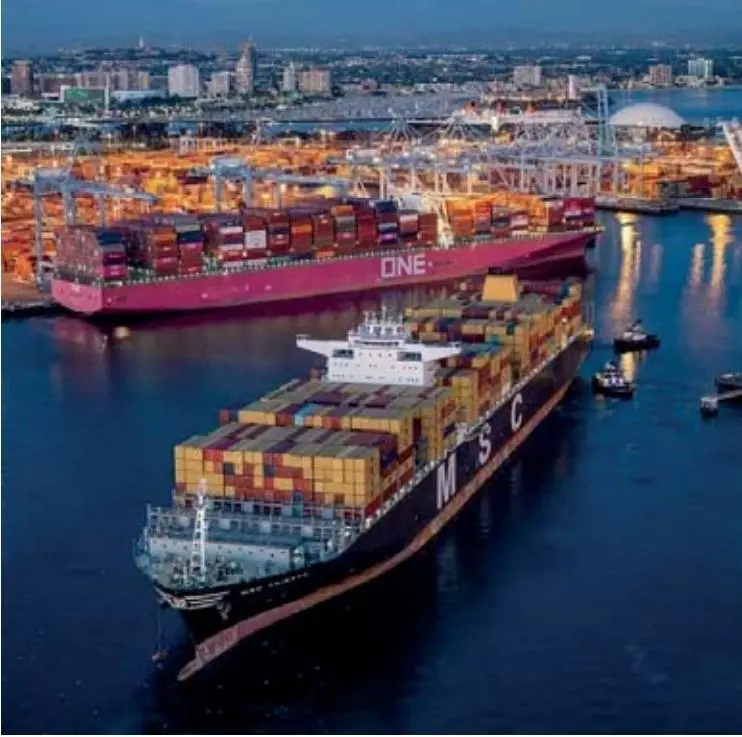
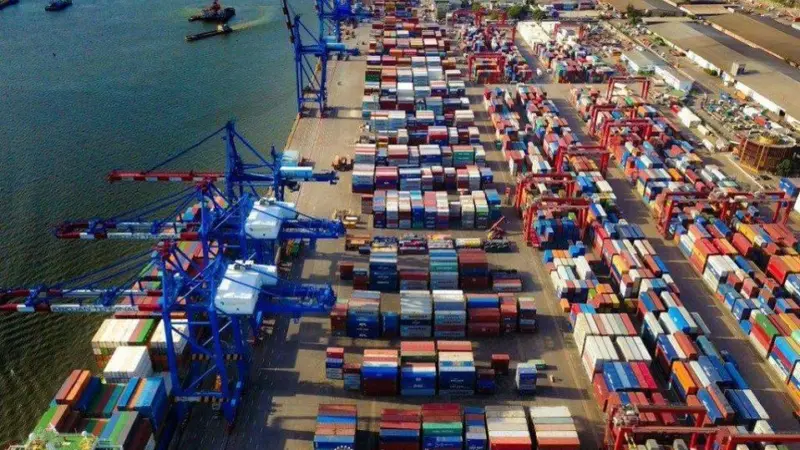
US ports have been suffering congestion for much of 2021 and the position has continued into 2022. Both Los Angeles and Long Beach have seen vessels regularly queuing for berths, not helped by a lack of truck driving capacity and warehouse workers. Ports on the eastern seaboard have also seen a vessel backlog appear as cargo shippers and ocean carriers have sought alternate gateway options. Consumer spending throughout the COVID-19 period has seen high demand remain for goods, especially imports from Asia.
This latest confirmation of planned spending from the White House will be welcomed by the port industry, but the time it will take to see any tangible benefits by the industry means that this is not an immediate fix. Plus, while improving efficiencies at ports is definitely a positive step forward, the danger is that the can is just kicked down the road.
Clearly, the Biden Administration would be well advised to take a holistic view of the supply chain while at the same time factoring in the realities of timing and grant distribution regarding the results that can be achieved.
Related Articles
 POST SCRIPT
 POST SCRIPT