


DARWIN’S CHINA OWNERSHIP UNDER REVIEW
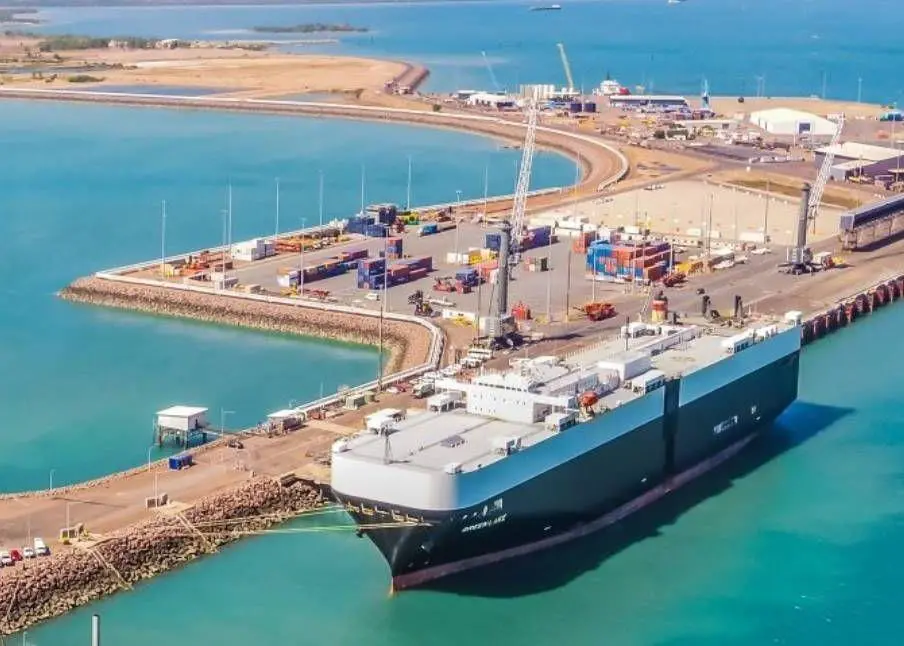
The port of Darwin, Northern Territories, Australia has been sucked into the ongoing dispute between China and Australia.
The differences between the two countries first came to prominence in early 2018 when, concerned over rising Chinese influence, the Australian Federal Government announced tougher rules governing foreign buyers of agricultural land and electricity infrastructure.
The friction has grown since. In March 2020 Australia brought in new rules to scrutinise foreign takeovers of Australian companies, after MPs in the Australian Parliament expressed concerns that companies impacted by the economic slowdown would become vulnerable to buyouts by state-owned enterprises in authoritarian regimes including China.
In May 2020 the situation further worsened when Australia called for an independent investigation into the initial coronavirus outbreak in China, with Prime Minister Scott Morrison suggesting that the World Health Organisation (WHO) needed tough “weapons inspector” powers to investigate the cause of the outbreak.
China has not taken this criticism passively – most notably it has discouraged purchases of thermal coal from Australia (for power station use). Australian thermal coal exports to China in 2020 dropped by 30 per cent from the previous year to a five-year low of 34.85 million tonnes, according to data from the Australian Bureau of Statistics. Similarly, coking coal exports to China (for steel production) have headed south as a result of the de facto ban.
Beyond coal, import restrictions have also been imposed by China on barley, beef and lamb, cotton, lobster, timber and other products. Australia for its part, as indicated above, has been resolute in resisting this induced trade pressure from China. It has to a large extent found alternative markets for many of its products, although not always at the same healthy price levels enjoyed with China.
Another significant waypoint involving the ‘push back’ against China came in April this year when Australia’s Federal government used its new foreign veto laws to scrap the State of Victoria’s Belt and Road agreements with China, in what the Chinese embassy denounced as a “another unreasonable and provocative move”.
Marise Payne, Foreign Minister, Federal Government, said she would cancel those two deals, along with two older agreements between the Victorian government and Iranian and Syrian entities, because they were “inconsistent with Australia’s foreign policy or adverse to our foreign relations”.
It is fair to say, however, that it was widely felt by observers that China was the main focus of this action. And following hot on the heels of this, in May Peter Dutton, Defence Minister, Federal Government announced that his department is conducting a review into the 2015 agreement between the Northern Territories then Country Liberal Party (CLP) government and the Landbridge Group – the China based company that acquired the lease to Darwin Port in 2015.
POLITICAL PLAY
While the Federal Government bills its port of Darwin review as security and defence driven – it is taking place against a backcloth of rising concern that China is using its Belt and Road Initiative (BRI) to gain economic and political influence. There is little doubt that substantial ‘political plays’ are in progress around the Darwin port issue.
The federal opposition has accused the Coalition government of “dragging its feet,” making the point that it had only acted after “six years of warnings”. The federal Labour Party has also said that it has long raised concerns about the port of Darwin and such a “critical strategic asset for Australia… being under “effective foreign ownership.”
Michael Gunner, the current Northern Territories (NT) Chief Minister, Labour Party, was not in power at the time of the lease award but clearly also has a political take on things. He has been quoted in local media as saying: “I don’t believe the CLP, as government of the day, have ever apologised to Territorians, or Australians, for the decision to sell the port to foreign owners.”
He has also gone on record as saying he is, “very happy for the Australian Government to look at anything they want in relation to the 2015 sale by the CLP.” Generally, from across the range of political interests there can be seen to be a growing body of support for the review and the objective of returning the port of Darwin back to Australian ownership.
If this does occur it will doubtless mark another significant downturn in China – Australia relations and of course it will spark an interesting discussion on the subject of financial compensation!
Related Articles
 POST SCRIPT
 POST SCRIPT