![GreenPort[PortStrategy]](https://www.portstrategy.com/greenport/wp-content/uploads/sites/4/2026/09/GreenPortPortStrategy.svg)
Ports embrace circular coastal protection
The Port of Esbjerg and ECOncrete are piloting circular coastal protection using dredged sediment to strengthen port construction while enhancing marine biodiversity.
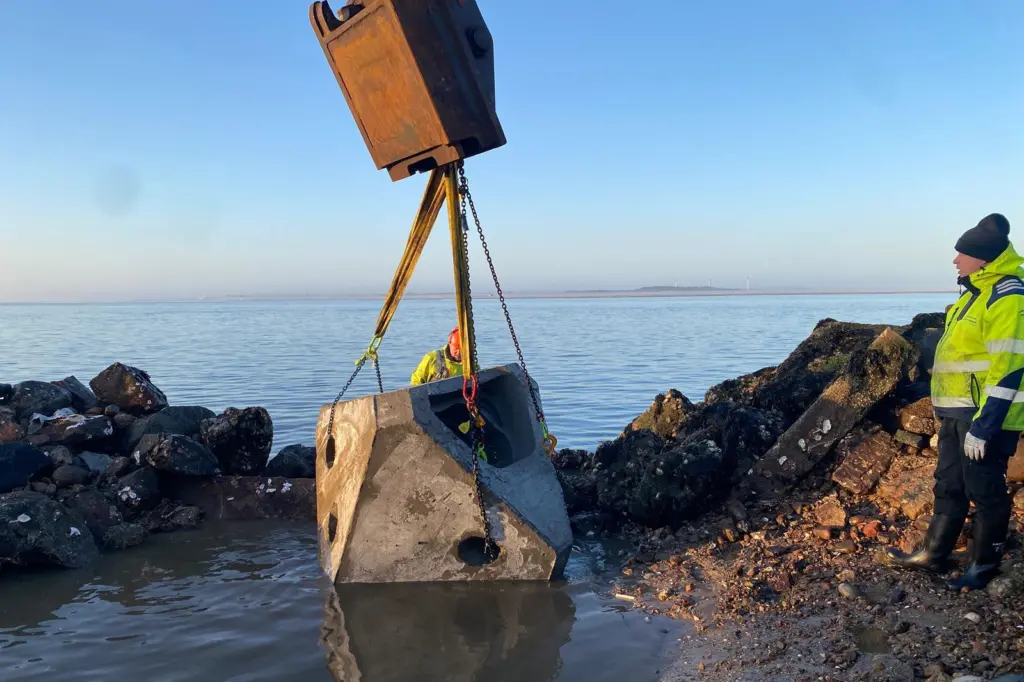
This marine construction project reuses purified clay from port dredging in Coastalock units, reducing CO₂ emissions and supporting port construction aligned with environmental targets.
Installed at Nordsøkaj, six units will be monitored to assess marine life development, with plans to scale to hundreds of units as part of core coastal protection infrastructure.
“When we can combine port infrastructure and coastal protection with a healthier marine environment by utilising sediment from maintenance and dredging in the fairway and the port, there is potential that extends far beyond Esbjerg,” said Dennis Jul Pedersen, Director of the Port of Esbjerg.
Industry first
The partners said this initiative marks the first time sediment from an active commercial port has been directly reused in marine construction with proven biodiversity benefits.
ECOncrete’s technology incorporates a specialised additive and textured surfaces to promote marine biofauna, including algae, mussels and small organisms, while improving structural durability.
Six initial Coastalock units have been deployed, visible at low tide, with a monitoring programme collecting continuous environmental data.
Future phases will integrate larger volumes into port construction schemes, reinforcing both operational resilience and coastal protection.
The project aligns with increasing regulatory and political focus on climate adaptation and biodiversity.
With EU requirements on nature restoration and national investment in coastal protection, the Port of Esbjerg initiative reflects a broader shift toward multi-functional marine construction that addresses climate risk, emissions reduction and ecosystem restoration in a single solution.
Related Articles
 ALTERNATIVE FUELS GREENPORT
 ENERGY & TECHNOLOGY GREENPORT
 PROJECTS & INITIATIVES GREENPORT