



New Zealand’s Lyttelton Port Company is advancing port construction with eco-engineering habitat units to support marine life at a new reclamation seawall.
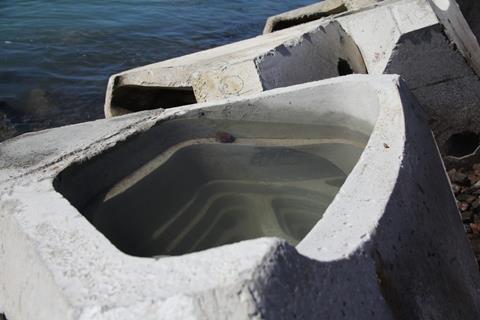
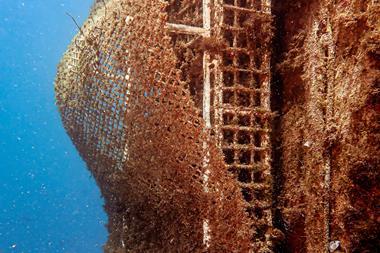
The initiative will see 220 ECOncrete Coastalock units installed in clustered formations to create intertidal and subtidal habitat, enhancing biodiversity while maintaining structural integrity.
“These Coastalock units can be positioned rotationally to create small rock pools that retain water at low tide, similar to natural rocky reefs,” said Crystal Lenky, head of environment and Sustainability, Lyttelton Port Company.
“Quarry rock does its job structurally, but it lacks ‘nooks and crannies’ and doesn’t hold water at low tide. By creating pools and textured surfaces, we can better mimic natural reef environments.”
Reclamation works
The operator has already deployed the first cluster of 22 units, each weighing 3.5 tonnes, along the eastern side of the reclamation.
Installed initially as a trial in February, early indicators show biological activity beginning to establish on the surfaces.
Ms Lenky added that conventional materials used in port construction lack the complexity required to sustain marine ecosystems, noting that textured surfaces and water-retaining features are critical for ecological performance.
The eco-engineering concept was developed in collaboration with marine ecologist Oliver Floerl from LandWaterPeople, involving structural engineers and geotechnical specialists throughout feasibility, design and installation phases.
Mr Floerl highlighted that the project exceeds standard requirements, reflecting a broader commitment to habitat restoration.
Further eco-engineering measures are planned, including the installation of smaller “living seawall” habitat boulders along the southern seawall to complement the existing structures and expand ecological benefits.