![GreenPort[PortStrategy]](https://www.portstrategy.com/greenport/wp-content/uploads/sites/4/2026/09/GreenPortPortStrategy.svg)




Better arrivals management could cut CO2
If ports kept ships more informed about berth availability prior to arrival they could adapt their sailing speed, save fuel and money and lower emissions, a new study has found.
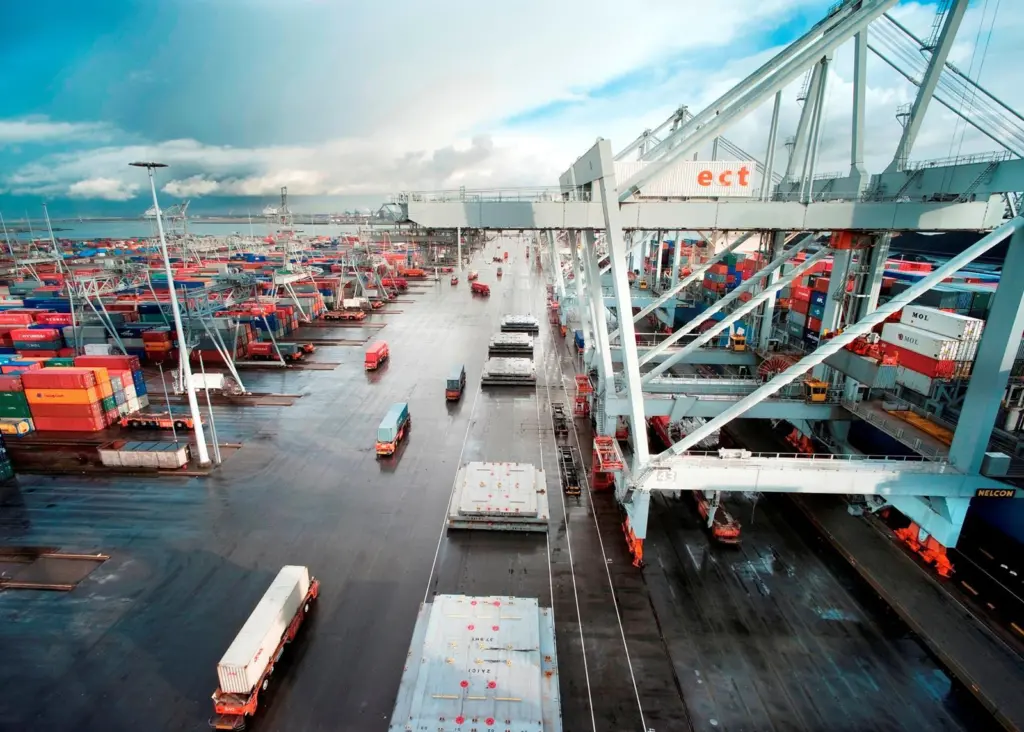
Commissioned by the Port of Rotterdam Authority and research institute TNO, the study analysed all the movements of container ships sailing to the Port of Rotterdam last year. It found that vessels would be able to reduce their speed to arrive just in time if they knew exactly when their berth would be available. Reduced fuel consumption also means lower carbon dioxide, sulphur oxides and nitrous oxides emissions.
“By supplying more accurate information to ships, 4 percent – or 134,000 tonnes – of CO2 emissions can be saved every year,” explained Jan Hulskotte, senior researcher at TNO. “To do this, container ships would have to adjust their sailing speed by an average of 5 percent, and still arrive at the planned arrival time.”
Fuel and emissions savings would also be made with shorter waiting times for ships in anchorage areas and more savings could also be made if ships were better informed more than twelve hours before arrival, noted the study.
Mr Hulskotte stated: “If this waiting time was an average of 12 hours shorter, that would really make a difference in percentage terms, with an annual reduction of 35 percent in emissions. So we’re talking about 188,000 tonnes of CO2 and 1,000 tonnes of nitrous oxides.”
The results of the study were presented at the office of the International Maritime Organisation (IMO) during a meeting of the IMO Intersessional working group on the reduction of Greenhouse Gas emissions from ships.
Related Articles
 EUROPE
 TERMINAL OPERATIONS
 TERMINAL OPERATIONS