
The Adani Group continues to feel financial pressures with recent attacks adding to the negative impact of the January report by short-seller Hindenburg. Is there more to come?
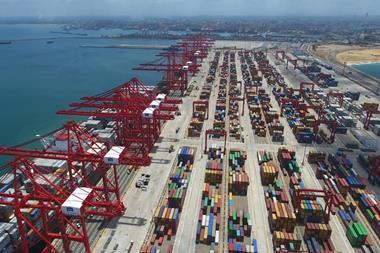
Adani Ports & Special Economic Zone (AP&SEZ), has been riding the roller coaster of financial pressure again, with the company experiencing the biggest loss in value – seven per cent – out of all the Adani Group companies on March 28, following a new report issued by The Ken, a pan-Asian subscription publication with a major focus on India. The Ken alleged that the Adani Group had not made a US$2.15 billion dollar repayment in share-backed debt. Specifically, the report said: “Despite the Adani Group’s claim of complete repayment of US$2.15 billion in share-backed debt, regulatory filings show that banks have not released a significant portion of the promoters’ shares held as collateral, indicating that the debt has not been fully paid off.
“As per Indian laws, disclosures on the release of shares need to be filed with stock exchanges by lenders within two working days, and by promoters within seven working days. But neither the Adani Group nor the lenders have made these disclosures to stock exchanges,” underlined the Ken Report.
Further pressure has also been piled on the Adani Group by a report around the same time in The Economic Times, a India-based publication, that Adani was attempting to renegotiate the terms of US$4 billion of debt.
The following day, March 29, Adani refuted both claims in separate statements. In conjunction with the Ken report it stated that it had paid off share- backed financing totalling US$2.15 billion and that the stock linked to the facilities involved had been released. The Economic Times report it dismissed in stronger terms, describing this as “baseless speculation.” The net effect was that Adani Enterprises Ltd, the group’s flagship, share value rose by 8.7 per cent and AP&SEZ by 7.3 per cent. This was the biggest overall rally since GQG Partners’ minority stake purchase in the companies earlier in March.
Jugeshinder Robbie Singh, Chief Financial Officer Adani Group, was particularly damming in his condemnation of the Ken’s report, he tweeted: “Deliberate misrepresentation (and if i speculate outright lies) of @TheKenWeb ( @SudzzBTS an @ nimishshp) they know that relevant exchanges will update end of quarter. The deliberate subterfuge will be clear to all once exchanges update the data post end of quarter.”
HOT ON THE HEELS
All this, of course, follows hot on the heels of the report issued issued in January of this year by short-seller Hindenburg alleging fraud, which resulted in an overall loss of over US$100 billion to Adani.
Effectively, since this time Adani has been in damage control mode with informed reports indicating that corrective actions taken by Adani have involved the group cancelling a share sale, abandoning some acquisition opportunities, raising money, prepaying debt, and performing roadshows around the world.
To add further fuel to the fire, ratings agency Fitch has highlighted the fact that two Adani Group subsidiaries are exposed to heightened contagion risks as a result of governance weakness at the conglomerate’s sponsor level. Adani Transmission Limited and Adani Ports and Special Economic Zone are, it suggests, prone to risks which could affect financial flexibility.
As if all this isn’t enough, AP&SEZ’s latest investment overseas, in the Port of Haifa, Israel, is, at the time of writing, facing severe operational problems.
Workers at Ashdod and Haifa ports launched a strike March 27 as part of nationwide civil action against the government led by Prime Minister Benjamin Netanyahu. The exact duration of the strike remains unclear, though some media sources have stated it will remain active until further notice.
The potential impact of this strike is severe with various parties highlighting the possibility of it negatively impacting essential food supplies.
MOUNTAIN TO CLIMB?
It is not quite a mountain to climb in terms of rebuilding investor confidence that Adani has on its hands. It has taken some positive steps in this respect but nevertheless it may yet become a mountain. The Securities and Exchange Board of India is probing any potential irregularities in the share sale, which was run by the flagship Adani Enterprises before this capital raising exercise was pulled.
The market regulator is also investigating allegations made in the Hindenburg report as well as the market activity immediately before and after the report was published, Reuters reports.
As reported in the UK’s Guardian newspaper: “One of Hindenburg’s most serious allegations involves claims that Adani uses shell companies to manipulate the price of the listed ones by holding large positions. Adani has denied the allegation and has said all related-party transactions were correctly disclosed.”
Adani has repeatedly said its balance sheets are healthy and that it has secure assets and strong cashflows.
If it clears the latter investigations, the consensus of opinion is that this will facilitate showing a good financial standing and generate an improved ability to raise funding. If not, then the view is that this may trigger asset sales.