![PortStrategy[GreenPort]](https://www.portstrategy.com/wp-content/uploads/2026/09/PortStrategyGreenPort.svg)




It pays to go local
Regional insurance markets are playing an essential role in port insurance, says James Brewer
We often hear these days of ‘local insurance markets’ covering ports, terminals and other facilities, but rarely do outsiders learn exactly how effective they are.
A reassuring story has emerged from Russia, a country with an insurance sector that is performing well in the marine classes, amid some usually misplaced nervousness about the wider performance of insurance companies.
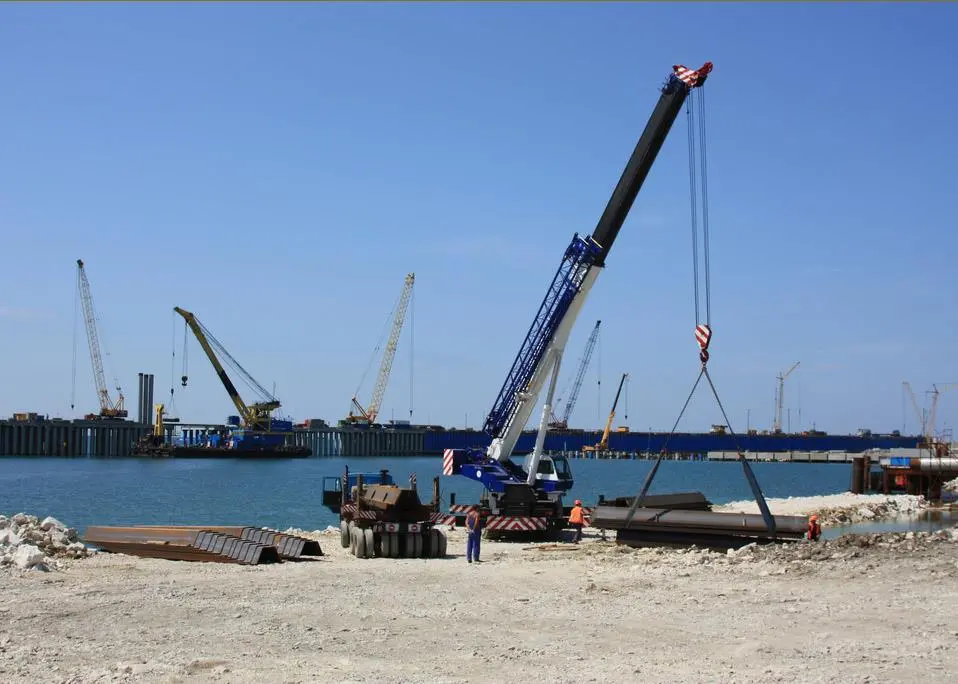
In December 2009, a fierce storm hit Sochi, a city due to host the Winter Olympic Games in 2014. One report had it that “the cargo port located near the mouth of Mzymtma River was washed away”. At the very least, piles for jetties being built, and construction machinery, were badly damaged. It seems that a diving boat involved in the construction work was overturned, leaving uncertain the fate of three crew members, and a cargo ship was wrecked.
Some of the risk was insured and co-insured by Gefest, a Moscow-based niche insurer mostly focused on transport construction, including roads, tunnels and bridges. The company was incorporated in 1993 by major Russian construction and engineering companies.
A preliminary estimate of the Sochi claim reported to Gefest is up to Roubles315m ($10.3m) on a gross basis and up to Roubles35m on a net basis. This is expected to be the largest claim, by a factor of nearly three times, relating to a single event in the history of the insurer.
Fortunately Gefest has adequate reinsurance protection, reportedly with Swiss Re, the world’s largest reinsurer, and a low net retention, so this should not knock too much from the net underwriting result of the insurer for 2010.
We know the basic details thanks to an analysis of the company’s finances and strategy by Fitch Ratings. The review resulted in Fitch downgrading the insurer financial strength of the company to B+ from BB-, with the ratings outlook seen as stable.
In fact, Fitch analysts Anastasia Litvinova and David Stephenson had words of praise for the company in terms of its underwriting expertise. What worried them was the attempt by Gefest to expand into some casualty lines that were less protected.
Gefest suffered a deterioration in investment performance and a notable contraction of 28% in gross written premiums in 2009 as a result of the slowdown in the construction industry, but its liquidity position could improve as premium volumes recover.
On the whole, Fitch tends to be downbeat about the Russian insurance sector, saying that ratings will be constrained by poor reserving and pricing risks that became apparent in 2009.
One problem is that the ratings of individual Russian companies cannot exceed those of the currently low sovereign rating of the Russian federation. Capital adequacy is weak at some Russian insurers, although the strengthening of the regulatory framework should reduce the pressure on tariffs, and there may be increases in the cost of reinsurance that primary insurers will find difficult to pass on to clients.
Major insurers including Ingosstrakh, VSK and Rosgosstrakh, all of which have important marine portfolios, contend that these kind of concerns are unfounded in their case and should not worry clients: they have top-class reinsurance, advanced claims handling expertise, and underwrite on near-identical terms to those offered by London and other Western markets.
Satisfactory responses to the Sochi incident and to other casualty cases will be part of the process of dispelling doubts.
Related Articles
 THE INSURER
 THE INSURER
 THE INSURER