



Loud and clear partnership message
Workshops at this year’s GreenPort Congress Americas investigated how best to progress environmental performance in the industry.
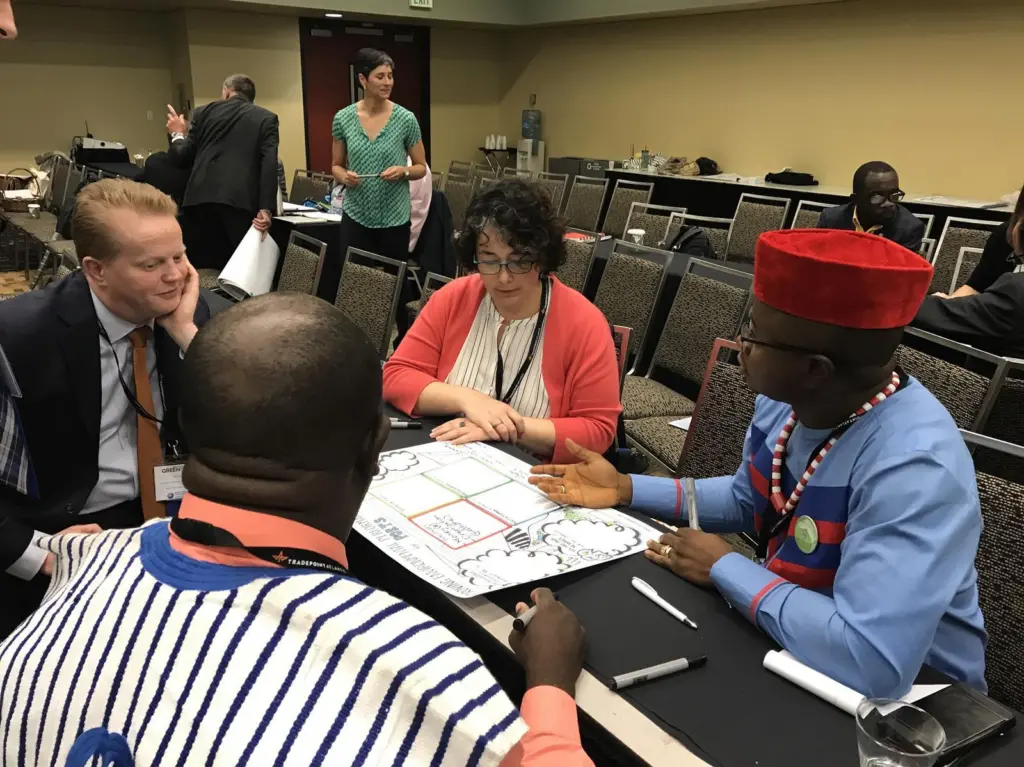
The inaugural GreenPort Congress America came to its conclusion in May with an interactive ‘collaborative’ workshop, reflecting two-days of learnings and signifying a shift to improve environmental management in ports, terminals and shipping sectors.
The workshop reflected the key theme of the congress to invest in ‘partnerships and collaboration’ between industry players and with the community.
The two and a half day congress was hosted in Baltimore, attracting over 170 delegates from over 14 countries. A diverse range of topics were presented, from advancements in environmental monitoring to new technologies and innovative practices in dredge management, climate change resilience, energy transition and updates on advances in the industry, including the launch of the World Port Sustainability Program (WPSP).
Throughout the congress the overwhelming message was a need to focus on partnerships and collaboration as a way to unlock barriers between industries and move forward to truly advance environmental performance, embed sustainability and make a difference globally.
Building on the learnings from the congress, delegates were also able to bring their industry experience to the congress workshop that concluded the two days. Dr Chris Wooldridge of Cardiff University facilitated the interactive session designed to invigorate delegates to find opportunities to advance environmental performance for ports, terminals and shipping.
The session kicked off with a panel of short, snapshot presentations to initiate thinking on environmental performance, programs and tools in the port, terminal and shipping industries. These presentations were delivered by international presenters including Kurt Nagel, president and chief executive of the American Association of Port Authorities, Renee Hovey from Sprott Planning and Environment (Australia), Tracy Fidell from WSP (US), David Bolduc of Green Marine (US) and Jan Fransen of the Green Award Foundation (The Netherlands).
Mapping the future
Following the presentations, the delegates worked in small groups to capture their thoughts on challenges and opportunities facing each sector. Adopting a creative approach, unique mindmap-styled templates were designed specifically for the session by Australian-based visual artist Dr Sue Pillans with Ms Hovey. The mindmaps aimed to guide delegates in a creative and visual way to move from challenges in the industry to explore the opportunities, best practices and what a leading port looks like.
The mindmaps captured a comprehensive list of challenges and opportunities from delegates for each sector. A mindmap on each sector was filled out to capture the thoughts from all the workshop groups and from this a summary of the top challenges and opportunities from the workshop was compiled.
The top opportunity identified was ‘stronger partnerships and collaboration’, reflecting the key message throughout the conference and supporting a philosophy to collaborate with others to achieve best practice.
The other top opportunities delivered a focus on integrating environmental management, including integration with social and economic aspects, which reinforces a shift in focus towards a sustainability approach. The launch of the WPSP supports this change in the industry globally. Patrick Verhoeven, of the International Association of Ports and Harbours (IAPH), presented on the WPSP to provide a global platform for ports to collaborate and also supported the use of the United Nations Sustainable Development Goals (SDGs).
The SDGs provide 17 global goals to provide a robust and comprehensive platform for ports, terminals and shipping sectors to ensure environmental aspects are well balanced with social and economic aspects. The 17th SDG for ‘Partnerships’ signifies the importance for collaboration to unlock opportunities to improve environmental performance and transition towards advancing sustainability.
Beyond capturing opportunities, the workshop also invited delegates to reflect on the question: “What does leading environmental performance look like?” The responses recognised that a sustainability approach is critical, however there is a need to focus on ‘enabling drivers’ such as strong leadership, transparency, trust, willingness to try/fail and, of highest priority, collaboration.
Related Articles
 DIGITAL
 OPERATIONS
 PORT & TERMINAL NEWS