


Lowering emissions quayside
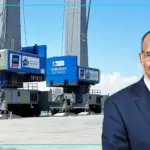
Twelve low-emission Terex straddle carriers went into operation at the HHLA Container Terminal Burchardkai (CTB) at Hamburg this month in a bid to reduce emissions.
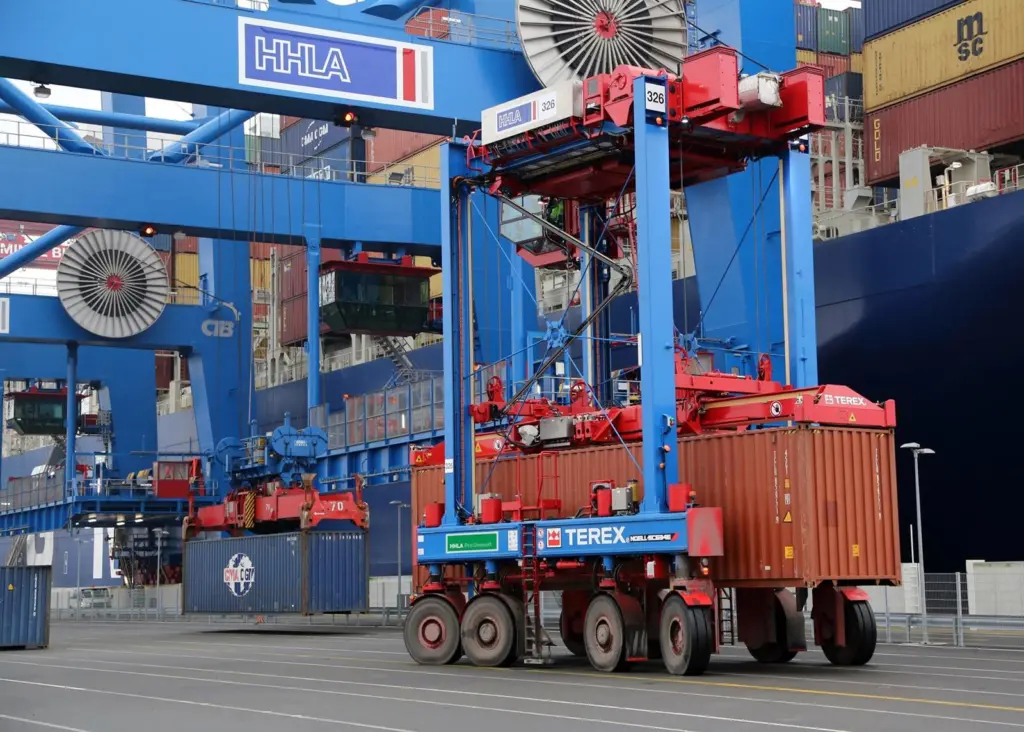
The modern diesel-electric vehicles should make an important contribution towards reducing emissions at the container terminal. They will provide 74% less nitrogen oxides than their predecessors’ and generate 95% less particulate matter.
Dr Stefan Behn, HHLA Executive Board, said: “By adding the twelve new straddle carriers, we have further expanded the fleet of vehicles at the Container Terminal Burchardkai (CTB). This enables us to further increase Burchardkai’s performance capabilities, especially at peak times.”
He added: “The Port of Hamburg is in the middle of the city. That makes it important to keep harmful emissions as low as possible. We at HHLA are using cutting-edge technologies and intelligent solutions to further reduce emissions at our terminals.”
The twelve latest-generation straddle carriers comply with the strict requirements of the European Union’s emissions standard Euro 4: they emit a maximum of just 0.5g of nitrogen oxides (NOx) and 0.025g of particulate matter per kilowatt-hour of output.
This translates into annual CO2 savings of more than 130,000 kilos per vehicle. An efficient diesel-electric power train and the AdBlue exhaust after-treatment technology commonly used for cars are responsible for this reduction. With the AdBlue system, a urea solution is added to the exhaust fumes in a catalytic converter, where they are then reheated.
Sustainability is an important part of HHLA’s corporate strategy. The company has set itself several targets in this regard, including cutting specific CO2 emissions by 30% between 2008 and 2020.
It already succeeded in bringing about a 24.9% reduction by 2013. This is partly thanks to HHLA’s electric vehicles (EVs). With 64 electric cars now in use, the company said it operates the largest fleet of EVs at any European port. It also operates battery-operated container transport vehicles at the Container Terminal Altenwerder.
Related Articles
 EQUIPMENT
 ALTERNATIVE FUELS GREENPORT