



Making the link
Ports are increasingly acknowledging the importance of their role in supply chains, as John Bensalhia explains
Break the chain and disruption ensues: bicycle chains, relay races – even the non-participant in a Mexican Wave. When a link in the chain goes dead, the system threatens to break down.
For supply chains, a weakened or broken link could potentially mean trouble. Recent reports referring to the East Coast of the United States highlighted the potential disruption of a broken link.
A disagreement over contract negotiations between the United States Maritime Alliance and the International Longshoremen’s Association threatened to end in a strike, which was due to take place on February 6, 2013. If the strike had taken place, this would have followed in the wake of an eight-day strike in November 2012 at the ports of Los Angeles and Long Beach, which caused shipping delays for millions of dollars worth of cargo.
For the East Coast strikes, ultimately, an agreement was reached on February 1, 2013 – although ongoing negotiations have still raised fears over potential future strikes. Because negotiations are reported to be ongoing, an air of uncertainty hangs over the situation.
Consumer change
The importance of the supply chain in today’s age has, however, been recognised by ports all over the globe. This has, in part, stemmed from changes in consumer culture. The way many of us shop today has changed since the days of walking into a shop and buying an item on the spot. The rise of internet shopping has affected the traditional high street shops and stores (as seen on the news in the last year).
David Baker, partner of Baker Rose Consulting, comments: “The traditional multi-store retailer is being taken apart, having to compete with the warehouse based internet retailer, who essentially is a web portal and a very efficient pick and pack logistics operation, based anywhere in the world. When the core costs of the product are down to the bones, the shipping cost has to be the next target; and woe betide the manufacturer/distributor who hasn’t placed themselves in an optimum position to provide that service at the least cost too.”
Mr Baker says that the United Kingdom is fortunate in that the major centres of consumption in the south and north-west are near to ports with growing deep-sea capacity under way (such as the London Gateway and the Port of Liverpool). With rising transport costs, involving ports in the equation makes good financial sense. “Think back to the 1950s, and you will see the solution was ports, coastal and short sea shipping and railways,” says Mr Baker. “Location for key logistics facilities will inevitably change as the cost equation bites. With paper-thin margins, price and availability of stock is key, as is the utilisation of equipment. It makes sense as operators come out of legacy contracts and leases, that they will be relocating stock to the regions and in close proximity, to key port and rail freight terminals in those regions.”
Recent changes have taken place at the Port of Antwerp, as Albert Pegg, senior advisor for marketing, promotion and commercial relations, explains. “The Antwerp Port Authority (APA) being a landlord port used to leave the supply chain operations to the private stakeholders and promoted the port internationally in a rather generic way. APA concentrated itself, besides the wet and dry infrastructure works and maintenance, on the smooth and safe movement of the sea-going vessels and barges within the port area and management of the leaseholds.”
All together now
Following the creation of 11 working groups comprising more than 180 senior people of the private stakeholders, government agencies and the Antwerp Port Authority, one of the key findings was that the port should come together and focus on the supply chain requirements of the beneficial cargo owners (BCOs). Mr Pegg says: “This resulted in a changed approach to the market by APA. In the past, our roles in the marketing, promotion and commercial relations department led by the BCO were geared towards the way the cargo was shipped (container, break bulk/ro-ro, liquid bulk – and dry bulk specialist).
“Since 2010, we have approached the BCOs/logistics service providers (LSPs) on a supply chain basis with specialists in perishables, steel and non-ferro, chemicals, project cargo, automotive, forest products and fast moving consumer goods. The shipping lines and their agents, the terminal operators and LSP’s as well as the forwarders also still have their interlocutors as they are part and parcel of the core business of a port, but the BCOs are now segmented, targeted and approached with a focused strategy by specialists.”
Mr Pegg says that the key performance indicators for supply chains are reliability, total cost, speed, flexibility, quality and sustainability. “Depending on the strategy of a company and the cargo segment that they operate in the weight of each KPI is different, as is their SC-model, which can be either lean, agile, collaborative or innovative or a combination of some of the foregoing characteristics.”
Realising the potential of supply chains, a number of ports have responded with plans and strategies that will add even greater value. PD Ports, for example, have a number of supply chain initiatives such as logistics fleets (one operates for the contract logistics, working for sectors such as steel and containers; the other is a multi-unit fleet delivering imported cargoes and collecting export cargoes); a Logical Link East Coast feeder service operating between Felixstowe and Teesport; and also rail terminal links.
On the rails
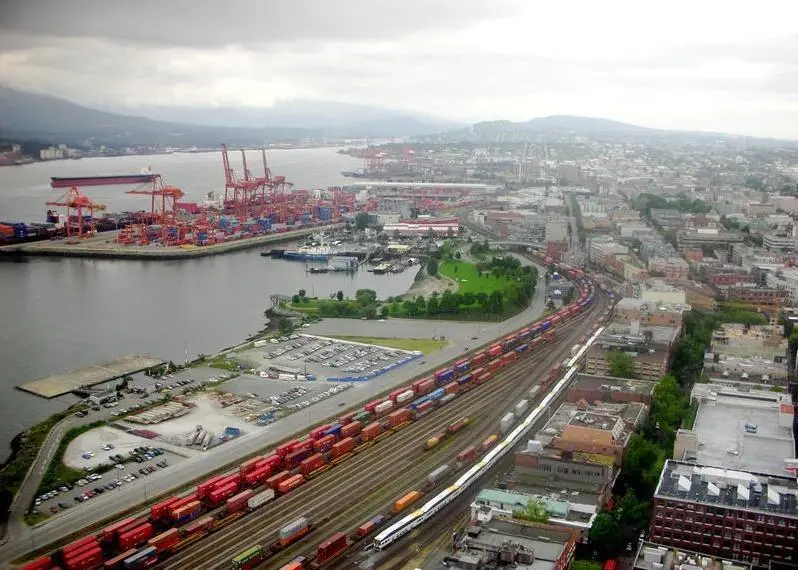
Port Metro Vancouver has assessed the benefits of supply chains with a strategy that aims to achieve constant growth in every cargo sector. This has involved investments and investigations into solutions such as the Roberts Bank Rail Corridor – the port is said to have committed to invest up to $50m in this with road and rail grade separation projects that will boost operations. Studies have also been conducted for both the North and South Shore Trade Areas, assessing future transportation systems and ideas for roads and rail, as well as the consideration of potential terminal and land developments.
For the Port of Antwerp, not only is the location a vital factor in the supply chain, knowledge and expertise from key personnel are also crucial. “The Port of Antwerp being situated 80 km inland with 60% of the European buying power within a 500 km radius is a major advantage,” says Mr Pegg. “Quadrimodal connections (pipe-line network, barges, rail and road) are abundantly available as well as deepsea and shortsea connections to ports. The know-how of the blue and white collars and specialisation of the logistic service providers and terminal operators competing against neighbouring ports and amongst themselves keep them sharp, flexible and innovative.”
Involving ports in supply chains means better value for money and smoother operations – especially in a climate that has seen growth in internet retailing and warehouse shipping.
Because port operators have recognised the value of their part in the supply chain, the future for this system looks set to be assured. Mr Pegg comments: “As we are getting more and more versed in the intricacies of each supply chain, we – as a neutral trusted third party – will continue to facilitate the search for the right private partners in our Antwerp port community.
“The BCOs themselves will be our best advocates, their testimonials will give their peers the reasons to believe in the capabilities of our Port of Antwerp community and our extended gateways in the hinterland, underpinned by an ICT-system that makes sure the information flow is as efficient as the physical flow.”
With continuing investments, strategies and developments – not to mention knowledge and information from port operators, supply chains look set to be stronger than ever before.
Related Articles
 EQUIPMENT
 EQUIPMENT
 EQUIPMENT