



MUSICAL CHAIRS IN BUENOS AIRES
It looks like the plans for one major terminal in Buenos Aires, Argentina may now be off the table, as Rob Ward discovers.
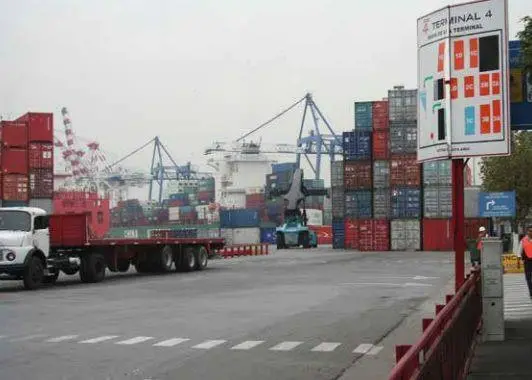
It’s all change once again as the political musical chairs in Argentina obliterates the nascent plan for one brand new “Super terminal” at Puerto Nuevo, in Buenos Aires the country’s principal entry point for containers. Instead, options are now turning towards extensions for two or three of the three concessions currently operating at Puerto Nuevo, which handled around 920,000 TEU in 2019, approximately 50% of Argentina’s entire throughput.
Port Strategy outlined the grandiose $1.9 billion plan (back in October 2019) laid out by the Administración General de Puertos (AGP, or General Ports Administration for Argentina).
The word from various reliable sources in the Argentine capital was that the “revolutionary transformation” of Puerto Nuevo would go ahead “no matter what happened in the Casa Rosada” – the Pink House where the Argentine president resides and governs.
The argument was that Puerto Nuevo was so congested and boxed in by the City of Buenos Aires and such was the demand for the valuable land it inhabited that a planned multi-billion dollar transformation into real estate (offices, and shops in the 143,000m2 area currently occupied by Puerto Nuevo terminals 1 to 3) and concomitant building of a dedicated cruise terminal would go ahead – nudging Puerto Nuevo operators into new areas of landfill to the north but at the same time nearly doubling the container capacity from 1.4 million TEU up to 2.7 million TEU – despite the surprise change of government.
Argentines voted out the centre right, market friendly Mauricio Macri and voted in the leftist, pro trade union, Peronist candidate Alberto Fernandez, backed by the ever present Cristina Kirchner as vice president, in last October’s Presidential elections.
“This urgently needed transformation [of Puerto Nuevo and downtown Buenos Aires] will go ahead because it is above politics,” said one confident port consultant, who has since been proven wrong. And he was backed up by officials at AGP during several information requests from Port Strategy.
PROTECTING FUTURE EMPLOYMENT
The left wing government of Fernandez and Kirchner is now keen to defend dock workers rights and so a new priority is to protect the future employment of the 600 or so dockers (1,800 in total) who work in each of the three existing terminals – APM Terminals’ Terminal 4, Terminales Rio de La Plata (TRP, majority owned by DP World in terminals 1 to 3), and BACTSA at terminal 5 (owned by Hutchison Port Holdings).
The BA conurbation is also served by Exolgan (owned and operated by International Trade Logistics, which is part of MSC, along with partners PSA of Singapore, out of Dock Sur, or the South Dock), and together with the Puerto Nuevo terminals, the throughput for the four operators totalled more than 1.5 million TEU in 2019, down 13% on the year before, but still comprising more than 90% of Argentina’s entire box handling.
LOSING SHARE
Although AGP has no up to date statistics and terminal operators were somewhat guarded about revealing the latest figures, Puerto Nuevo terminal managers told Port Strategy that Exolgan last year had 40% of the market (around 630,000 TEU), Terminal 4 had 21% (320,000 TEU), Bactsa 20% and TRP just 19%, and the struggling DP World facility now looks likely to lose even more market share.
“They [the Argentine port authorities] were so close to carrying out this major revamp,” said Patricio Campbell, the long-standing President of the Centro de Navegacion , which represents shipper and shipping line interests in Argentina, “but in the end they ran out of time and now with a new government for Argentina it seems they will just maintain the status quo, possibly with three terminals merging into two.”
Dockers employment issues have been brought right to the forefront of the debate when, just as we were going to press, it was announced that Maersk Line was shifting its north Europe to East Coast South America (ECSA) service from TRP to AP Moeller Terminal/Maersk’s Terminal 4 operation, ripping out the final deep-sea service at TRP, which used to be the biggest operator in the BA conurbation, until Exolgan took over that mantle.
Maersk Line switched a number of its Hamburg Sud brand services from TRP to Terminal 4 two years and not it is moving the north Europe service “in house”, from mid May.
With only a couple of cabotage (Maruba and Patagonia Shipping Lines) services, as well as Mercosur trade bloc (independent Brazilian carrier Log In and CMA CGM’s Mercosul Line) services remaining, it is thought that it may have to fold in the near future.
NO EXODUS, YET
However, reliable sources in Buenos Aires are telling Port Strategy that the exodus is “not the done deal that Maersk Line thinks it is”. High level talks between Maersk Line, TRP (DP World) and key government figures and leading dockers’ union leaders may lead to “a major re-think as the dockers are mobilising” and they averted strike action at all three Puerto Nuevo terminals, just as we went to press.
The new government has just appointed Jose Berni as General Manager of AGP and Leonardo Cabrera has been “nominated” as undersecretary of ports but his final approval to take over has not quite been officially approved. As the AGP web page has not been updated since before Christmas it is difficult to get clarifying official information.
The, now frozen, “major revamp” would have consisted of doubling the size of Puerto Nuevo’s capacity from 1.4 million TEU up to 2.8 million TEU and given the port enough space and infrastructure to serve BA for the next 15 to 20 years which will reduce congestions in downtown BA.
According to various sources the River Plate “landfill project” – using rubble from the improvements to the Avenida Costanera Obligado, the main port highway running to the north – has been suspended “for now”, until such time as the government makes a decision on the continuation of the Puerto Nuevo “Super Terminal” project, or not!
When contacted in late November and early December various managers at the AGP maintained the line that “the tender process for the $1.9 billion new Puerto Nuevo will go ahead” but that there “would be some minor delays until the New Year”.
Port Strategy also sent emails and made phone calls to try and contact Captain Flavio Galanis, who was the planning director for AGP who had outlined the concession plan in detail to us throughout last year, but he was never available.
REPLACEMENTS AT AGP
When the New Year came, however, it became very difficult to contact anyone at the AGP and now it turns out they are all being replaced, including Galanis.
Such is the way that politics and port strategies intertwine in Argentina and, indeed, in South America as a whole.
Until the “shock” news of the Maersk Line Northern Europe service switch from TRP, the talk was of “concession extensions” possibly for another five years or so and of struggling Terminal 5 (BACTSA), combining with Terminal 4, which is operated by Maersk Line subsidiary APM Terminals.
However, the seemingly more likely outcome is now on TRP disappearing and BACTSA probably surviving, unless the powerful Argentine trade unions can force a major change from Maersk Line.
“If not TRP will be left in a very precarious position,” said one BA shipping agent. “MSC, dominates at Exolgan and Maersk Line and its various brands [Hamburg Sud, Alianca and CSAV] are very dominant now in Buenos Aires, with more than 65% of the market between them. Independent port operators like TRP/DP World and BACTSA/Hutchison Ports are gradually being side-lined as the mega carriers congregate their cargoes in their own port facilities.”
Campbell believes that the messy turmoil that has beset Puerto Nuevo, located in the central downtown area of Buenos Aires, will bolster its various rivals vying for their share of the lucrative Buenos Aires containerized cargo business.
Exolgan, which operates out of Dock Sul, a separate port entity some 20 km from Puerto Nuev and Terminal Zarate (based some 90 km northwest of Buenos Aires) already have a 40% and 10% market share of the overall BA conurbation containerized cargoes, and are likely to increase that share in the future. (See The Exolgan Story, in panel).
TECPLATA BEST-PLACED
However, Campbell opines that TecPlata, the newest box facility in Argentina, which is owned and operated by International Container Terminal Services Inc (ICTSI) of the Philippines is best placed to take the greatest advantage from Puerto Nuevo’s declining fortunes.
“La Plata is trying to take some advantages from these difficult scenarios for Puerto Nuevo,” explained Campbell, who has also been the President of Ocean Network Express (ONE) Argentina since it was formed from the merger of three Japanese carriers, adding, “And I think they have the opportunity to secure themselves as a viable alternative to Buenos Aires. Already they are looking to bring in international players with their deep-sea calls with Evergreen taking out slots on Log-In Logistica Gran Cabotage (Mercosur) services and there is talk that they and other carriers are considering regular calls.”
He expands on the local position further. “Tec Plata’s management is getting closer and closer to persuading a shipping line with deep-sea services to move to its terminal. Already Evergreen is taking out regular slots with Log-In Logistica [the Brazilian flag cabotage and Mercosur coastal operator] which is transhipping its import and export cargoes via Brazilian ports.”
Another two sources in BA also said that Evergreen was “talking seriously” about having its own ships calling at Tec Plata on a regular basis.
One experienced Buenos Aires based consultant said that the best way forward now for Puerto Nuevo is to keep the status quo more or less as it is now, and give the existing concession holders an extension of between five and eight years.
“I personally think these extensions should be given and forget about the ‘mega projects’ and concentrate instead on using TecPlata and Exolgan and Zarate to take any possible future throughput increases,” the veteran consultant, who used to work for a major European shipping line, told Port Strategy.
“I also think the three current Puerto Nuevo operators should be left to decide themselves which of the two or three entities should go forward into the next five to eight years.”
PRIORITIES
Priorities for the Fernandez/Kirchner government right now are the raging inflation and the bid to get an agreement – a probably “financial debt haircut” – from the International Monetary Fund and resolving the social issues emanating from a failing economy.
To some extent, the travails of Puerto Nuevo are not a huge priority for this left-wing government – although assuaging the labour force is quite important – and that is why a short-term five to eight year remedy is almost inevitable.
The Exolgan Story
Although Puerto Nuevo’s three terminals together still handle the majority of Buenos Aires’ container movement – 60% – the biggest single terminal in the country today is Exolgan, operating out of Dock Sur (South Dock), some 15 miles to the south of the longer established Puerto Nuevo.
Last year Exolgan handled 630,000 TEU, down 13% on 2018, and it is the terminal of choice for South America’s box super carriers Maersk Line (with various brands including Hamburg Sud) and MSC Line.
In fact, MSC Line has an interest in the Dock Sur terminal via its stevedoring arm Terminal Investment Limited (TIL), who, along with PSA International, are the joint owner/operators.
After its inception, back in the mid-1990s, Exolgan was assisted by Hamburg er Hafen Und Logistik AG (HHLA) and the German connection meant that Hamburg Sud was its headline client for many years.
Now, since Maersk Line took over the German outfit, some of those services have migrated to Terminal 4, operated by AP Moller Maersk subsidiary, APM Terminals.
For many years Exolgan was the second biggest box terminal in Argentina for volumes handled but, following the demise of DP World’s TRP, it has been in first position for some years.
Even so the volumes it handled in 2019 are barely above the 600,000 TEU it handled in 2010, when TRP throughput was 630,000 TEU, Terminal 4 was 230,000 TEU and BACTSSA was at 270,000 TEU.
Some port commentators in Buenos Aires believe the Puerto Nuevo expansion will not be needed for years to come because Exolgan has an annual capacity of 960,000 TEU and Puerto Nuevo 1.4million TEU.
So, with volumes less now than they were 15 years ago – owing to Argentina’s perennial economic crises – any expansion in capacity is not an urgent priority.
Both Terminal Zarate (90 miles north of Puerto Nuevo) and La Plata (40 miles south) can also easily expand their present day capacities, of 200,000 TEU and 450,000 TEU, respectively.
Today TZ handles around 130,000 TEU and the recently opened Tech Plata, handled about 30,000 TEU during its first year. Just to keep its busy facility rolling though, Exolgan has invested in four new Hybrid RTGs from Kalmar (handling boxes one over five high and lifting capacity of 40 tonnes under the spreader) with two delivered last year and two more due for delivery during late 2020.
It already operates 10 Ship-to-Shore Gantry cranes (seven Super Post Panamax and Post Panamax, plus three Panamax units) along a 1.2 km quay and offers 1,300 reefer plugs.
Related Articles
 PORT & TERMINAL NEWS
 PORT & TERMINAL NEWS
 PORT & TERMINAL NEWS