![PortStrategy[GreenPort]](https://www.portstrategy.com/wp-content/uploads/2026/09/PortStrategyGreenPort.svg)


Containers and cruise ambitions
Container transhipment and cruise are the two sectors concentrating minds at the Indian Ocean islands ports. Felicity Landon reports
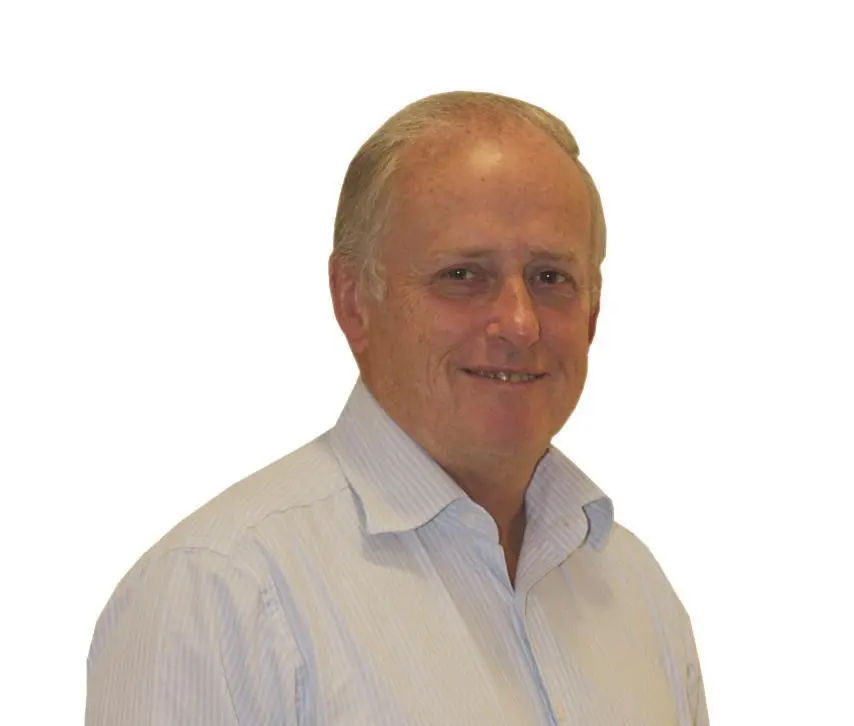
Trade patterns in the Indian Ocean are changing fast, so planning ahead can be difficult, says Richard Clarke, market sector director – containers, at Halcrow Group. He should know – he has been involved in producing three masterplans for Mauritius Port Authority (MPA) in little over a decade, the first with Royal Haskoning and the second and third with Halcrow. Recent times have seen transhipment volumes pulled in on the back of Durban’s problems, but now there is the threat of South Africa’s huge new deepwater port at Coega pulling them back; the low-cost mass production clothing business has come, gone and been replaced by high-fashion designer garments; and Mauritius is having to face up to free market reality following the abolition of its European Union sugar quota – sugar tonnages are expected to drop dramatically as a result.
With the new masterplan in place, the port authority is to invite bids for running an extended container terminal at Port Louis. But this is a port with very powerful unions which themselves have very strong political links, “so they are not going to privatise lock, stock and barrel – because politically it is just not on”, says Mr Clarke. “They are likely to set up a company in which the present government-owned stevedoring company, Cargo Handling Corporation, has a share and an outside company has a share.”
The plan is to build another 400 metres of quay at the dedicated container terminal, to bring total quay length to 1,000 metres: “That would make it much more attractive for transhipment, because it could accommodate two big ships and a feeder as well,” he says.
“When the existing terminal was built in the late 1990s, there was considerable doubt as to whether they would ever see anything as big as a panamax vessel. But they have just handled two 6,000 teu ships.”
Is it realistic to expect a huge surge in transhipment? Mr Clarke says South African ports “still have their issues”, so there are clear opportunities for Mauritius.
At present the port is handling 200,000 teu a year and 60% of this is transhipment – mostly for Mediterranean Shipping Co.
“The transhipment traffic is basically ships going Singapore to South Africa and up West Coast Africa and often across to Brazil,” he says. “They are transhipping at Mauritius to go to East African ports and also to West African ports on the way to Brazil. With all the African ports there is a lack of efficiency; container lines don’t want to risk putting their big mainline ships in because a delay of these ships costs a huge amount of money, while with smaller ships it is not quite so bad.”
While the Indian Ocean islands are well placed to serve Africa, it seems that India’s expansion will not present transhipment opportunities, according to Nikhil Naik, managing director of Eredene Capital, a major investor in Indian infrastructure projects.
“I don’t think the Indian Ocean island ports can play a large role, if any at all, in Indian trade flows,” he says. “India today handles about 7 million-plus teu and all the pointers are that this volume should increase substantially in the next five to ten years.
“We commissioned a study that showed Indian container traffic has grown 15% year-on-year for the past ten years. That is very strong growth by any measure – so India will not need these (island) ports. It has sufficient volume as its own entity.”
Indeed, the Indian government is determined to handle transhipment, says Mr Naik, and this is reflected in the detail of concession agreements. “It is giving a lot of incentives in terms of fiscal agreements and contractual requirements to ensure that transhipment cargo comes to India and India has its own transhipment ports.”
Related Articles
 EXPANSION & DEVELOPMENT
 CONTAINER & CARGO HANDLING
 EQUIPMENT