![PortStrategy[GreenPort]](https://www.portstrategy.com/wp-content/uploads/2026/09/PortStrategyGreenPort.svg)


Covering the bases
OSCs Ian Chadney examines the changing face of the North African container business
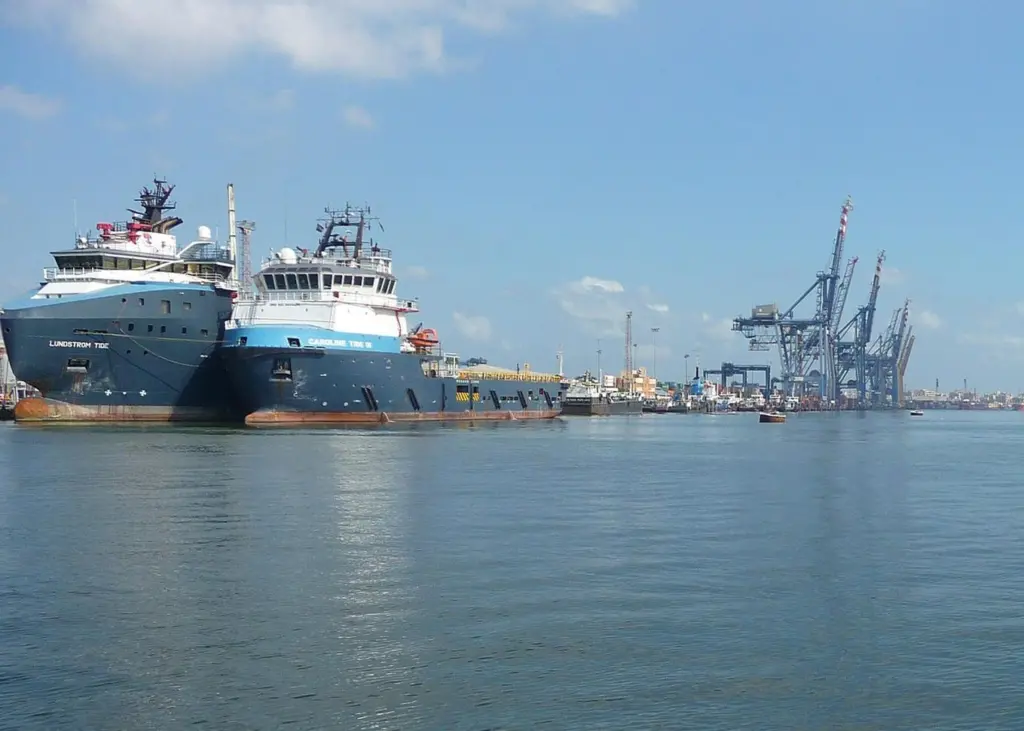
While substantial in length, the North Africa coast line has only a few major container ports with Egypt taking the lion’s share of volumes.
Container throughput at ports in Egypt has grown by an average of 7.6% per annum over the past 10 years, rising from 3.6m teu in 2005 to more than 7m teu by the end of 2014. The country was largely unaffected by the global financial crisis of 2009 and while traffic dropped in 2012 due to political and social unrest, volumes rebounded strongly in 2014 and surpassed the decade-high 2010 total.
In terms of share of the total market, East Port Said and the Alexandria/El Dekhelia complex currently handle the most container traffic. There has been a decline at Damietta and West Port Said, in particular, although a large part of this trend has been due to the shift of transhipment to the East Port Said facilities.
This summary defines the market in Egypt because the country’s ports serve both gateway and transhipment markets. Since 2005 the split has been generally consistent at just over 40% of the total market being import-export demand and transhipment accounting for around 60% of the total Egyptian port market activity.
Between 2005 and 2014, East Port Said, Damietta and West Port Said saw a much higher proportion of transhipment boxes, whereas El Sokhna and Alexandria/El Dekhelia moved more import-export units. While this simple assessment does not take into account actual volumes of containers, it does allow further conclusions to be noted. For example, Egyptian hub ports are seeing a fall in transhipment incidence, most notably at Damietta where the 2005 total of almost 90% was down to 70% by 2014. Likewise, at East Port Said transhipment containers totalled 100% in 2005 but by 2014 the share was just over 85%. A similar trend can be noted for West Port Said, although volumes are considerably lower. Consequently for each of these ports it is clear that import-export containers are becoming a larger proportion of overall activity.
Hinterland numbers
Looking at the gateway container market in Egypt the ports serve a large national population of around 85.3m inhabitants. The entry/exit locations for cargo are basically divided into three major port complexes with the facilities generally serving their own hinterlands: Alexandria/El Dekheila – well-placed for the Alexandria hinterland; Port Said/Damietta – serves the cities around the Suez Canal and the Nile River area; and El Sokhna – a good location for southern Egypt and mainly Cairo. This means that the competitive overlap is somewhat limited, although the ability to serve the large Cairo market is a crucial factor influencing container port import-export demand.
The Cairo metro area has a population of around 19.4m people, with the immediate city itself contributing an estimated 9.1m individuals. Other notable cities include the port-city of Alexandria with 3.8m people, Al Jizah/Giza to the south-west of Cairo (and part of the Cairo metropolitan area) consisting of 2.4m inhabitants and the city of Port Said with over 0.5m people. These are all large-scale populations with consumption demand being met by the key ports.
The hinterland connectivity of any port is a key factor in its competitiveness and in Egypt the position is no different, with as much as 98% of all cargo moving between ports and hinterlands via road. There is a noted government initiative that aims to see the use of river transportation and the rail network move up to 20% of cargo but the exact timescales are unknown at present and it is likely that there will actually be little change to the existing status quo.
While Egyptian ports compete against each other for import-export demand, the competitive position is somewhat different for transhipment activity for the East Mediterranean region. This means that there is greater competition for cargo but does bring scope for high volumes of containers to be handled.
Ports wishing to serve this wider region are competing with large-scale terminals in Greece, Turkey and Cyprus. So, for East Port Said and Damietta the key criteria is the same as for all other regional hub facilities and includes such major factors as: close proximity to East-West sailing routes; infrastructure and equipment to serve larger ships, offering efficient performance; good feeder network; and competitive tariff.
Close call
Proximity is a major advantage for hub ports in Egypt. With Port Said and Damietta both located very close to the Mediterranean Sea entrance to the Suez Canal, these facilities offer excellent, and in the case of Port Said in particular, immediate access for major shipping lines that utilise this transit waterway from Asia and the Middle East/Indian Sub-Continent areas.
Of course, for Egypt’s ports wishing to serve the East Mediterranean region it is also necessary to be able to offer good water depth, terminal capacity and a level of service that matches the excellent geographic location. Only offering a combination of all of these factors will allow the country’s hub ports be able to effectively compete with other terminals looking to meet regional container transhipment demands.
Capacity is currently an issue at some ports in Egypt, with existing facilities at Alexandria/El Dekheila operating above their confirmed capacity. As a result, the timing of the reported, but unconfirmed B100 Terminal – which could add up to 2m teu per annum – is critical. However, there are other noted investment plans, including the new El Sokhna Container terminal which will add 0.55m teu per annum and the 2nd Container Terminal at Port Said East, which will eventually provide an additional 2.50m teu per annum.
With economic growth projections from the IMF of at least 4% for the majority of the current decade, the local import-export markets will continue to grow in Egypt. However, if the country’s existing hub ports, notably Port Said East, continue to offer suitable facilities, then transhipment will also remain a viable option in the country and will drive the crucial need for more port capacity in this part of North Africa.
Ian Chadney is principal port consultant for Ocean Shipping Consultants, part of Royal HaskoningDHV.
Taking on Mediterranean transhipment traffic
Tanger-Med is the other major container facility on the North African coast, albeit that it is competing in an entirely different market to the hub port facilities in Egypt.
This facility serves the West Mediterranean transhipment market, meaning that the port is primarily targeting the same transhipment traffic as Algeciras and to a lesser extent the Spanish ports of Malaga, Barcelona and Valencia. These latter two facilities are primarily import-export ports that also handle some transhipment traffic in the West Mediterranean area.
Tanger Med benefits from a very good location on the major East-West shipping routes. Despite only commencing operations in July 2007, Tanger-Med has seen its volumes ramp-up quickly and in 2014 the port surpassed the 3m teu barrier for the first time. In fact, the growth has been strong in recent years, rising from just under 1.9m teu in 2012 and 2.6m teu for 2013.
At Tanger-Med 1 the APM Terminals-led consortium brings calls from Maersk Line, among others, while Tanger-Med 2 includes Eurogate/Contship Italia and CMA CGM. The concession holders at the port have been highly important to the development of this port in bringing cargo and operating capabilities, according to regional economist, Dr Emanuele D’Agostino.
He notes: “Shareholders of Tanger Med are leading global terminal operators and shipping lines. The first guarantee quality of standards and efficiency, while the latter, in a very volatile segment as the transhipment is, are very important to guarantee a core of volumes to reach the break-even of the balance sheet.”
National ports company, Marsa Maroc will be the first terminal in the second development area and will provides a further 2.2m teu capacity per annum. When fully built-out, the entire Tanger Med complex is expected to offer 8m teu per annum.
With good-quality facilities, deep water and a well-established customer base, the port will continue to be a viable hub port option in North Africa, serving the West Mediterranean region.
Related Articles
 EXPANSION & DEVELOPMENT
 CONTAINER & CARGO HANDLING
 EQUIPMENT