![PortStrategy[GreenPort]](https://www.portstrategy.com/wp-content/uploads/2026/09/PortStrategyGreenPort.svg)


Domestic attraction
Transnet needs to be more proactive and less reactive to overcome infrastructure issues. Stevie Knight reports
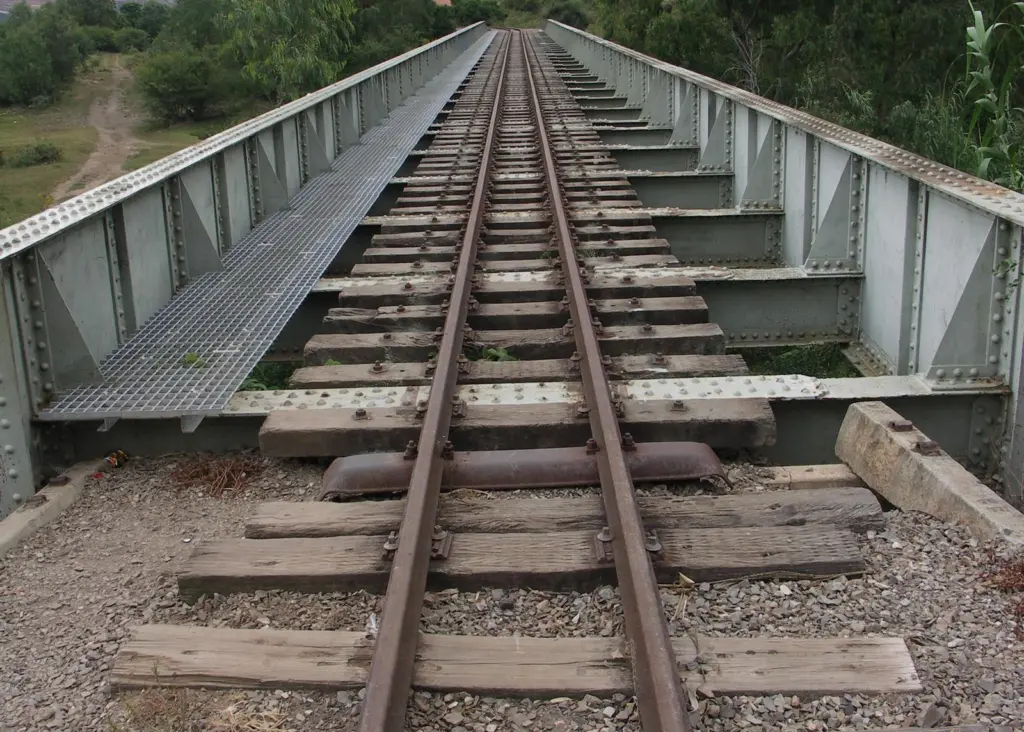
South African ports, after years of relative physical and cultural isolation, are now being faced with the reality of a shrinking world and a change they have, until now, been avoiding.
The whole of Africa is becoming increasingly competitive, “and more about domestic markets”, according to Paul Welling of Trelleborg Marine Systems.
Certainly, while South African ports could be sitting on a wealth of potential it will only be realised if the inward links into the new transport axes are sorted out, such as Africa’s developing North-South Corridor which runs from Durban up into the copper belt of the Congo and Zambia.
The South African government has – a little belatedly – responded to the challenge by putting a huge amount of money into infrastructure: this spring saw President Jacob Zuma’s State of the Nation address pledging a total of Rnd 300bn ($39.1bn) toward South Africa’s port, rail and pipeline projects through Transnet, the state-owned logistics group.
Its port arm, Transnet National Port Authority, says that around 71% of its Rnd33bn ($4.3bn) share will be focused on expansion projects and creating capacity to meet projected demand.
Mr Welling explains that port facilities are taking on a big step change, going from “a relatively higher African standard to an international standard of operation”.
Infrastructure challenges
However, history points to a series of issues. “South Africa’s hinterland network has been mostly ineffective, rail underutilised, road over-utilised,” says Mitchell Brooke of the Citrus Growers Association of Southern Africa. “Congestion has been severe, continually stressing the network,” he adds, pointing out that CGA suffered with only having a two day stack window, which combined with the berthing difficulties on the marine side, meant fruit export companies had to pre-pack containers with perishable fruit and store them before being able to deliver them to the quay.
This added a huge chunk – around 10% or 15% – on to costs. Further, while other problems outside the port’s remit also impact the total logistics costs – for example higher diesel and vessel bunker rates – Mr Brooke points out there could be quite a bit that the port could do to mitigate the effects including raising its efficiency, so ships and carriers aren’t hanging around burning fuel. “It’s down to port level to look at problems holistically and make additional provisions,” he says.
In part, this cost issue was simply down to lack of competition says Mr Brooke: the South African ports have traditionally been really very expensive in comparison to the rest of the world. “Since the ports are owned by the state, the authorities just declare the tariff and because there’s no alternative they had had a captive market,” but he adds, “however, we hope to see a change to this situation quite soon”.
Mr Welling explains: “Transnet is becoming aware that it has to become more proactive: in the past it may have thought ‘since we’ve got the best infrastructure, people will automatically come to us’.” He points out that the rising box ship size has polarised the market, with those that can handle the bigger ships automatically making more of their market ability – which has meant more challenges from places that were traditionally just handling their own domestic cargo. “Although Transnet is certainly forming a hub, you now have to look at places further afield on both sides of the coast as possible competition, like Tema and Takoradi in Ghana, Lekki in Nigeria, Dar es Salaam in Tanzania and Kenya’s Mombasa port.”
He adds: “The ones that will win are the ones that will sort out the quay to interior connections… and if you are looking at an equatorial corridor, you have to ask if Transnet is best located to take advantage of it – I don’t necessarily think so.”
Cash commitment
Further, all this development doesn’t come free. Apparently Transnet wants to fund the greater part, around 70% from operational cashflow, the organisation’s acting chief financial officer Anoj Singh told the South African parliament.
But there is another side to these historical issues: pricing. Cargo dues and terminal handling charges account for more than 50% of total port costs in South Africa, a far greater slice than others take. According to TNPA, cargo dues are charged to recover port infrastructure costs – arguably this should be borne by the ports themselves as they are the ones that benefit from an increase in turnover. It’s also not necessarily a transparent or equitable structure: for example, recent tariff rebates going to sectors where they need to see more activity – a Rnd1bn first come, first served discount program aimed at full containers and new vehicles – are being paid for by an overall tariff increase of 2.76%.
Mr Singh also told parliament that TNPA had taken on the needed operational efficiencies to secure sufficient volume but added that ensuring revenue growth would require a “robust tariff methodology” and he also mentioned “take or pay” contracts.
The implications are, at present, a little unclear. The industry perception, whether TNPA likes it or not, is that charges are already unreasonably high. So there is still the question, will this budget help to reduce cargo costs or will there be even higher handling and cargo dues? It remains to be seen whether the ‘international standard’ will be reflected in the pricing structure too.
Despite the huge budget, Mr Singh told parliament that “it is not enough. Definitely, it is not enough.” There are inland hub and terminal expansions to account for and the first phase alone of the second Durban port will cost Rnd50bn.
Whether or not this means Transnet eventually considers private sector participation is an interesting point. It seems that while the government knows that it has to deliver results, and quickly, “I think there are just too many political issues involved for Transnet to consider, at least at the moment, bringing in a global operator” says Edwin Dekker of Seaport Group. To start with, a private player would inevitably lower the charges, leaving other SA ports high and – probably – dry.
However, he adds, “Never say ‘never’… you can’t say it won’t eventually happen.”
Related Articles
 EXPANSION & DEVELOPMENT
 CONTAINER & CARGO HANDLING
 EQUIPMENT