![PortStrategy[GreenPort]](https://www.portstrategy.com/wp-content/uploads/2026/09/PortStrategyGreenPort.svg)



LUANDA DECISION RAISES FUNDAMENTAL QUESTIONS
The award of the Luanda container terminal concession has not been without controversy, raising local and broad-based issues regarding the management and operation of container terminals by groups with strong shipping line links. Mike Munday reports
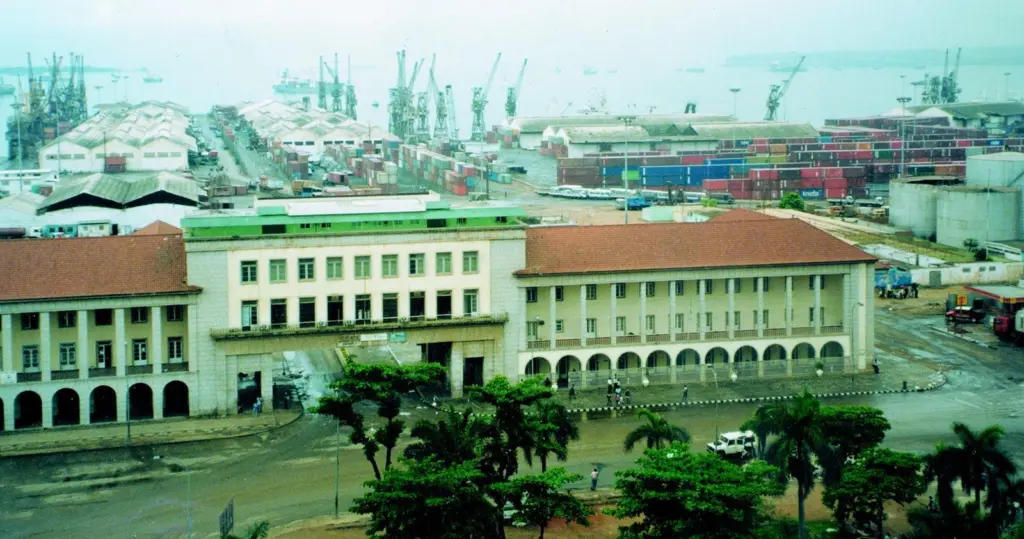
Just before Christmas last year, in that slow news period when so many controversial items are buried, the news slipped out that the consortium Gestao de Fundos and A.P. Moller – Maersk Group, had been selected to operate, manage and develop the new container terminal in Luanda, Angola, under a 20-year concession.
On the surface, this appears to be a step forward for Angola, namely: the securing of much needed overseas foreign investment and expertise in order to raise the efficiency of its gateway container terminal operation in Luanda, which, in turn, should facilitate the development of overseas trade overall.
The fact of the matter is, however, that a mixture of amazement and stoic acceptance has greeted the news of this award; and across the board this has raised some fundamental questions.
The World Bank was not involved in the Luanda concessioning process and while the Bank is not always seen as a finite solution in such matters, in an environment such as Luanda/Angola it can exercise a useful guiding hand when it comes to ensuring a relatively straightforward concessioning process where the words “clean” and “transparent” have a particular relevance.
Hence, with the advantage of hindsight – and in the light of the misgivings about the result that have surfaced since – it does appear to be a matter of some regret that the World Bank was not involved.
Clearly, a number of the other parties involved in the final part of the bidding process are somewhat puzzled by the fact that according to the criteria by which bids are rated they finished higher up the pecking order than the Gestao de Fundos/Maersk consortium and still failed to win the concession. Or, conversely, they are just simply perplexed at how the Gestao de Fundos/Maersk consortium managed to win!
Key elements of the bidding criteria included factors such as the fixed rent for the terminal facility, the variable rent/royalty offered, the proposed tariff and the programme for investment.
The various bids assessed in this context and taking into account other relevant factors saw the Gestao de Fundos/Maersk consortium rated third overall out of the five bidders that participated and yet it still managed to secure the concession!
Why? The short answer is no one seems to know or they are not willing to voice their thoughts publicly.
Of course, it wouldn’t be the first time that a set government criteria had been over-ridden but this is usually the case when it is clear that there is a major advantage in doing so. In this instance, however, it is hard to discern what such an advantage might be or, frankly speaking, whether there is one at all. Nothing leaps “off the page” so to speak to suggest that there were extenuating circumstances that may lead to such an over-ride.
To take one “sound bite” of this in relation to the bid criteria, Gestao de Fundos/Maersk offered an investment figure of near $55m in their bid, one of the other bidders offered $63.7m and another $82m!
Investment is required to extend an existing quay and to upgrade container handling equipment, install new I.T. systems and so on. Last year, the terminal handled a near 200,000TEUs and it is becoming a matter of increasing urgency to provide both new capacity and effective container handling systems and procedures.
ANOTHER DIMENSION Another dimension of the appointment of a group of the type of Gestao de Fundos and A.P. Moller, is the linkage within the latter group between Maersk and APM Terminals, Maersk representing the group’s liner shipping interests and APM Terminals its terminal operating division. In effect, it raises the same concerns raised recently when Maersk APM Terminals emerged as the front runner with its partner, the Bollore Delmas Group, for the Douala, Cameroon container terminal concession – i. e. is it beneficial to have a terminal operating group with strong connections to a liner shipping group running the exclusive gateway terminal to a specific country? ( seePort Strategy, July/August 2003, p.3 )Shipping lines involved in this equation argue that it shouldn’t make any difference at all and that their affiliated terminal operating divisions can operate at arms length in an independent way.
Other parties, however, including various liner operators suggest that to place a shipping line linked terminal operating body in charge of such a concession can lead to an effective monopoly in shipping trades linked to that country and specifically in those trades where the partner shipping line or lines associated with the terminal operator have a strong presence.
As the theory goes, there is basically scope within such an arrangement for the terminal operator to cross subsidise the shipping operation in turn allowing the sister shipping operation to enlarge its market share and step-by-step gain a pivotal position in the trade concerned.
Such a result would, of course, ultimately not serve any country concerned. It would reduce competition in the liner trades and almost certainly lead to higher freight rates, which can impair a country’s export ability and raise the costs of import activities. Further, at a pure terminal operating level there are questions pertaining to whether different liner operators, especially ones competing with the group’s own shipping affiliates, would be handled fairly?
Would the affiliated shipping line(s) be given unfair priority when it comes to basic matters such as berthing rights? What would happen if the partner line arrived at the berth at the same time as an independent line? Would the latter be given priority on the basis of being a full-blooded independent customer (as should happen) or would it get shuffled back in the berthing queue?
QUESTIONS UNANSWERED Many questions remain unanswered concerning shipping line linked management of common user container terminals versus that undertaken by independent container terminal operators. It seems some of the answers are set to be “worked through” in the demanding operational climate of the African nations and it will certainly be interesting to see how things pan out.
It will be particularly interesting to compare and contrast, for example, how these latest African container terminal concessions, with links to shipping interests, fare against say, the proven success record of the Dar es Salaam container terminal, the first fully fledged container terminal privatisation of its kind in Africa, awarded to an independent container terminal operator.
“Watch this space” is clearly an appropriate phrase to apply to this latest round of African container terminal concessions.
Related Articles
 EXPANSION & DEVELOPMENT
 CONTAINER & CARGO HANDLING
 EQUIPMENT