![PortStrategy[GreenPort]](https://www.portstrategy.com/wp-content/uploads/2026/09/PortStrategyGreenPort.svg)


North Africa chips away at its wishlist
The region is making inroads in overcoming infrastructure and investment issues, albeit progress remains slow. Felicity Landon reports
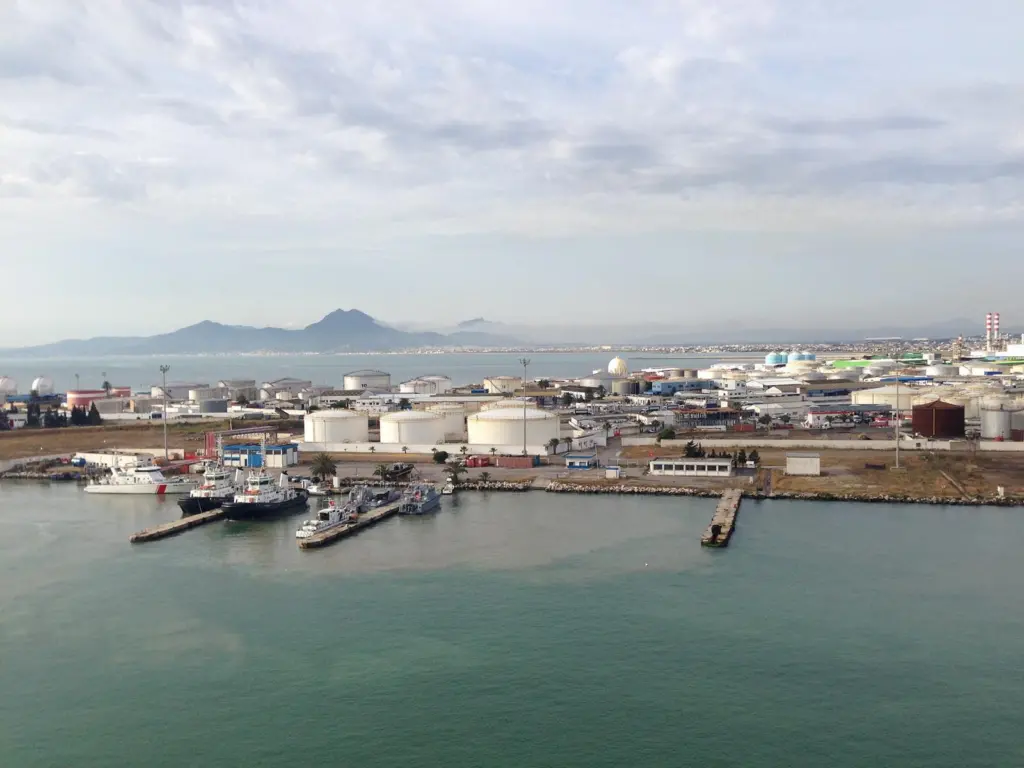
There are real developments and there are planned developments. And then there are the ‘hoped for’ developments. Against a background of political turmoil and economic uncertainty, and in a region where there are stark contrasts in the fortunes of neighbouring countries, it can be hard to tell which is which.
This is North Africa – ranging from Morocco, with its highly sophisticated trade procedures based on the advanced electronic exchange of data provided by PortNet, to Libya, struggling to emerge from conflict but said to be attracting attention from some key investors with an appetite for risk.
According to Quantum Global’s African Investment Index 2018, the North African countries of Morocco, Egypt and Algeria are the most attractive economies for investments on the continent, taking first, second and third positions respectively. “International investors are looking at a wide range of sectors for investments, including energy, infrastructure, tourism and ICT, among others,” says Quantum Global. The index is based on indicators such as the share of domestic investment in GDP, the share of Africa’s total foreign direct investment net inflow and forecast gross domestic product growth rates.
Libyan potential
But there is also focus on Libya which, according to the International Monetary Fund, has the fastest growing GDP in the world – its economic growth being based on the reestablishment of its oil industry, after years of civil war.
The Libyan economy is hugely reliant on crude oil production, although experts say that the country has not yet returned to pre-war levels.
“Libya has a small population of around 6m but it has oil and minerals,” says Dean Davison, port and shipping consultant with Clipper Maritime. “It isn’t necessarily the security issues that put people off investing but more the question of ‘is there a market?’. And the answer is – yes, there is a market.
“As things start to settle down in Libya, there has to be massive infrastructure investment after years of neglect and civil war. That in itself will generate cargo demand – and not just containers but also cement, steel, other bulks and general cargo.”
Demand for consumer durables will rise and supply will likely be from China, he points out. “And there is already a good trade route, Asia-Mediterranean direct for containers, and Libya would not be a big deviation. Because only 6m people are there, perhaps it isn’t ever going to be massive – at present Libya is handling 400,000 teu-500,000 teu in very low-quality ports. There is a need for better ports.”
However, there has also been talk of a possible new transhipment hub in Libya, which could deliver more choice on the south coast of the Mediterranean to balance that of the southern European hubs on the north coast.
Transhipment options
At present, the major transhipment hub in the region is Morocco’s Tanger Med, where APM Terminals and Eurogate both operate. The port recorded a 12% increase in 2017 total volumes to about 3.3m teu last year, according to Clipper, with volumes supported by both Maersk Line and CMA CGM, which together offer nine weekly services. The terminals are able to cater for the largest ships in (and entering) service, points out Clipper. And expansion is well under way.
In Algeria, DP World operates the Port of Algiers in a joint venture with the Algiers Port Authority, and is also developing operations at Djen Djen – which, it says, has the potential to handle the new generation mega-vessels and become a major transhipment hub for the region.
Originally built to handle steel traffic for the Bellara region, Djen Djen has 17 metres draft and offers easy access and minimal deviation, says DP World.
Meanwhile, plans for a new $3.5bn port and industrial zone at El Hamdania, 70 kilometres west of Algiers, appear to still be on course. Granted $900m of funding by the African Development Bank, the plans involve a joint development with a 51% stake to be held by the Algerian Port Authority and 49% by China Harbour Engineering Company and China State Construction Engineering Corporation. To be developed in phases, El Hamdania is slated to provide up to 6.3m teu capacity a year over 23 berths, once fully developed.
Tunisia’s investment need
In stark contrast to the ambitions and achievements of hubs such as Tanger Med, some figures from Tunisia stand out. In March this year, Khaled Ben Gharbia, president of CONECT International’s transport trade association, said the problems of transport in Tunisia were huge, with the cost of logistics standing at 20%, “which is a very high load compared to international standards, set at 10%”.
For maritime transport, the problem is in the functioning of the Tunisian Company of Stevedoring and Port Handling (STAM), he said, particularly as it has become more specialised in passenger transport and “no longer plays its role in the transport of cereals and hydrocarbons, in the absence of innovation in its fleet”.
He called for more strategic international partnerships, highlighting the success of Morocco and its specialised logistics in agricultural business.
At the same meeting held in Tunis, one agricultural exporter described as a “catastrophe” vandalism problems at the port of Radés, which handles up to 80% of Tunisia’s container and semi-trailer traffic.
Operations at Radés allow the entry and exit of only three containers an hour, which compares with 30 per hour before the revolution, according to Foued Gueddich, who said he was forced to send his containers to the ports of Sfax, Sousse or Bizerte, with significant additional costs, in order to meet his commitments to overseas clients.
The Tunisian government recently announced a roadmap to revive the economy overall. Its proposals include seeking strategic partners for public-private partnerships, and full privatisation for non-strategic enterprises. A good deal of the focus is on structural reforms, but the document also mentions increasing exports and diversifying the economic fabric, and improving the business climate. The government said a total of 19 projects had been identified and could be carried out within a PPP framework or jointly by companies. Emphasis will also be placed on improving the attractiveness and, therefore, global positioning of the business climate, said the paper.
Infrastructure issues
The global agency Waterfront has 38 offices across North and West Africa. Chief executive Terry Gidlow says: “In general, Africa is rich in raw materials for export to other countries, while inbound it is foodstuffs, project material, construction materials and semi and fully processed goods coming in,” he says. “Most of these commodities tend to come out of the hinterland – and one of the biggest challenges is under-investment in infrastructure to get them to the port.
“One study estimated that $50bn needs to be invested in rail in Africa over the coming years, to provide at least another 4,000 kilometres of additional rail infrastructure to cope with volumes moving out of Africa. In most places – and North Africa is no exception – the issue is the lack of infrastructure to get cargoes to the ports, and then the lack of investment in the ports themselves. That creates significant inefficiencies for various parties in the supply chain.
“Likewise, with cargo coming in, lack of investment and sophistication leads to congestion and problems with distribution.”
The problems, he says, are pretty similar across commodities and borders, with hydrocarbon exports from North Africa being a case in point.
“Lack of investment and political turmoil both have a lot of impact – however, this does create a lot of opportunities. The more difficult an environment is to operate in, the more opportunity for us to go and help clients find solutions. The more tangled something is, the more opportunity to go through and untangle.
“Yes, it is fraught with risk and challenges and, given the political risk, getting people to make long-term investments has traditionally been pretty challenging. But where there is more than a glimmer of hope of real investment is the One Belt One Road from China – that will be one of the biggest game-changers.”
Project lottery
As to current investments, Mr Gidlow says: “You could list all the different projects considered to be at various stages in the pipeline, look back at my presentations over the past ten to 15 years, and find that the countries are the same, the projects are often the same, but the names and sources of funding seem to change with the seasons.
“How many actually get kicked off and how many are actually completed is a very different story altogether. Investors are often worried about what is going to happen politically – are they going to put their money into something that will then be nationalised? The risk appetite China has is very different – China has the political will and the balance sheet and thinking that means they can look at very long-term returns.”
One important development this year has been the signing of the new African Continental Free Trade Area (AfCFTA) by 44 of the 55 African Union member states. The creation of this massive free trade area is designed to improve regional integration and boost economic growth across the continent.
The agreement commits countries to removing tariffs on 90% of goods, with 10% of ‘sensitive items’ to be phased in later. Leaders hope it will boost intra-African trade, which is currently only 10% of all trade across the continent.
The African Union wants to see the agreement come into force before the end of this year. The free trade area could establish a market of over 1.2bn people, with combined gross product of more than $3trn, and increase intra-African trade by 52% by 2022, while paving the way for the establishment of a Customs union within four years.
A SENSE OF COMMUNITY IN MOROCCO
PortNet, Morocco’s highly advanced port community system, has continued to expand its operations with the launch of new Single Window services at the Port of Agadir and new paperless services at Nador.
The PortNet platform was first deployed at Casablanca in 2011 by the National Ports Agency (ANP). It has since been extended to all commercial ports managed by the ANP and to other foreign trade processes since 2012.
As a result, the Single Window system now has nearly 31,000 customers and offers its paperless services to a community of more than 35,540 users throughout Morocco, says PortNet general manager Jalal Benhayoun.
“Agadir is the natural outlet for agribusiness activities in the plain of Souss-Massa. Like the other ports under the supervision of the ANP, it already benefits from the paperless management of ship calls since 2012, as well as from other services via the PortNet platform,” he says. Paperless export procedures are now in place, including electronic processes relating to the National Food Safety Authority, and now PortNet is expanding its services to cover import processes at Agadir.
In a new development supported by the World Bank, PortNet is launching a new ‘Trade Portal’.
To be integrated into the Single Window, this will not only provide national and international operators with the information they need to carry out import/export operations but also provide an intelligent business resource centre which, based on all the data on the platform, will optimise users’ choices and decisions, says Mr Benhayoun.
“The Trade Portal will allow users to benefit from the experiences of other users of the Single Window, without compromising the confidential nature of personal data. In particular, the Trade Portal will allow exporting and importing companies to run cost simulators, by destination and product, based on statistical evidence from other users’ experiences and data they have provided to the system. For example, it can provide information on the cost of an imported product, or on the competitiveness of an export product, to support the decision-making process regarding the choice of a market or a supplier.”
TANGER MED KEEPS ITS CROWN
The Moroccan transhipment hub of Tanger Med is already Africa’s top performing port, and volumes increased by 12% last year. The port’s container volumes are handled by terminals operated by APMT and Eurogate. A major expansion will provide two more terminals, to be operated by APMT and Marsa Maroc.
Three of the world’s largest cranes have now been installed at the new APMT facility, which is due to open in 2019. Each weighing 2,500 tons and measuring 144 metres in height, they can serve ships up to 22,000 teu or more, says APMT. The first 14 Kalmar hybrid shuttle carriers have also recently arrived on site.
“It’s a great day for APM Terminals,” said Dennis Lenthe Olesen, general manager of APM Terminals Medport Tangier, speaking at the installation ceremony. “These cranes use digital technology to ensure the most efficiency during their movements. This will help us to deliver increased productivity throughout the process, from lifting a container box off the ship until it is delivered to its stack in the yard, and vice versa.”
APM Terminals Medport Tangier has invested $800m into its new terminal. Maersk Line and its partners hope to improve the port’s performance and attract new vessels by creating new routing options.
Related Articles
 EXPANSION & DEVELOPMENT
 CONTAINER & CARGO HANDLING
 EQUIPMENT