![PortStrategy[GreenPort]](https://www.portstrategy.com/wp-content/uploads/2026/09/PortStrategyGreenPort.svg)



NORTH CORRIDOR CONUNDRUM
The Northern Corridor extending from the port of Mombasa to key landlocked Africancountries is seeing ongoing improvements but the big issue of further extension of theStandard Gauge Railway remains stalled. Mike Mundy reports.
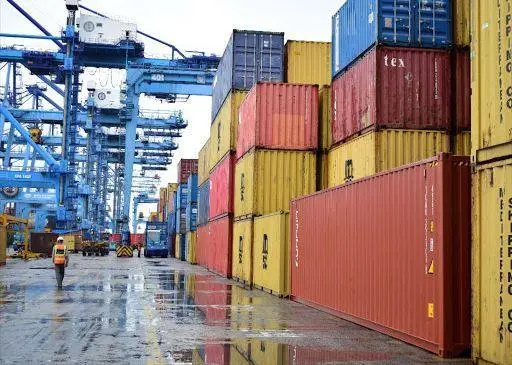
In April the port of Mombasa received a major boost with Uganda reaffirming its commitment to using the Northern Corridor and playing its part in enhancing its infrastructure. An alternative option could have been the Central Corridor which links to Dar es Salaam Port, Tanzania but Uganda chose to follow past practice and stick with the Northern Corridor which step by step has seen improvements made in the three critical areas – the port gateway of Mombasa, hard infrastructure along the corridor and soft infrastructure, documentation border controls and so on.
Uganda currently accounts for 83.2 per cent of transit cargo moving via the port of Mombasa. South Sudan is ranked second with the much lower market share of 9.9 per cent while DR Congo, Tanzania and Rwanda account for 7.2 per cent, 3.2 per cent and 2.4 per cent respectively.
The importance of Uganda to Northern Corridor traffic and the port of Mombasa in particular is plain to see. In terms of volume, over the last five years Ugandan cargo at the port of Mombasa has registered a compound average growth rate of 4.9 per cent from 6.35 million tonnes in 2016 to 7.70 million tonnes in 2020. The percentage share of the port of Mombasa’s total volume occupied by Ugandan cargo runs out as an average share of 23.7 per cent.
ACTION AND ASPIRATIONS
Despite the unique set of investment and operating circumstances presented by the COVID-19 Pandemic work on the upgrading of the Northern Corridor has continued at a steady pace. Examples of recent developments are highlighted in Table 1 and key future works and challenges are discussed in more detail below.
As might be expected, planned development work in conjunction with the Northern Corridor is multi-faceted as has been very much the case to-date. Phase two of the development of Mombasa’s second container terminal is underway and is expected to be completed towards the end of 2021 adding another 450,000TEU of capacity.
By 2023 the port of Mombasa is forecast to handle 1,732 million TEU, up from the current annual volume of around 1.4 million TEU. This will raise overall capacity at the new terminal to around one million TEU. The port has managed to weather the COVID-19 Pandemic comparatively well registering just a one per cent decline in throughput in 2020 compared to 2019, accounting for 34 million tonnes.
Container traffic also registered a decline – of five percent – totalling 1,359,579TEU. Interestingly, however, transit cargo maintained a growth position in 2020, up by 2.2 per cent at 10.2 million tonnes against 10 million tonnes recorded in 2019. As happened previously with the opening of Mombasa’s new container terminal, the Phase two capacity addition is expected to act as a catalyst to traffic along the Northern Corridor.
RAIL REDEMPTION
A big challenge going forward for the Northern Corridor is the completion of the SGR all the way to Kampala, Uganda. This is a key issue and is one that presents some challenges especially in the arena of financing.
At present, as stated in Table 1, the SGR stops some distance short of the border with Uganda with Kenya reportedly being turned down by China for a new loan to complete the railway to the border. Issues are now also increasingly coming to the fore regarding repayment of the loans made by China to Kenya in conjunction with the SGR. These loans now top US$4.7 billion after the line was extended from Nairobi 75 miles to Naivasha in the Rift Valley.
The operating position is also not good. A report presented to the Kenyan parliament in 2020 notes that the railway recorded a loss of USD 200 million over three years. During the period revenues of US$230.7 were generated against operational costs of US$430.5 million. This has led to calls for Kenya to follow in Ethiopia’s footsteps and renegotiate its railway loans.
There have also been calls for Kenya to renegotiate the SGR operation agreement which was awarded to the Africa Star Railway Operation Company, a subsidiary of the China Road and Bridge Corporation which constructed the railway. This looks like it will happen with the Kenyan government giving notice in March this year that it intends to transfer control of operations on the country’s standard gauge railway to Kenya Railway Corp from May 2022.
The bigger issue of renegotiating the Chinese loans, however, remains unresolved as the situation in Kenya has worsened with the impact of COVID-19. As a result of this, the International Monetary Fund has raised the country’s risk of debt distress to “high” from “moderate.” COVID-19, says the IMF, has “exacerbated existing vulnerabilities”.
Meanwhile there has been no tangible progress with SGR development in Uganda. Recent comments made by the Ugandan Government suggest negotiations are ongoing against a background of growing concern about the potential pitfalls associated with the inability to pay back Chinese loans, and particularly the seizure of national assets.
Clearly, while the SGR offers significant potential to streamline and enhance the operations of the Northern Corridor there remains a considerable body of work to do first to get it to achieve financial viability over the track already constructed and secondly to create a solid basis for its further extension all the way to Kampala.
No solutions are in sight yet emphasising the continuing importance of maintaining diverse works of the type featured in Table 1 on the road corridor which promises to remain the main transport artery for some time yet.
Recent Northern Corridor Upgrades
Phase One of Mombasa’s second container terminal with a capacity of 550,000 TEU was completed in September 2016. Second phase development is now underway.
Prior to these developments a series of ‘quick wins’ which included the expansion of port gate 18/20 and upgrading of Yard 5 to boost available capacity.
Road & Rail Developments
Road
In June 2018 a 10km stretch of the new port access road opened, developed at cost of US$120 million with financing from the Japanese agency JICA. The road has delivered the major benefit of taking traffic away from the city of Mombasa.
Mombasa-Nairobi highway – notable project work has included two contracts awarded to two different Chinese firms for the 41.7km MombasaMariakani and 21km Athi River-Machakos turn off road sections involving rehabilitation and dualling of the two stretches of the highway.
The US construction and engineering firm Bechtel and Overseas Private Investment Corporation was also awarded a contract for work on a section of the Mombasa-Nairobi highway expansion project.
Other Mombasa – Nairobi road system improvements have also been actioned, with diverse sections, with work in this sector overall delivering significant improvements. Road freight charges from Mombasa to Nairobi have been declining from US$1,300 in 2011 to an average US$879 in 2016 and down to an average of US$650 and US$850 for a 20 foot and 40-foot container, respectively in 2020.
The installation of high-speed weigh-in-motion weighbridges and the harmonisation of vehicle load controls have played their part in reducing the cost of transporting cargo.
In 2017 The Northern Corridor Green Freight Strategy was launched to reduce vehicle emissions –particulate matter, black carbon, oxides of nitrogen and CO2 emissions – improve road safety, and improve vehicle fuel efficiency.
Rail
In 2018, cargo operations commenced on the new Standard Gauge Railway (SGR) running from Mombasa to Nairobi. Work also commenced at this time on extending the new SGR to cover 10 berths at the port of Mombasa Port.
The second phase development runs for 120 kilometres from Nairobi to the Rift Valley town of Naivasha. According to the Northern Corridor Infrastructure Projects protocol, the SGR is expected to link at least four countries: Uganda; Kenya, Rwanda and South Sudan. Key challenges remain in this area, however, with the full railway extension in Kenya still pending all the way to Malaba near the Ugandan border.
Currently, the track only extends to Naivasha, a town 75 miles northwest of Nairobi in the Rift Valley.
Border Posts
Since the enactment of the East African Community One-Stop-Border Posts Act 2016, a total of 17 stops have been established and are operational.
Eight of them are on the Northern Corridor routes. It now takes an average of three days to move cargo from Mombasa to Busia and Malaba borders compared with the previous 20 days.
Cargo to Burundi and DR Congo now takes less than a week and cases of theft have gone down by more than 90 per cent following the implementation of the Regional Cargo Tracking System (R-ECTS).
Related Articles
 EXPANSION & DEVELOPMENT
 CONTAINER & CARGO HANDLING
 EQUIPMENT