![PortStrategy[GreenPort]](https://www.portstrategy.com/wp-content/uploads/2026/09/PortStrategyGreenPort.svg)


Power of politics
North African ports have become a political playground, as Stevie Knight discovers
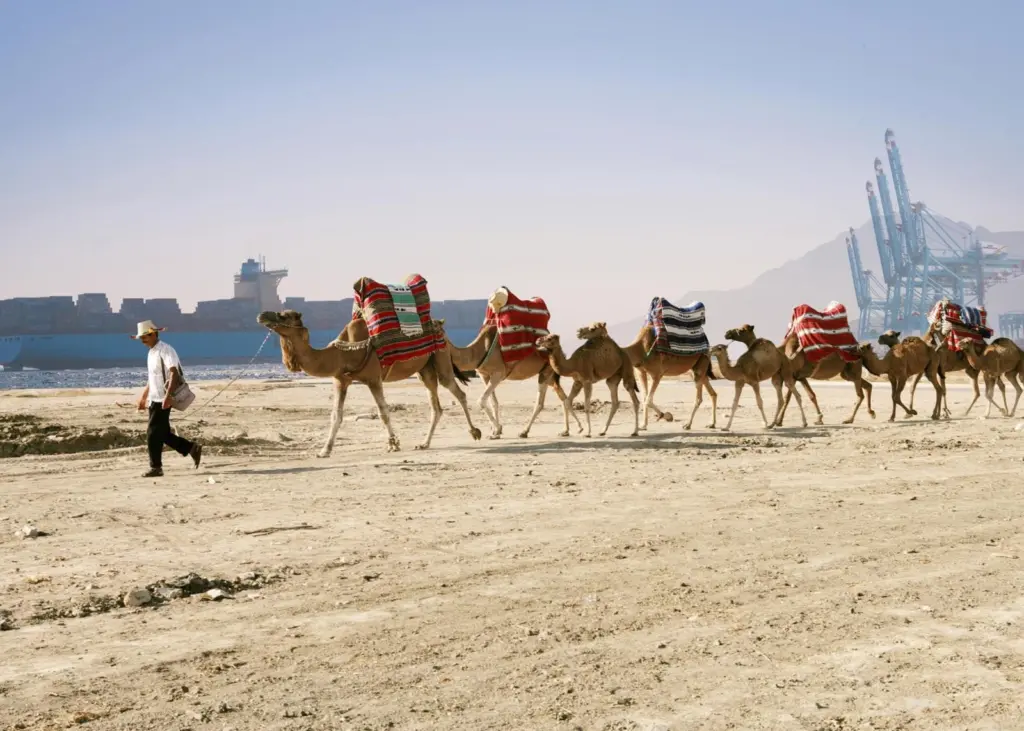
Port and shipping intrigue were at the heart of Moroccan life last summer, when the Brigade Nationale de la Police Judiciaire arrested Taoufik Ibrahimi on suspicion of trying to put a hole in TangerMed operations.
The BNPJ accused Mr Ibrahimi of conspiring to foment a series of strikes that caused lines to switch to Spanish rival Algeciras.
Others rule out intrigue saying that there were growing union and management tensions anyway, and Mr Ibrahimi’s arrest is due to a series of coincidences; a potentially lucrative (but failed) attempt to rescue the ferry company he helped privatise along with accounting irregularities and strikes coinciding with those at TangerMed are still not beyond the scope of mere chance and a bit of naivete.
But while ports briefly found a place in the centre of politics, politics has edged its way into ports on a much longer term basis. Janet Ching of lawyer Holman Fenwick Willan explains that in Egypt the unrest in 2011 caused a number of ports including Alexandria and Damietta to come to a standstill, with attendant backlogs and lengthy delays complicated by a shortage of both labour and fuel.
Head down
But it isn’t over yet. Firstly there is always the issue that parts of the North African region could flare up again without much notice. However, she adds that although a port might have a very good idea that trouble was brewing, “it might be reluctant to declare this, as to do so would effectively put a question mark over business”.
When ports close, it’s not just the main calls but also the feeder vessels which service the area that can be affected. Ms Ching points out that, in such circumstances, lines are best advised to share slots on each other’s vessels. “The ports themselves are often in a very good position to help match-make these deals, having specialised local knowledge and up to date information on which services are up and running where,” she says.
Of course if a port is doing its best in a crisis, it does gain a reputation for being helpful; very useful for when things calm down. But consolidation of cargo isn’t only for crisis situations; it’s a good tool for assisting lines when volumes dip, an all too common feature of modern times.
It should be noted that while some routes have effectively closed due to armed conflict, other ports have been affected by strikes. According to local news, Ain Sokhna lost out due to industrial action: Turkish reefer shipments were looking for an alternative route after battles made the Turkish-Syrian borders unsafe. The plan was to route via land to Ain Sokhna and then go by sea to the Saudi port of Duba. However, a full scale strike meant the cargo was moved to Saudi via neighbouring Jordan instead.
Robert Hambleton of Port Said’s Suez Canal Container Terminal in Egypt said that while SCCT has not experienced any labour unrest since last April, the latest round of industrial action in other Egyptian ports indicates the importance of working within the “politicised environment”. So, while these latest disruptions may not be directly caused by the earlier civil unrest he underlines the significance of being close to the workforce in “the new Egypt”.
He adds: “While we are sensitive to the background it’s important that we are clear about our focus which is to move cargo. Basic leadership has helped, along with patience and being open with our staff; discussing it whether it’s good or bad news.”
Mr Hambleton points to an example from the beginning of 2012 when the terminal’s volumes took a dive and some of the business went to its competitors, Istanbul and Malta. He suggests that one of the factors was an exodus of business in the face of further Egyptian troubles but he admits another was a dip in performance. “Transhipment is all about reliability, stability and productivity; if you can’t guarantee those, you are, maybe, second choice. If that.” Standing up and talking about it wasn’t easy but since April the performance at SCCT has been firm.
Interestingly, the politicised environment isn’t confined to one element. At Ain Sokhna 200 workers from DP World, six international shipping lines and various contractors and personnel staged a ‘counter protest’ against, they says, the strike’s threat to the port’s viability.
Global economy
But there’s more to the future than just the local political troubles. Robert Hambleton says that although SCCT saw a 3.2m teu throughput last year, he doesn’t expect the terminal to reach that this year. In fact, at time of writing, eight weekly main line calls to or from the Far East are expected to omit SCCT in November and December.
The reason? Volumes all round are sliding, China has just missed its first target for growth and the engine driving the world economy is looking like it’s losing a bit of traction.
“The cake is generally getting smaller,” says Mr Hambleton. “But, given around six months or so for lines to adjust to the demand changes and increased vessel supply, I think SCCT will win. This is either because the lines will consolidate their business in SCCT, or because we will have a greater share of the cake simply because of our location; if you go further west to other hubs in the centre of the Mediterranean, such as Malta or Gioia Tauro in Italy, fuel consumption and costs increase as cargo is fed back to the East Mediterranean destinations.
Further, whereas most think of SCCT as a transhipment terminal, “we ignore Egyptian cargo at our peril”, says Mr Hambleton, adding that while around 10% of 2011’s traffic was local, he expects that to reach 15% this year.
His point echoes Ms Ching’s. If lines are finding it difficult to fill ships they have the means to increase the loads with Egyptian domestic cargo: “We can assist by offering opportunities and helping things along,” he adds.
Another insight comes from Morocco, at the other end of the North Africa run. APM Terminals operation suffered what Hartmut Goeritz of APMT’s Tangermed facility calls “a perfect storm” of events.
First of all, TangerMed was hit badly by the previously mentioned strike action. “The worst thing was it coincided with the Daily Maersk offering which has to offer complete and utter reliability, so Maersk Line decided to play it tough and skip out of here, dropping all calls for three months.”
What was needed was to build up the sense of the operation’s dependability. So, we put a stake on our reliability with both incentives and an equal, mirroring set of penalties, hinging on things like turnaround times and efficiency, says Mr Goeritz. It was a smart idea; handling the two sets of demands and choices in parallel meant that the labour side could see exactly what was at stake from the operators side and vice versa.
“We spelled out what success or failure would mean. Further, while we have been working on a labour agreement with people like the National Union, the whole process has been strengthened by developing a social charter. It actually means accepting our social partners as real partners, not just giving lip service to the idea,” he says. “You can see the lines are thinking, ‘if these guys are so confident they can manage to take whatever comes up on the chin, we’ll go with them’.”
Mid-Med markets
When all’s said and done there is a dearth of movement, civil unrest or no, on the southern side of the mid Med market. Little is happening for Algeria. Syria is simply unsafe, and while Tunisia has a small port project on the cards, reconstruction is fragile and the ports will have to deepen to get the bigger ships in.
The Tunisian port authority Office de la Marine Marchande et des Ports (OMMP) has a couple of projects at Radès: the quay extension, redevelopment of the oil terminal and the port’s liquid bulks facility are either underway or out to tender, and it is exploring a possible concession agreement at the multibulk terminal. OMMP is also investigating the development of the port of Skhira and making Zarzis an economic hub, probably through public-private partnership.
However, it’s also had its labour upsets. Trade has suffered as a result of strikes on the part of Société Tunisienne d’Acconage et de Manutention operatives, with sluggish customs services and congestion in the port of Radès. Businesses still point to bureaucracy, berthing issues and unjustified delays in customs clearance.
Post troubles and with a new government in place, Benghazi port in Libya might also get its share of infrastructure budget. The port has been petitioning for new, bigger container berths aimed probably at both the domestic and the transhipment market, with the current central facilities turned over to leisure and tourism.
The problem is that reconstruction in these areas is still fragile and the ongoing European crisis could have a major impact on both Tunisia and Libya in the next year.
But according to Mr Goeritz: “While the mid Mediterranean strategy was spot on ten years ago, now you need both deep water and convenient connections, which limits North Africa’s options.”
Related Articles
 EXPANSION & DEVELOPMENT
 CONTAINER & CARGO HANDLING
 EQUIPMENT