![PortStrategy[GreenPort]](https://www.portstrategy.com/wp-content/uploads/2026/09/PortStrategyGreenPort.svg)


Running partners
Are South African being left behind in the drive for bigger and better ports, asks AJ Keyes
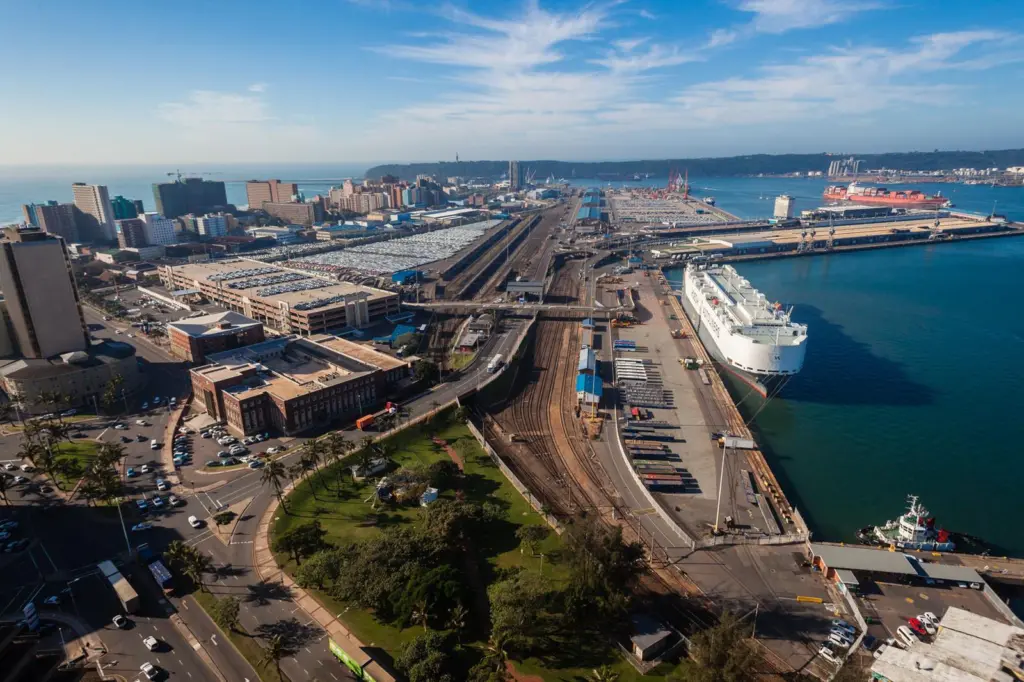
Speak to almost any container shipping line or terminal operator and the subject of tapping into the considerable potential of Africa will provoke strong acknowledgement and interest.
On a regional basis, North Africa has seen significant port developments, especially in serving the transhipment market, while there continues to be a number of large-scale projects involving the growing West African markets and the demand to serve landlocked countries via key East African ports remains on the agenda.
With an estimated population in 2013 of around 1.1bn people – the Sub-Sahara region alone expects to see continued year-on-year growth of around 5.5% per annum until 2020, according to the IMF World Economic Database – ports on the continent are vital to serve future trade demand.
To help cater to this growing population, there are a number of large-scale projects in both West Africa and East Africa.
The known container port projects either underway or due for initial phases of completion by the end of the current decade will add an estimated 8m teu to the region by 2020, substantially increasing the amount of capacity but also helping to raise the quality of infrastructure too.
APMT approval
This view was substantiated by APM Terminals’ chief executive, Kim Fejfer, in June 2015 when he publicly announced the company’s new venture at Tema, Ghana, in conjunction with Bolloré Africa Logistics and the Ghana Ports and Harbour Authority. “Increased access to global markets is a key component of Africa’s ongoing economic growth……expanding the port using superior infrastructure and modern, advanced technology competes for business in the most cost effective way,” he stated.
Other major projects which further enforce container port capacity on these coasts include Togo’s Lomé Container Terminal, a joint venture between Mediterranean Shipping Company’s port investment vehicle, Terminal Investment Ltd, and China Merchant Holdings, and the new box hub at Lekki in Nigeria, in which CMA CGM and ICTSI are both involved.
There are also notable port expansion projects in East Africa. For example, Kenya’s Mombasa port is currently handing over 1m teu per annum and in 2015 launched the concession for the second terminal. There were 19 interested parties including almost all major terminal operators and shipping lines, with additional phases of capacity to follow starting at the end of the current decade.
There are further plans, including the very large-scale (if rather ambitious) 10m teu per annum facility at Dar-es-Salaam. Nevertheless, it clearly proves that there is demand for more capacity and better quality facilities for both import-export and transhipment container traffic.
South Africa plans
So, how does investment in South Africa’s container ports compare? The $1bn Ngqura port development has recently seen further deepening and capacity expansion, while there are confirmed plans for substantial investment in other facilities, according to the state-owned operator, Transnet. The company has confirmed there is a range of what it describes as ‘mega projects’ that fall within its ‘Corporate Strategy 2015-2020’.
Durban represents a key area of this focus with total spending of over $2bn either ongoing or confirmed. A Transnet spokesperson said that Durban’s weakness has been its water depth, so a new project is on the table to address the issue. Deepening to 16.5m and increasing berth length will mean that this facility will be able to concurrently berth three 12,000 teu ships of 350m long.
There has been continued cargo demand growth in South Africa of almost 5% per annum, a rate that Transnet expects to continue: “We are expecting volume growth for the current financial year for containers will be 5%, fuelled mostly by transhipment demand,” its spokesperson confirmed to Port Strategy.
On an individual port basis, Ngqura has been increasing its role in the market since it opened in 2012, although Durban is by far the dominant facility in terms of share of activity. Based on investment to date and what is planned moving forward, these two ports will continue to attract high cargoes share, along with Cape Town.
Throughout South Africa, West Africa and East Africa there are noted plans for container port capacity development. These plans mirror the growth in ship sizes now serving trades to these regions, but ports need to keep a close eye on future ship size developments to ensure that they do not fall out of favour.
Displaced ships
Increasing ship sizes on the main East-West arterial container shipping lanes has resulted in a displacement of historically dominant vessels onto secondary routes. Services such as the ‘Africa Express’ operated by Mediterranean Shipping Co are now using vessels of up to 8,500 teu capacity to serve both South Africa and West Africa from Asia via the Cape of Good Hope instead of the Suez Canal. These services are effectively replacing the existing offerings that have been transhipping in Algeciras by offering transhipment opportunities at hubs at South African and West African hubs.
This is a trend noted by Dean Davison, principal consultant at Ocean Shipping Consultants, part of Royal HaskoningDHV, who outlines this impact on South Africa’s ports. “At present only Ngqura is able to handle the ultra large container ships when fully laden, although Durban is also expected to be able to receive them in future. Depth restrictions elsewhere in South Africa will reduce the effectiveness of other terminals, which will be more likely to handle feeder vessels and/or secondary trade vessels” he said.
So, does it mean that South Africa is developing its container ports at a slower rate or generating insufficient capacity? Quite simply, no. The big difference between South Africa and other African ports is that despite previous strong interest from the terminal operating industry, privatisation hasn’t gained any traction and doesn’t seem likely in the near term, at least. As a result, investment in the country’s facilities will have to be self-funded. From an economic perspective the country is already the fifth most populous in Africa with an estimated 54 million inhabitants in 2014 according to Statistics South Africa and has a well-established position in the regional transhipment market.
Further developments at Ngqura and planned capacity increases at key ports in Nigeria, Togo, Kenya and will put pressure on traditional transhipment hubs in South Africa, but the ongoing investment at Durban by Transnet means that it is preparing to face up to the challenge.
East London carves a niche for itself
East London is an established port serving the Eastern Cape hinterland, primarily handling a mix of industrial and agricultural cargoes, with a particularly strong focus on the local automotive industry.
Annually the port handles around 50,000 teu, together with 64,000 ro-ro units/vehicles and about 1.5m tons of other mixed-use cargo. In total the cargo tonnage is about 2.2m tons per annum.
The port falls under the control of Transnet Port Terminals, which is one of the five operating divisions of Transnet SOC that forms South Africa’s state-owned freight transport and handling company. TPT is responsible for commercial handling services of import and export cargo and freight moving through the seven commercial ports of Richards Bay, Durban, East London, Port Elizabeth, Ngqura, Cape Town and Saldanha. These ports are then divided into the three geographical regions of Eastern Cape, Western Cape and KwaZulu Natal, and divided into the key sectors of containers, mineral bulk and agricultural bulk and ro-ro.
As a result of this ownership/operating methodology, the wider policy of the state authorities has a strong influence over the future direction and development of all ports in South Africa, including East London.
East London is a well-established facility handling a variety of different types of cargo. Containers and breakbulk cargoes are handled on the east bank, with dry cargoes and vehicles moving through terminals on the west bank of the river, meaning that the operations are split but tailored to meet current requirements on a commodity basis.
In its ‘Port Development Framework Plan 2014’ covering the future requirements of each of its facilities, Transnet states that it expects the current volume level of just over 2m tons for East London to increase to 5m tons over the 30-year assessment period of its forecasts. This total is reflective of 2.8% growth per annum.
For a well-established facility that is located in close proximity to other, potentially better equipped ports, this is a reasonable forecast and the development of a coal handling terminal on the West Bank is likely to be the major driver of this future demand.The future role for East London will be as a specialist niche port.
While the coal terminal represents the best route to increase future traffic levels, the port’s limited expansion potential and the development of Ngqura are key issues impacting future development of the port.
The restrictions faced at East London are acknowledged by Transnet directly: “Sited at the mouth of the Buffalo River, which has steep rocky riverbanks, means there are some restrictions in both width and depth. There are therefore limited opportunities for future port expansion.
”In addition, Transnet also acknowledges that the development of Ngqura “suggests East London will see limited growth in the 30 year planning horizon”.
Nevertheless, the company does believe that there will continue to be a future role for East London in “providing general cargo handling services”, albeit to a limited hinterland.
Related Articles
 EXPANSION & DEVELOPMENT
 CONTAINER & CARGO HANDLING
 EQUIPMENT