![PortStrategy[GreenPort]](https://www.portstrategy.com/wp-content/uploads/2026/09/PortStrategyGreenPort.svg)


South African stand-off
With Transnet undergoing a massive transformation, Stevie Knight considers the future
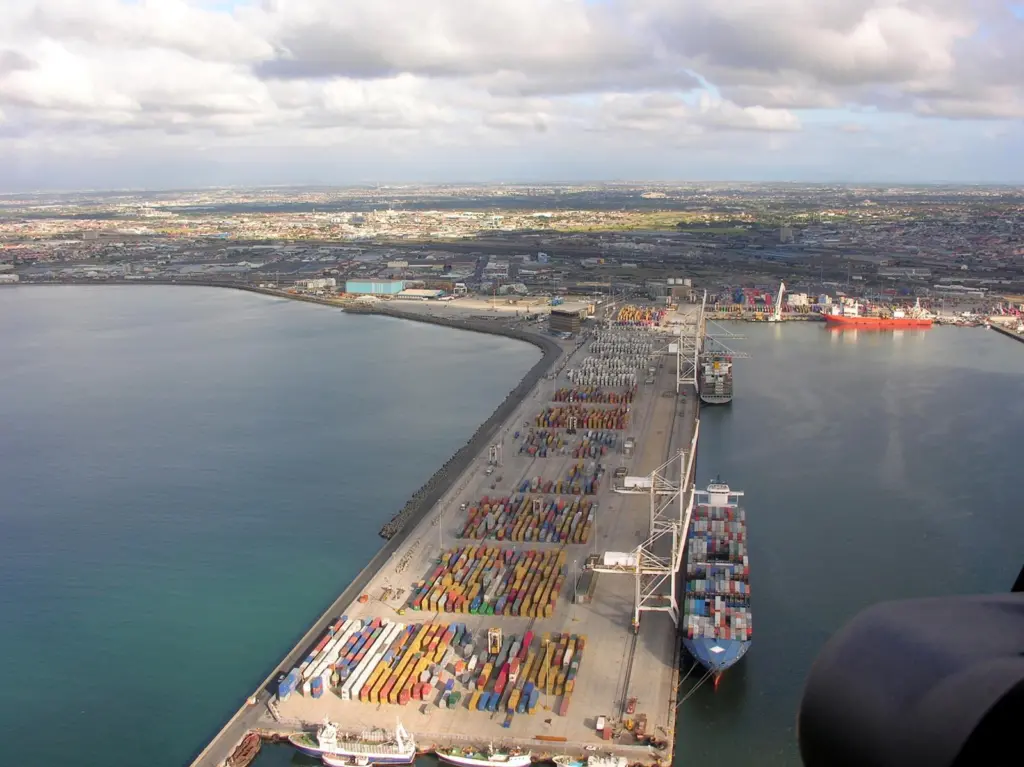
South Africa is one of the more stable African economies – joining the BRIC alliance at the end of last year. But in case you thought is was going to be a straight rise to stardom for its ports, think again.
Firstly, while South Africa does have more money flowing around than most other sub-saharan countries, its port sector performance in the past has been lacklustre. Transnet Port Terminals (TPT) the main state-owned port sector body, was at time of writing undergoing a major reform, but no one, including it seems Transnet itself, yet knows in what shape it will emerge from the reappraisal.
Some people put down the inefficiencies in many of South Africa’s state-run companies to a frailty inherent in any bureaucracy that isn’t governed by market forces, others say that the very necessary but sensitive subject of transition has led to a loss of experience within port operations.
Whatever the causes, South African port users have been voicing their preference for some time for Transnet to introduce private partnerships and to get a global operator involved to help push up box volumes. To date, Transnet has been slow to respond as there are a number of factors against this route.
As Jeremy Prain of Bowman Gilfillan points out: “Transnet has been making money out of the ports, despite their general inefficiencies – so there is less of a chance that the state-run company will let go and give concessions to private players in the near future.
“Added to these circumstances is also the political strength of the labour unions which may well equate privatisation with loss of employment” says Mr Prain. This is, actually, an understandable and probably realistic reaction given the history of other state-run port operations.
So, why indeed are the South African ports making money – despite the devastating dip caused by the downturn? One factor is that they are the most expensive in the world. This was the finding of an investigation taken up by the Ports Regulator, a body formed in 2007.
Transnet had proposed tariff hikes of nearly 12% but following an objection to the rise from the South African Association of Freight Forwarders (SAFF) the regulator bit down, only allowing an increase of 4.49% and pointing to a number of issues that included the failure to provide a transparent system or the timeframe of the review process.
SAFF’s point is that the tariffs are being used to cover the finance for basic infrastructure, dropping the bill with its customers. This is not the first time Transnet has proposed a large increase; last year’s too was for a hike of the same order.
In a letter to the regulator, SAFF’s representative Dave Watts said: “Proposing increases at this level and in such an important area would, during normal economic times, be unacceptable: for such to be tabled as the countries economy struggles to recover from the worst global recession in seventy years is astonishing.” He added: “Should the authority be allowed to consistently increase these dues over coming years then we can visualise a situation where South African products and exports are priced out of both local and international markets.”
But there is a captive audience for the South African ports, as the distances to other ports are enormous. Despite the beginnings of a partnership with the port of Walvis Bay in Namibia which could serve the north-west corner of South Africa, the venture was allegely scuppered by the aggressive competitiveness of Transnet’s rail arm, which, according to a source close to the project, pinched its rail costs below any sustainable level for the Namibian side of the equation.
So, the ports have little interest in keeping competitive – but the chances of the area growing a viable transhipment hub on that basis is really quite small.
One consultant, who wished to remain nameless, pointed out that Transnet itself has been caught in a conundrum. “While it’s a good guess that they knew if they went ahead and signed over some facilities, they’d gain around 30% almost immediately in the way of volumes, they also knew that if they went for the private partnership option based on the ports’ previous performance, they would have had to sign over more than they probably wanted to, in both concession terms and control.”
Against the accusations of expensive inefficiency, Transnet has pointed to its massive $1.4bn five-year capacity boosting programme across the entire port system and its focus on improving operations, saying it has pushed gross crane movements to 30 an hour in Durban – a 50% improvement on the previous year’s average.
Further, it aims to increase productivity at all its container terminals in South Africa, together with an increase in ship working hours and better truck turnaround times.
There has also been mention of a possible plan to purchase extra land, including both Salisbury Island and an abandoned airport, in order to expand the port of Durban – already the largest in South Africa. If the project goes ahead, Durban will add about 700,000 teu a year capacity, bringing the total to about 2.6m teu.
The new deepwater port of Ngqura, near Port Elizabeth, was also seen as a solution to the congestion problems at Durban. Although standing on its own two feet, it isn’t yet really seen as a transhipment hub, and it is still largely serving the domestic market.
Devised to take advantage of the natural deep water, it was also in part built as a social engineering project to generate some economic activity in a deprived region (which incidentally has a particularly strong ANC voter base) and there is as yet still a lack of infrastructure connecting it to the hinterland. So, although it has the draught to get the big container ships in, it remains relatively isolated. “However,” says Nishal Sooredoo of Drewry, “although the links are not yet in place, these will probably come with rising volumes: it all takes time, especially in a country with a state-run enterprise.”
Michael Ivenso of the Trident Group adds: “A lack of information flow and too much red tape tends to generally hold ports in sub-Saharan Africa back.” He says that they need to think about the whole logistics movement chain, as there is a significantly longer dwell time in many of these ports. “It often takes around five times as long to clear cargo in this region than it does, say, in Europe,” he says.
However, according to him, “a lot of it comes down to the right people getting the information at an appropriate time”. He says that if the right information is available, operators, can efficiently deploy the right trucks to the terminals and evacuate the cargo in a timely fashion. “This is in sharp contrast to the situation where trucks are allowed to enter the port and wait for cargo to be released. They park along the main thoroughfare, blocking other operations and hampering smooth movement within the port.”
Also, he believes a technology intervention would be particularly useful enabling cargo to be cleared at remote customs location outside the port. Tracking, using a combination of location-based technologies, RFID, GPRS, video monitoring and tamper-proof seals ensures cargo integrity and is not diverted on route . “Government is assured of the revenue and cargo owners have peace of mind,” he adds.
The problem is, say a number of people, that it is a managerial, not a technical issue in South Africa. Mr Sooredoo for example adds that technology solutions “might be of limited benefit or just plain rejected” by the South African unions, who are likely to make a fuss about the tightening of a culture which is geared to long, unscheduled breaks.
Related Articles
 EXPANSION & DEVELOPMENT
 CONTAINER & CARGO HANDLING
 EQUIPMENT