![PortStrategy[GreenPort]](https://www.portstrategy.com/wp-content/uploads/2026/09/PortStrategyGreenPort.svg)


Threefold capacity hike for Walvis Bay
Expansion of Namibia’s biggest commercial port could see its capacity boosted to more than 1m teu.
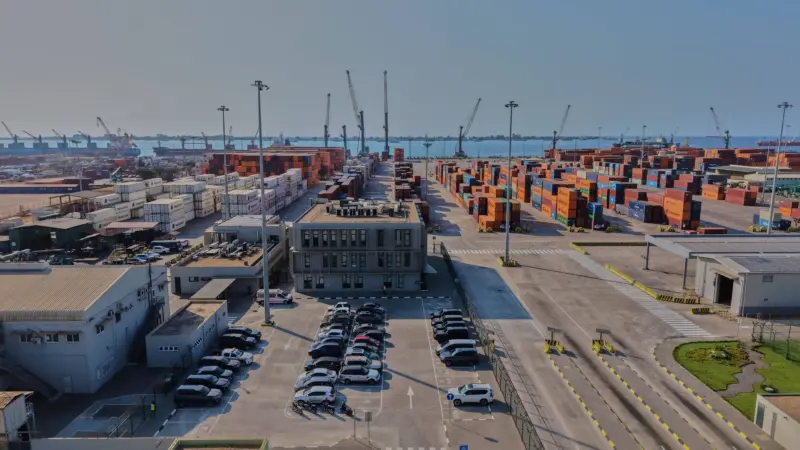
According to Mining Review Africa, a new container terminal at the Port of Walvis Bay — which has been supported by a loan from the African Development Bank (AfDB) of around $300m — is anticipated to take the container handling capacity from the current 355,000 teu to up to 1,005,000 teu.
Terminal explained
Work on the new facility is over 85% finished, with ancillary activities to follow, and the terminal’s construction is due to end in June next year.
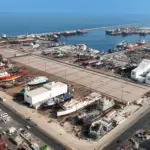
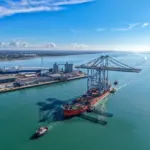
It is being built on 40 hectares of land reclaimed from the sea and is anticipated to lead to additional and sustained trade between the Southern African Development Community (SADC) and the rest of the world, and the AfDB loan covers 87.6 % of its costs.
The bank’s support will also fund up-to-date port equipment and training for pilots and operators at the facility.
Mining Review Africa said that in financing the new container terminal, the AfDB aligns with the Government of Namibia’s goal to boost the Port of Walvis Bay’s efficiency and capacity to respond to the increasing freight demand in the region.
According to the publication, the terminal venture will significantly increase the AfDB’s work in regional integration and improving African people’s lives, and SADC region poverty alleviation will improve, due to better port efficiency and greater cargo volumes from more trade, which will generate better opportunities for capacity development, trade and job-creation. This, the publication claimed, will lead to inclusive growth and economic transformation.
“I think the expansion is very positive news for the industry and for us as a business,” said Woker Freight Service general manager Philip Coetzee on the port’s ongoing upgrade.
“It promises increases in business volumes, cargo flows and additional commodities coming through.”
Port to cause hub
The ongoing Port of Walvis Bay expansion is driven by Namibia’s Vision 2030 plan and is set to turn Namibia into a regional logistics hub.
Expectations in the region are running high at the prospect, according to Mining Review Africa, and the bigger and modernised port will mean quicker and easier transit between Southern Africa, the Americas, Asia and Europe.
The port will directly benefit Namibia’s governments, people and private sector, along with the SADC region — particularly the Democratic Republic of the Congo, South Africa, Zambia, Botswana, Zimbabwe and Angola.
Extra capacity will reduce the transport costs of goods bought in Namibia and neighbouring nations, representing some 14% of the total cost in comparison to an international standard of 5%.
Related Articles
 EXPANSION & DEVELOPMENT
 CONTAINER & CARGO HANDLING
 EQUIPMENT