![PortStrategy[GreenPort]](https://www.portstrategy.com/wp-content/uploads/2026/09/PortStrategyGreenPort.svg)


Turning point
South Africa needs to choose between responding to the market and its duty of care explains Stevie Knight
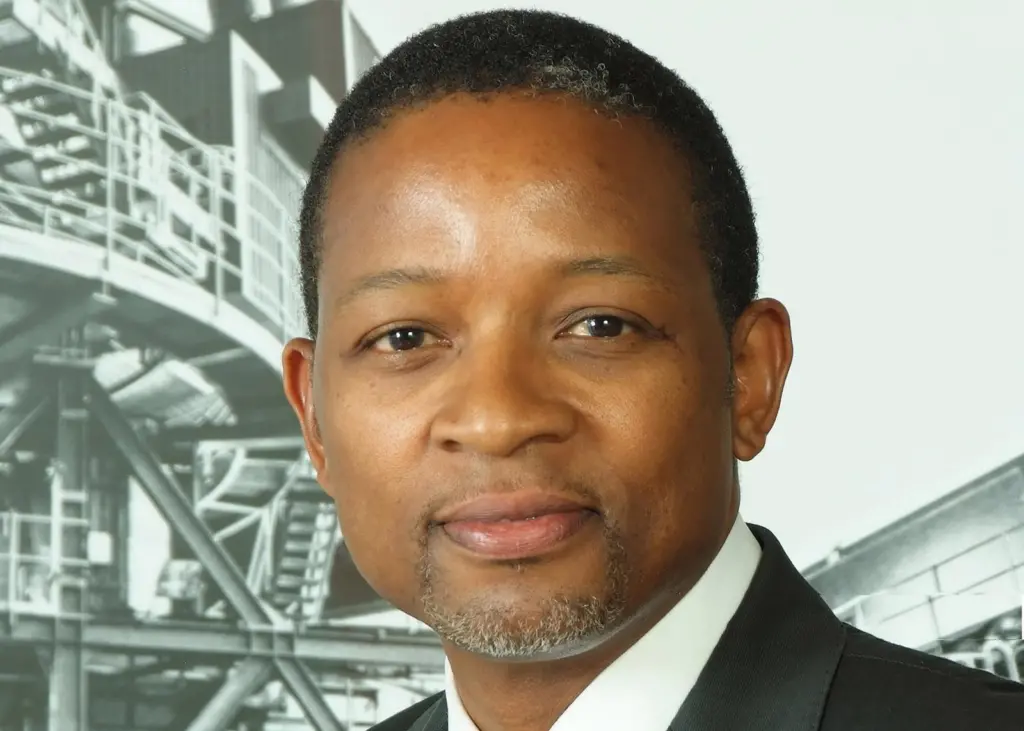
According to Karl Socikwa, Transnet Port Terminals chief executive, the South African port logistics business has “turned around from being an inwardly focused, state organ to becoming a customer-centric, world class port operator”. It’s even started selling its know-how to terminals around the world, most recently Benin.
But like its parent – South Africa’s overarching logistics provider, Transnet Group – it’s still a ‘parastatal’; a quasi-government organisation peculiar to South Africa, located on the blurry ground of state-run enterprise. Darron Wadey of Dynamar, publisher of numerous studies on Southern Africa container trades, adds that while this kind of organisation can attract the occasional derisory “monopoly comment” Transnet “should be effective in a way that, for example, East African logistics isn’t at the moment… because it consolidates national infrastructure under one roof”.
Right now parastatal status may have a silver lining as changes to both the global and local economies have left South Africa’s ports riding the ups and downs of a rollercoaster market – the element of control lending a measure of stability. So, while the company’s Market Demand Strategy reacts to market conditions, Mr Socikwa is equally clear that Transnet has a “duty of care” and South Africa’s infrastructure needs investment – despite falling volumes: “We believe that we are going through a cycle and that demand will return… but it can’t come back to a huge infrastructure bottleneck which will hold up the country’s development. It needs a competent logistics network.”
Shifting sands
However, the choices remain tricky given the insecure market.
Take Ngqura for example. It started out in 2009 as a container terminal; its deep water, big cranes and reefer facilities meant that it picked up boxes for other, less equipped African ports along both coasts, serving them with feeder vessels. It even managed to grab a certain amount of Far East cargo destined for South America and Europe; “It’s been well positioned as a transhipment hub… and it offers vessels an alternative to going through the Suez Canal,” says Mr Socikwa. “Just a few years ago it was one of the world’s fastest growing container terminals.”
Then came trouble. Mr Wadey says firstly MOL “snipped away” its South-West Africa relay from its height in 2013 to nothing in 2015. Then the port lost services from Maersk and MSC for very different reasons and “consolidation of cargo” played a big part in adding to the port’s woes, says Mr Socikwa.
At the same time MSC redesigned how it serves West Africa. As Mr Wadey explains, 2014 saw the launch of MSC’s Africa Express from the Far East. The start of direct calls to Lomé Container Terminal in Togo represented a big step up for West Africa: Lomé, with its 400m berths, has become the line’s regional hub with weekly feeder services connecting a string of ports up and down the coastline, and it even handled 11,600 teu ships early this year. Of course, all this meant less for Ngqura whose volumes fell by 9% during 2014.
However, there is some solace. “Ngqura became a port of call on the SAECS loop from North Europe in 2015,” says Mr Wadey. It already featured on MSC’s equivalent service and now it’s also a wayport between the Middle East and the Indian Sub Continent as well as the Far East to West Africa route. Plus, he adds, Ngqura is welcoming the new joint Maersk, MSC and MOL service between the Far East and the east coast of South America.
Durban backtrack
It may also be that development along the coast has underscored the need to shift priorities down in South Africa’s largest port, Durban. So, while the spectacular, $15bn, sixteen berth, 9.6m teu Dig Out project was to triple present box capacity and provide a ro-ro outlet for the automotive industry, the spade work has been put back till 2021.
Instead, older plans for Durban itself have been dusted off and accelerated: these hinge on deepening the draft to 16.5m from its present 11.8m depths which will allow ships of 15,000 teu to call, explains Mr Socikwa.
It’s partly a function of the larger vessels cascading down from other routes which has, with the growth spurt further along the western coast, pushed up ship sizes very rapidly. So, while Mr Wadey believes South Africa’s domestic cargo won’t be that affected, “if South Africa wants to be a way port call for those ships of 9,000 teu or 10,000 teu, it needs to expand its capability”, he says. “If it doesn’t, it runs the risk of seeing big ships sailing right past on the way to West Africa and South America.”
Further, there’s competition for transhipment cargo for the landlocked countries of Botswana and Zimbabwe: Walvis Bay, Namibia “is getting quite creative” says Mr Wadey. The port is expanding from 350,000 teu to 1m teu, “and it’s looking to anchor itself to a number of inland corridors”, he explains. “It has granted these two countries rights to establish dry ports in the Walvis Bay area, allowing them processing facilities linked to onward transport.”
Interestingly, he adds: “It also sees South Africa’s north-west as part of its own potential hinterland.”
Bulk woes
Bulk has also had its issues, once again impacting Ngqura. A broad swath of port space was earmarked to handle South Africa’s economically important manganese exports, relocating them from Port Elizabeth “which has reached the end of its design life”, explains Mr Socikwa.
However, all of South Africa’s big mineral outputs including coal, iron ore and chrome as well as manganese have been hit by the dramatic fall in commodity prices, “weak demand” resulting in “realigned” priorities says Mr Socikwa, although he adds: “We haven’t cancelled our plans… manganese is still one of our core businesses and we have to support that.”
So while the rail link to Ngqura still needs to go ahead, the port itself will see development “being phased in according to demand” rather than making a splash with an initial 16m tonnes per annum export capacity.
However, the subject of private sector involvement is an awkward one. While Mr Socikwa says that when it comes to dealing with South Africa’s infrastructure backlog “we have realised Transnet cannot shoulder the burden on its own… and we need to collaborate to see if we can do things in a smarter way”, he admits there’s a balance. “Where we have a goose that lays the golden egg, we will guard that very jealously.”
PRIVATISATION STILL ONLY BEING WHISPERED
Private participation in South Africa’s ports remains almost exclusively linked to supply chain partners and more recently, agribulk specialists who are, it seems, clamouring to get into terminals in Durban and in East London.
But – as yet – there are no moves to involve other terminal operators. In fact, some believe APM Terminals’ recent failure to get a foot in the door may be inherently linked to Transnet’s less-than-straightforward structure.
Andrew Pike of Bowman Gilfillan Africa Group explains that Transnet Group – which deals with rail, pipelines and ports together – was supposed to let Transnet Port Terminals (TPT) come out from under its umbrella some years ago. “It didn’t happen,” he says, and points out that “since TPT is the most profitable division of Transnet, corporatisation remains a thorny issue.”
It has had an unfortunate effect: on one side TPT escapes having its charges thoroughly regulated “and hikes are often in the realm of 10% – far in advance of inflation”, says Mr Pike, although he admits that there are ‘certain elements’ that impact on costs such as wages, fuel prices and so on.
On the other, as TPT remains under the wing of the group, Mr Pike explains “the industry always cries foul when the concessions are put up and TPT is tendering… the suspicion is that it’s awkward for Transnet to remain objective.”
More, there’s the matter of labour – a hard issue to avoid in light of global operators’ tendencies to favour a ‘lean’ workforce. Mr Socikwa says he “appreciates that the trend toward terminal automation is delivering efficiencies in places like Rotterdam” but adds, “We are very much alert to the fact that South Africa still has issues like poverty, inequality, and especially unemployment… so we’d much rather make sure we upscale the current staff’s abilities by looking at what we can leverage in the way of existing technologies such as the internet and cloud working.”
“Certainly we are saying, let’s do this in stages, and don’t take our eye off the ball – we need to create job opportunities.”
Related Articles
 EXPANSION & DEVELOPMENT
 CONTAINER & CARGO HANDLING
 EQUIPMENT