![PortStrategy[GreenPort]](https://www.portstrategy.com/wp-content/uploads/2026/09/PortStrategyGreenPort.svg)




LNG now available at 93 ports
LNG can now be delivered to vessels at 93 ports with a further 54 ports in the process of facilitating LNG bunkering investments and operations, according to a new report.
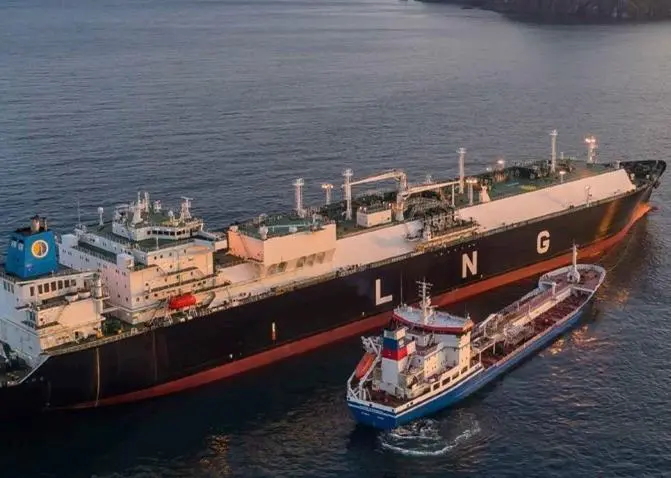
SEA/LNG’s ‘View from the bridge’ 2019/20 report notes that the infrastructure to support LNG has grown significantly.
“This begins to answer the “chicken or egg” dilemma as both new LNG-powered vessels are being ordered and major ports around the world are developing infrastructure to service this growing fleet,” said the multi-sector industry coalition, created to accelerate the widespread adoption of LNG as a marine fuel.
“This process will continue and accelerate as the real benefits of LNG as a marine fuel continue to be demonstrated for forward-thinking vessel owners and operators.”
There are active bunkering capabilities or plans to provide LNG bunkers in nine out of the world’s top ten ports, said SEA/LNG. Port infrastructure is continually improving and key regions are investing heavily into the bunkering infrastructure that supports LNG as a marine fuel.
LNG in Europe
Examples of this include the Port of Rotterdam, which nearly doubled its LNG bunkering operations in the third quarter of 2019, compared to the previous three months. This year Rotterdam will have seven to eight bunker vessels operating in the port area.
Titan LNG’s Flexfueller001 has added to the truck-to-ship bunkering capabilities at the Port of Amsterdam, while ENGIE Zeebrugge continues to perform ship-to-ship LNG bunkering services in the Port of Zeebrugge.
Nauticor’s bunkering vessel Kairos has delivered LNG to a range of vessels since it began operations in the Port of Visby in Sweden.
Elenger this year started providing LNG bunkering services to LNG-powered vessels in the Port of Hanko, Finland, in addition to the ports of Tallinn and Helsinki.
Barcelona is currently the largest cruise port to offer LNG bunkering, due to Carnival’s partnership with Shell Western LNG, which uses Anthony Veder’s Coral Methane vessel.
LNG elsewhere
At Eagle LNG’s Talleyrand LNG Bunker Station at the Port of Jacksonville, three LNG-powered cargo ships already sail regular voyages to Puerto Rico.
In Japan, Toho Gas Co., Ltd. and Mitsui O.S.K. Lines, Ltd. (MOL) carried out the first LNG bunkering at the Port of Nagoya using a truck-to-ship system with the LNG-fuelled tug, Ishin. The same vessel was also bunkered at the Port of Kobe.
NYK, together with Kyushu Electric Power Co. Inc., Saibu Gas Co. Ltd., and The Chugoku Electric Power Co. Inc., successfully conducted a truck-to-ship LNG bunkering demonstration at the Port of Kitakyushu.
2020 developments
The Maritime Port Authority (MPA) of Singapore expects the first of its two LNG bunker tankers to facilitate ship-to-ship LNG bunkering for ocean going vessels from the second half of 2020 onwards.
DNG Energy will provide LNG bunkers in Algoa Bay, South Africa’s largest bunkering port, from the second quarter of 2020.
Later this year, Shell will charter an articulated tug barge (ATB) to help it carry out its pledge to deliver LNG to various ports in Florida and southeast US.
Going forward
The British Columbia Government has joined SEA-LNG members Vancouver Fraser Port Authority and FortisBC to establish the first ship-to-ship LNG marine bunkering facility on the west coast of North America. This would enable large vessels to be fuelled from a fuelling vessel that fills up at an onshore jetty at Tilbury Island on the Fraser River.

Related Articles
 ALTERNATIVE FUELS GREENPORT
 ALTERNATIVE FUELS GREENPORT
 ALTERNATIVE FUELS GREENPORT