![PortStrategy[GreenPort]](https://www.portstrategy.com/wp-content/uploads/2026/09/PortStrategyGreenPort.svg)





LNG safety guidelines for Europe
The first edition of an LNG emergency and incident response study has been handed over to the first Major of the City of Mannheim and dedicated chief of the fire department by the Rhine Port Group.
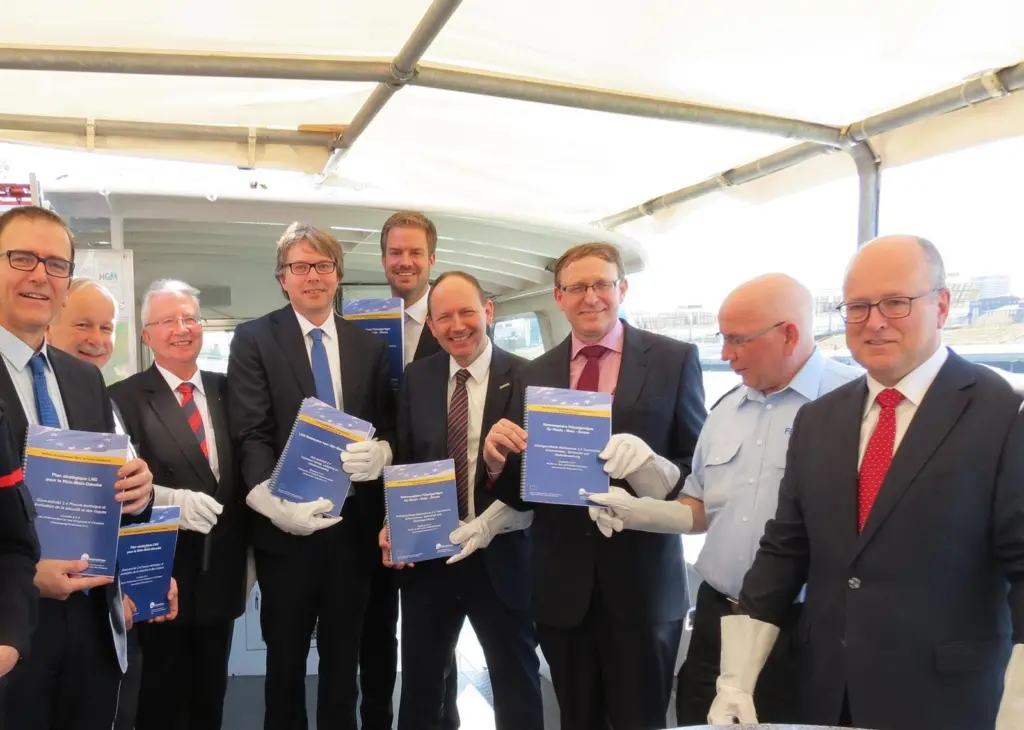
The document, which was carried out under the EU-funded project ‘LNG Masterplan for Rhine-Main-Danube’, informs emergency response organisations how to prepare themselves to manage credible LNG incidents on inland navigation along the Rhine-Main-Danube corridor.
A consortium of Falck RISC and the Unified Fire Department was chosen back in 2014 to carry out the study which targets emergency responders in the inland waterway transport (IWT) sector, consisting of emergency response organisations such as fire brigades and port authorities.
“We were very pleased to execute this study,” said Van der Veen, managing director, Falck RISC. “I truly believe the bottom line – for now – is that people who are in need of this knowledge and these insights are enabled to get professional upgrade LNG emergency response education and practical training. This gap should be given highest priority.”
Consisting of two main parts, the document features a desk study of existing technology and state of readiness in the Rhine ports of Rotterdam, Antwerp, Mannheim, Strasbourg and Switzerland. In addition, the study includes guidelines for LNG incident preparedness education and training.
The study comes at a time when the use of LNG as a fuel, and therefore the transport of the gas, continues to rise in Europe. A cryogenic gas that is stored at a temperature of -162ºC, LNG diminishes to a volume about 600 times compared to the size of its original gas volume. Due to its nature it requires specific handling procedures as well as a different approach to emergency and incident response.
Major Specht added: “This document is of high quality and ready to land at the right spot where the report is needed: at Fire Departments and Port Authorities.”
Related Articles
 ALTERNATIVE FUELS GREENPORT
 ALTERNATIVE FUELS GREENPORT
 ALTERNATIVE FUELS GREENPORT