



Port of Busan bunkering agreement
The Port of Busan has signed a cooperation agreement with the Korea Gas Corporation (KOGAS) to establish a robust port bunkering system going forward.
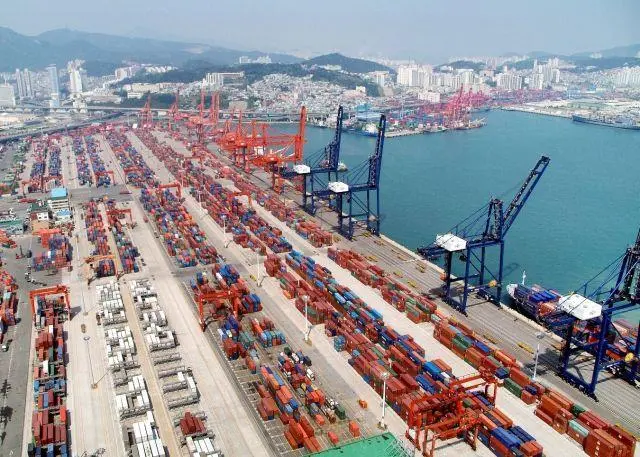
Through this agreement, the two companies will include a comprehensive review of the LNG bunkering system and business methods for Busan Port, including looking into a Floating LNG Bunkering Terminal.
Air emissions at the port have come under increased scrutiny from research projects, including Korea Maritime Institute (KMI), which has criticised air pollutants from ships as not being managed in a systematic and efficient manner.
Clean option
In the future, it’s envisaged that if the domestic fleet of vessels is gradually converted to LNG, particulate matter from shipping will be substantially reduced.
Busan, the largest port in the Republic of Korea, is close to KOGAS’s Tongyeong LNG base making it favourable for the development of the LNG bunkering business.
Korea currently has two LNG-powered vessels in service – Ilshin Shipping’s 50,000 dwt bulk carrier Green Iris and Incheon Port Authority’s 200 gt passenger vessel Econuri. Kogas supplies LNG fuel for both ships and bunkering is carried out by means of jettyside truck-to-ship transfers.
In the future, KOGAS will also take on charter for 20 years a pair of 7,500 m3 coastal LNG carriers that Korea Line is having built at Samsung Heavy Industries (SHI) for delivery in May and December 2019.
The operator will use the small LNG carriers to shuttle cargo from its Tongyeong LNG import facility on the mainland to a new mid-scale receiving terminal it is building on Jeju Island. One of the two newbuilding LNG carriers will have an LNG bunkering capability.
In further support of a shift towards LNG, KOGAS has been promoting the conversion of port yard tractors to LNG fuel with the Busan Port Corporation and the Ministry of Maritime Affairs.
Related Articles
 ALTERNATIVE FUELS GREENPORT
 ALTERNATIVE FUELS GREENPORT
 ALTERNATIVE FUELS GREENPORT