



The great LNG debate
The IMO’s move towards the global 0.5% sulphur cap by January 2020 has stirred up the debate again on how appropriate LNG is as the shipping industry’s main option to reduce greenhouse gas emissions.
Although its been well publicised that LNG is an excellent solution for reducing SOx and NOx emissions, Ian Adams, the former CEO of the International Bunker Industry Association, has said it is not a “panacea” to reducing GHGs.
In fact he has said, its increasing use as a marine fuel could be even worse for the environment than burning heavy fuel oil.
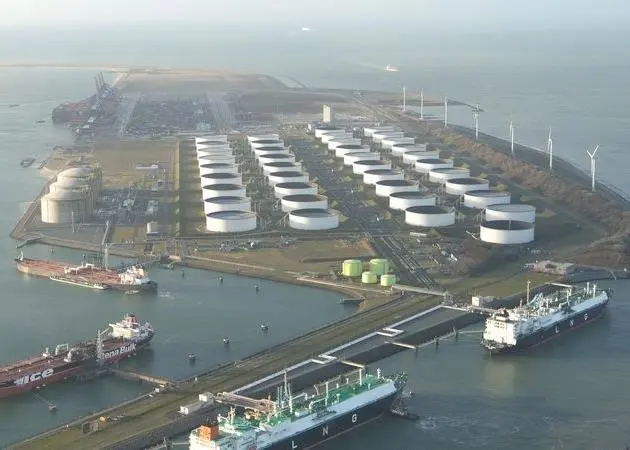
LNG is a solution that many of the world’s largest cruise companies are turning towards and ports are subsequently having to consider their infrastructure and bunkering setup if they want ships to better compete for business.
The fuel is being championed by the ports of Antwerp, Rotterdam, Singapore and Zeebrugge, which have developed the first set of harmonised LNG bunkering standards in an attempt to better cater for their customers.
But there are plenty who are throwing caution to the wind when it comes to LNG being the go-to option for the industry.
Naturschutzbund Deutschland (NABU) said that there are some environmental concerns surrounding LNG which have not yet been addressed adequately.
Dietmar Oeliger, head of transport policy at NABU, told GreenPort: “The CO2-effects are widely and often overestimated but the chances to reduce air pollution are massive. However LNG is a fossil fuel and can only be a bridge technology in an decarbonised shipping industry.”
He said that LNG is essentially methane which has a global warming potential around 30 times than CO2 and so it is not the right choice to limit the transport sector’s emissions by 95% until 2025, in order to meet the two-degree target adopted by the Paris agreement.
It’s also sometimes acquired by fracking which cases severe environmental damage.
The combustion of the gas always creates some methane slip which Mr Oeliger said can and should be minimised by using supplementary catalysts to cut methane emissions.
“The solution is that renewable energy sources must be given preference as quickly as possible. Low sulphur fuels must be used in conjunction with particulate filters and catalysts for pollutant reduction. NABU rejects the favouring of LNG over any other readily available alternative.”
Related Articles
 ALTERNATIVE FUELS GREENPORT
 ALTERNATIVE FUELS GREENPORT
 ALTERNATIVE FUELS GREENPORT