![PortStrategy[GreenPort]](https://www.portstrategy.com/wp-content/uploads/2026/09/PortStrategyGreenPort.svg)





Three new LNG terminals for Finland
A grant worth €65.2m is being used to build three LNG terminals in Finland that are expected to help significantly reduce the industrial use of fuel oil and LPG in the country.
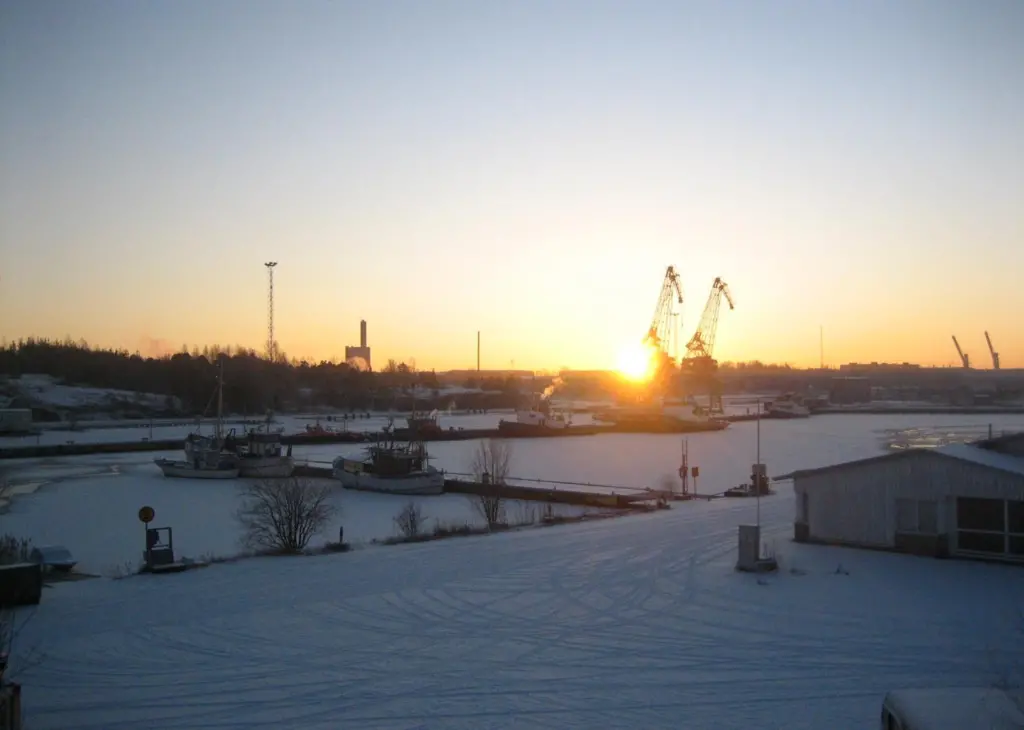
The grant comes from the Finnish Ministry of Employment and the Economy, while Manga LNG Oy, Skangass Oy and Oy Aga AB will build the terminals in Tornio, Pori and Rauma.
“The decrees to go ahead with these three operations will see more than €200m being invested into LNG terminals,” said Jan Vapaavuori, Minister of Economic Affairs. “This will then instigate the development of a network of terminals along the Finnish coastline.”
“LNG offers an environmentally-friendly and carbon-free alternative fuel source for the shipping industry. It also enables us to create alternative procurement streams for industries that use gas. According to estimates, the market potential for the use of LNG by the shipping and other industries is particularly significant in the Satakunta region. Furthermore, a terminal in the Bay of Bothnia would make possible the use of LNG in all the harbours located in the Northern part of the Bay of Bothnia,” he added.
Manga Oy has been awarded €33,155,400 for the construction of a terminal at Röyttä Harbour in Tornio, Northern Finland. Due for completion in 2017, it will have an LNG storage capacity of 50,000m³.
Skangass Oy has been awarded €23,441,500 to build a terminal at Tahkoluoto Harbour in the Port of Pori, which will have an LNG storage capacity of 30,000m³. It is set to be up and running in autumn 2016.
The third and final terminal will be built in the Port of Rauma by Oy Aga, which has been awarded €8,619,200 for its construction. The combined storage capacity of the Rauma terminal’s eight LNG tanks will be 10,000m³. Work on the terminal is set for completion in early 2017.
The combined maximum operating capacity of the three terminals will be 450,000 tonnes, which equates to more than 6 terrawatt-hours a year. The three new terminals are also expected to reduce CO2 emissions by around 370,000 tonnes and carbon emissions by 1,870 tonnes.
Related Articles
 ALTERNATIVE FUELS GREENPORT
 ALTERNATIVE FUELS GREENPORT
 ALTERNATIVE FUELS GREENPORT