![PortStrategy[GreenPort]](https://www.portstrategy.com/wp-content/uploads/2026/09/PortStrategyGreenPort.svg)



Canada shore power project complete
Vancouver Fraser Port Authority has completed a shore power project to reduces greenhouse gas (GHG) emissions and air pollution by enabling ships to shut down their diesel engines and connect to an electrical grid supplied by renewable energy sources.
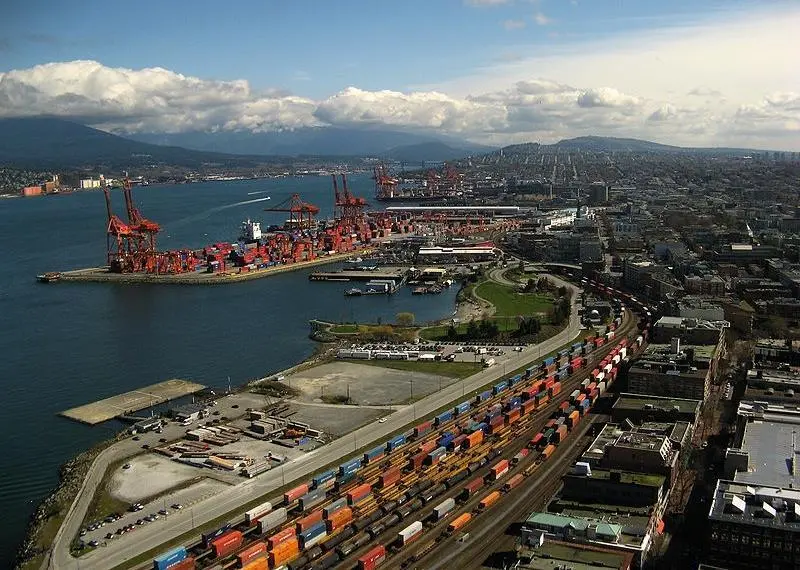
As part of the Shore Power Technology for Ports programme, in collaboration with the Government of Canada, shore power was installed at DP World’s Centerm container terminal. For each large ship at berth for 60 hours, over 95t of air pollutants and greenhouse emissions will be eliminated from the port through the shore power facility. This amounts to taking 20 cars off the road for one year.
“The Vancouver Fraser Port Authority is mandated to enable Canada’s trade while protecting the environment and considering local communities,” said Robin Silvester, president and CEO of Vancouver Fraser Port Authority.
“Installing shore power at DP World’s Centerm container terminal represents another positive step towards improving air quality by reducing marine shipping emissions.
“We are very proud of the collaboration with the Government of Canada and our terminal operations partner DP World to bring shore power to this facility, and are working to expand the program to other terminals in the Port of Vancouver.”
CAD$7m investment
Through the Shore Power Technology for Ports programme, the Government of Canada and the Vancouver Fraser Port Authority have each contributed CAD$3.5m to the Centerm project, for a total investment of CAD$7m.
By providing ship operators with an alternative to running diesel auxiliary engines while docked, shore power technology also reduces noise associated with running engines, decreases ship owners’ fuel costs, and increases the competitiveness of Canadian ports.
Since 2009, shore power installations at the Port of Vancouver cruise ship terminal have eliminated 524t of air pollutants and 18,264t of greenhouse gases.
Related Articles
 ALTERNATIVE FUELS GREENPORT
 OPERATIONS
 ALTERNATIVE FUELS GREENPORT