![PortStrategy[GreenPort]](https://www.portstrategy.com/wp-content/uploads/2026/09/PortStrategyGreenPort.svg)


Education around emissions
The US ports of Long Beach and Los Angeles are doing their bit in terms of environmental stewardship by educating the general public on the new air pollution regulations that came into force on 1 January 2015.
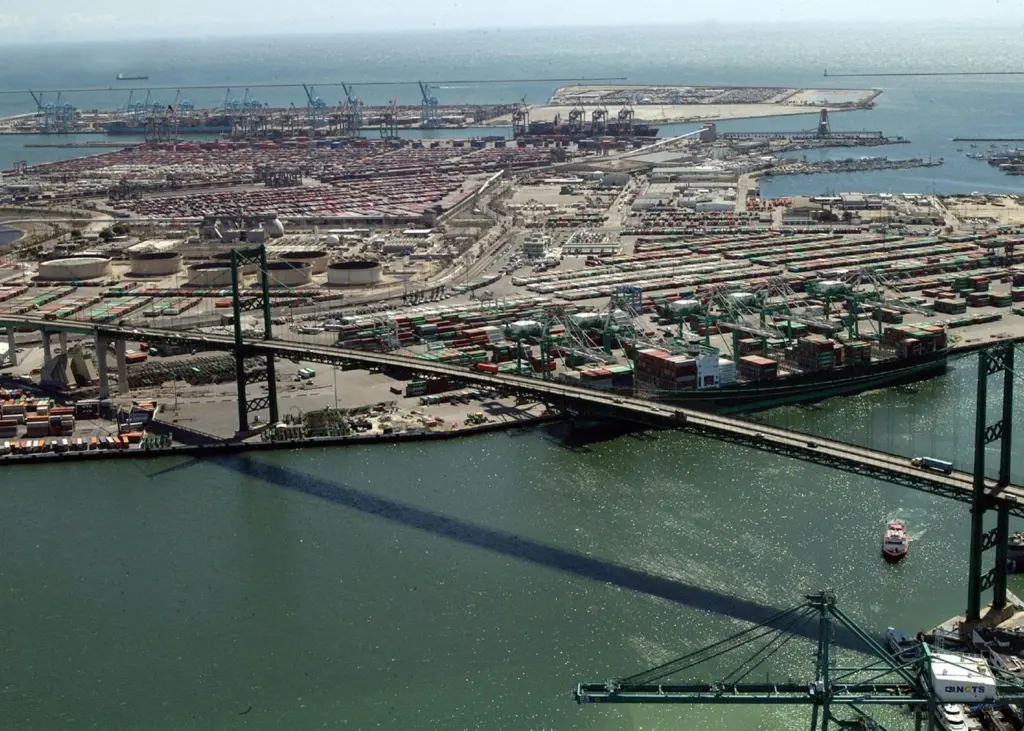
Both ports are now subject to the revised version of Annex VI of the International Convention for the Prevention of Pollution from Ships (MARPOL), which applies to ships operating up to 200 nautical miles off US shores.
At a recent webcast on the issue to the general public, Chris Cannon, director of environmental management, POLA, said: “I believe that this has been ground zero of the environmental stewardship movement for the maritime industry. We have some big challenges when it comes to continuing work within the region and meeting attainment for health risk purposes.”
Since the legislation came into force, MARPOL has introduced a penalty policy for violations of sulphur levels in fuel, which is enforced by the US coastguard. There have already been vessels that have been issued with a citation for not using the right fuel.
The port meanwhile, is doing its best to best to aid in the collective effort towards emission reduction. Linked to the MARPOL revision, it introduced the Green Flag incentive which has helped to encourage the adoption of slow steaming, thereby lowering emissions and reducing the chance of injuring wildlife such as whales.
Going forward, the port said that the exchange of ballast water is still a challenge to be solved though. It said it would be a challenge to implement ballast water exchange systems on the quayside because of limited space, but sees the solution as being on-ship cleansing systems, which are currently being tested.
Related Articles
 ALTERNATIVE FUELS GREENPORT
 OPERATIONS
 ALTERNATIVE FUELS GREENPORT