![PortStrategy[GreenPort]](https://www.portstrategy.com/wp-content/uploads/2026/09/PortStrategyGreenPort.svg)



Electric tractor to pilot at Long Beach
Kalmar is to supply a fully electric Kalmar Ottawa T2e electric terminal tractor to Long Beach Container Terminal (LBCT) for a six-month demonstration period.
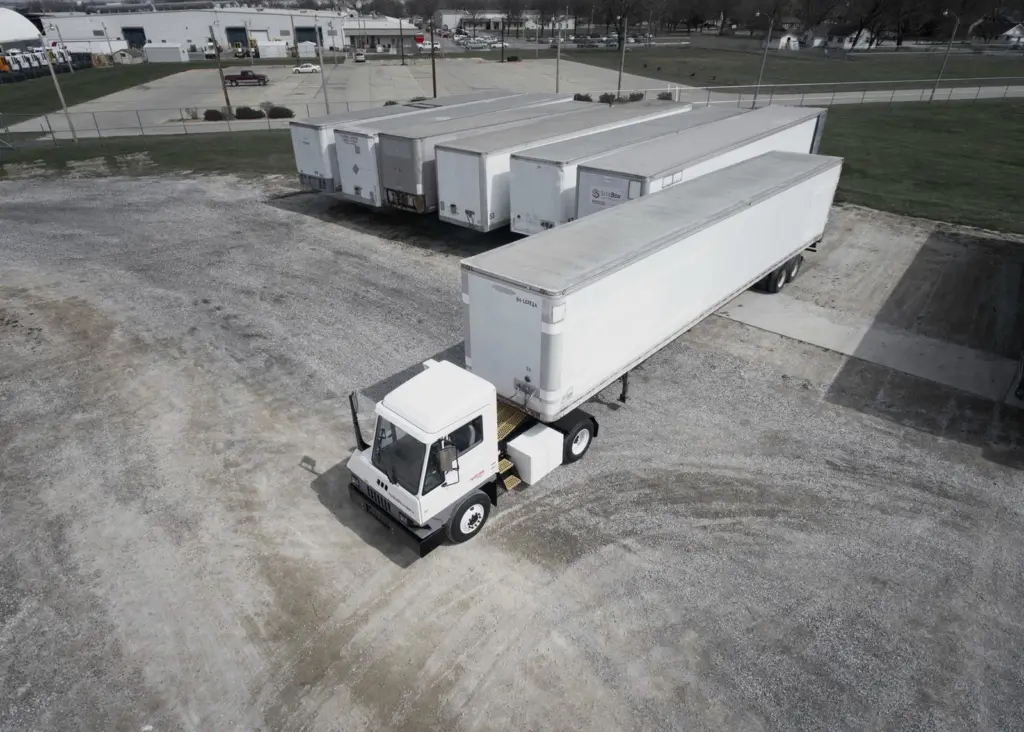
The new Kalmar Ottawa T2E Electric Terminal Tractor will play a key role in a much larger Port of Long Beach Freight Electrification Project – the nation’s largest project for zero-emissions cranes and other seaport cargo handling equipment.
“We have relied on Kalmar Ottawa terminal tractors as well as other Kalmar equipment for many years, so they were the natural choice when it came to seeking out a solution that would help us comply with the new legislation,” said Kevin Hayes, senior vice president, LBCT.
“The Kalmar Ottawa T2e will play a key role in helping us to achieve our business goals and maintain our position as a front-runner in terms of eco-efficiency.”
Green regulation
The Kalmar Ottawa T2E Electric Terminal Tractor is designed for trailer handling operations in dispersed warehouses, container terminals and other applications where short distance road travel is required.
It features Kalmar’s latest lithium-ion battery technology and a fully electric powertrain that produces zero emissions at source. The onboard inverter charger allows the vehicle to be ‘opportunity charged’ during working breaks; a battery monitoring system displays charge status and indicates when a recharge is required.
Compared to a diesel-powered tractor, the Kalmar Ottawa T2e generates less noise, vibrations and heat and most importantly, no fumes.
US port operators are increasingly demanding more environmentally friendly machines and Californian ports have taken the lead in this respect by setting a target of having fully electric fleets by 2030.
The Long Beach Freight Electrification Project, which includes technology manufacturer partner Kalmar, is an off-road demonstration project funded by a $5.3 million grant awarded to the Port of Long Beach.
That project is part of California Climate Investments, a statewide program that puts billions of Cap-and-Trade dollars to work reducing greenhouse gas emissions, strengthening the economy, and improving public health and the environment – particularly in disadvantaged communities.
Delivery of the tractor is scheduled for the first quarter of 2019.
Related Articles
 ALTERNATIVE FUELS GREENPORT
 OPERATIONS
 ALTERNATIVE FUELS GREENPORT