![PortStrategy[GreenPort]](https://www.portstrategy.com/wp-content/uploads/2026/09/PortStrategyGreenPort.svg)



Emission Decrease in LA
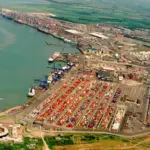
Monitoring stations around the Port of Los Angeles show concentrations of carbon in the Port area air fell in 2010 for the fourth straight year.
Elemental carbon is used as an indicator of diesel particulate matter which is the soot produced by the combustion of diesel fuel. These reductions, almost 55% less than when the Port began monitoring in 2005, happened even as cargo volumes at have rebounded in 2010 by 16% over 2009, but elemental carbon was 10% lower for the same period.
“I’m very pleased to be able to report that we are living up to our Clean Air Action Plan commitment — we pledged to cut Port-related emissions by 45 percent, and these results show that for diesel exhaust we did more,” said Port Executive Director Geraldine Knatz.
One of the Clean Air Action Plan measures is the Port’s Clean Truck Program. Truck emissions, a substantial source of DPM in Port-area air, have been substantially reduced. Since the program was launched in 2008, the Port has distributed more than $70 million to spur the purchase of more than 2,700 cleaner, newer trucks. There are currently more than 10,000 trucks serving the San Pedro Bay port complex that meet or exceed the U.S. EPA 2007 heavy-duty truck emissions standards.
Other reasons for the continued improvement include the State’s restrictions on the sulfur content of fuel used in vessels and equipment operated at the Port, the Port’s Alternative Maritime Power program, and the San Pedro Bay Vessel Speed Reduction program as key measures the State and the Port have used to tackle vessel emissions. The Port has also spent millions of dollars retrofitting cargo handling equipment and harbor craft engines with pollution control devices, and pioneering the use of alternative fuels and power systems. The air quality monitoring stations measure, in real time, ambient concentrations of several key air pollutants, including two sizes of particulate matter (PM10 and PM2.5). In addition, twenty-four hour integrated samples of particulates are collected on filters every third day for detailed chemical analyses, which cannot be done with real-time monitors. Those analyses include measuring the amount of elemental carbon in the filters.
Related Articles
 ALTERNATIVE FUELS GREENPORT
 OPERATIONS
 ALTERNATIVE FUELS GREENPORT