![PortStrategy[GreenPort]](https://www.portstrategy.com/wp-content/uploads/2026/09/PortStrategyGreenPort.svg)

Green port upgrade
A US terminal has completed the first stage of an electrification project to make operations greener.
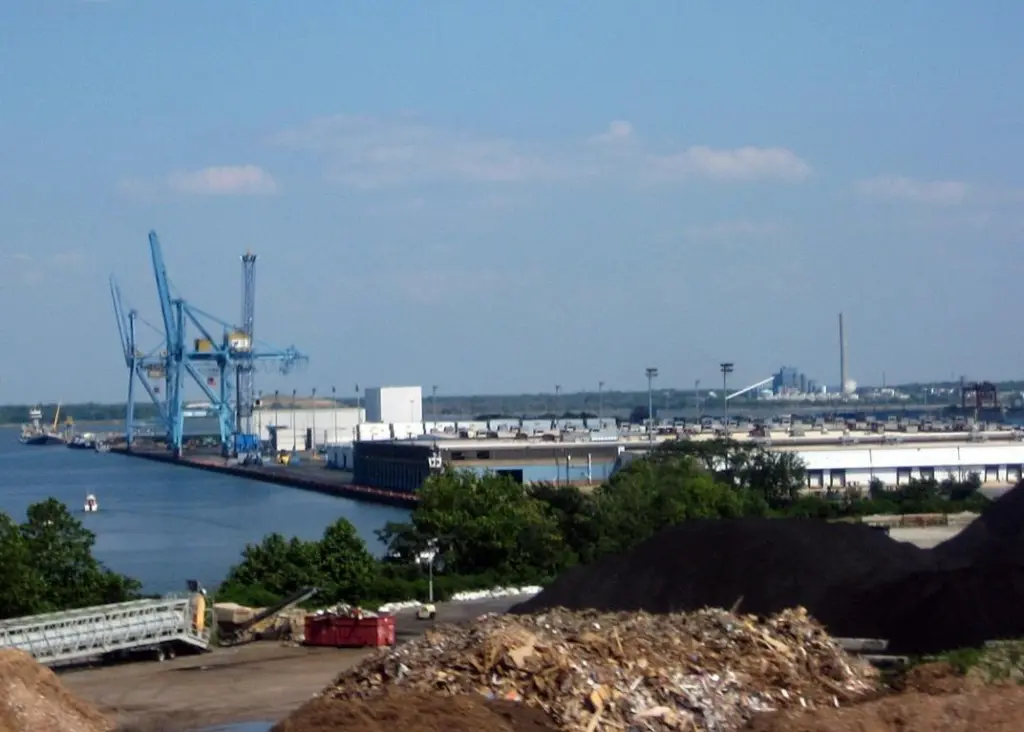
GT USA Wilmington (GTW) at the Port of Wilmington has upgraded its terminal with five all electric Konecranes Rubber Tyred Gantry (RTG) Cranes and additionally, the port’s information technology system and terminal operating system.
“These improvements increase overall productivity and operational capabilities at the port, improve our customer service levels, and create a cleaner, greener, safer environment,” Richards said. “We stand steadfast in our unwavering commitment to the state of Delaware and to the Port of Wilmington,” said Peter Richards, CEO of Gulftainer, GT USA.
No emissions
The cranes are 100% electric with no carbon emissions and are battery assisted for continued electric use when off the rail.
In addition, GT USA said that they use in-point efficiency and can make a production pick in 15 minutes that would have taken a reach stacker three hours worth of of labour and fuel..
To add to the green credentials, each crane is equipped 100% LED lighting throughout.
GT USA said that despite costing more upfront, the cranes save money in the medium term because they have a longer life and are easier to maintain.
They also have no hydraulics which improves performance and makes them more eco-friendly. If the RTGs need to change location, a battery pack is mounted that is precharged to help move the crane around.
The yard project was completed at a cost of US$37 million and is part of an US$88 million investment in improvements by GT Wilmington since taking over operations at the port in 2018.
GT USA said that it is committed to investing up to US$600 million at the current port site and in building a new facility at the nearby Edgemoor site on the Delaware River.
Since it took over the terminal, GT USA said it has saved the State of Delaware over US$45 million in subsidies over the last three years – money that can now be spent on education and local communities.
It has also extended its rail offering to link six of the eight berths at the port, all of which now have 38-foot depths. The operator has also added three new 45-tonne reach-stackers and 16 terminal tractors all of which has helped double container storage capacity from 350,000 to 650,000 teu.
Related Articles
 ALTERNATIVE FUELS GREENPORT
 OPERATIONS
 ALTERNATIVE FUELS GREENPORT