![PortStrategy[GreenPort]](https://www.portstrategy.com/wp-content/uploads/2026/09/PortStrategyGreenPort.svg)




LA’s “Clean Truck Program” under way
When fully implemented in 2012, Los Angeles’ “Clean Truck Program” will take over 16,000 diesel trucks off the road, cutting emissions by 80 percent.
On 1 October 2008, Los Angeles Mayor Antonio Villaraigosa launched the “Clean Truck Program”, the centre-piece of the most ambitious air-pollution cleanup initiative in the US. Immediately over 10 percent of the region’s port trucks were banned from the Ports of Los Angeles and Long Beach, thus removing over 350 tons of emissions from Los Angeles’ air. “Today we are launching the Clean Truck Program and immediately, we will take 2,000 of the dirtiest, diesel spewing trucks off the road and start reducing the choking pollution in LA and Long Beach,” Villaraigosa said. The Clean Truck Program immediately bans trucks built before 1989, the first year of diesel pollution control; and by 2012, bars any truck that doesn’t meet the cleanest 2007 emission standards. Removing 2000 pre-1989 diesel trucks from the road is the equivalent of taking over 400,000 cars off the highways. These old trucks emit Nitrogen Oxide (NOX) and the even more harmful diesel particulates. Taking 2000 diesel trucks off the road will reduce 325 tons of NOX and 63 tons of diesel particulate per year. When fully implemented in 2012, the Clean Truck Program will remove over 16,000 diesel trucks from the roads and reduce harmful emissions by 80 percent. The success of the Clean Truck Program hinges on the participation of the trucking companies serving the Ports. As of 1 October, 598 Companies had signed up to participate in the program, which means they are agreeing to abide by the environmental, operational and security requirements. These 598 companies will be using over 21,000 clean trucks to haul goods from the Ports to the rest of the region. The Clean Truck Program set a 1 October 2008 goal of at least 10,000 trucks in order to ensure that goods and cargo would be delivered without delay or backup. With over 21,000 trucks participating, the truck program is on course for implementation.
Clean Air Action Plan
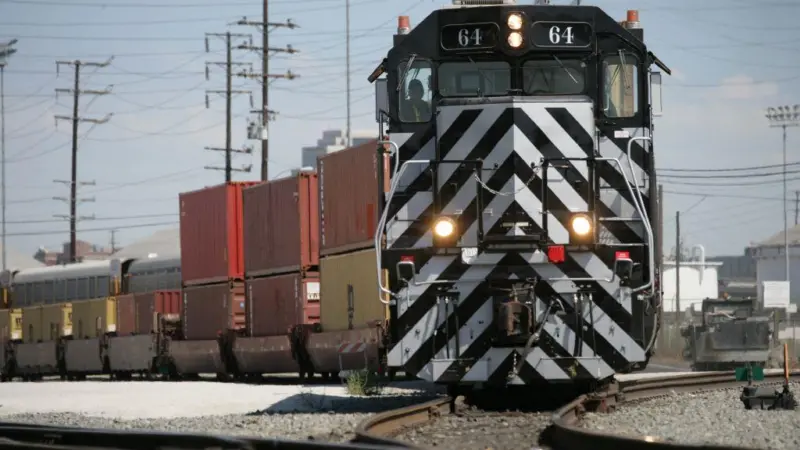
The Clean Truck Program is central to Mayor Villaraigosa’s Clean Air Action Plan (CAAP) that targets the five leading causes of pollution at the Ports: ships, trains, trucks, cargo handling equipment and harbour craft. CAAP was adopted in November 2006 to cleanup the Ports of Los Angeles and Long Beach, which are the leading air polluters for the greater LA region. The ports of Los Angeles and Long Beach adopted the Clean Air Action Plan (CAAP) in November 2006 to address the public health and environmental issues caused by the pollutants emitted by each port. The CAAP is a comprehensive plan to address and curb emissions from the main port-related sources: ships, trains, trucks, terminal equipment and harbour craft. The CAAP:
• Will cut port-related emissions by 45 percent or more over a five-year period, including: 47 percent reduction in diesel particulate matter; 45 percent reduction in nitrogen oxides; 52 percent reduction in sulphur oxides.
• Relies on pollution-based impact fees, ensuring the worst polluters pay their part to improve air quality.
• Encourages ships entering and exiting the harbour to reduce speed limits and use low-sulphur, clean-burning fuels to minimize diesel emissions.
• Calls for cargo ships to shut down dirty diesel-powered auxiliary engines while docked and instead use shore-side electricity by 2016.
• Commits to eliminating dirty trucks by helping finance a generation of clean big-rigs.
The CAAP is the first of its kind in the world, partnering the two largest port’s in the United States with the support of local, state and federal agencies that regulate air quality standards (the South Coast Air Quality Management District, the California Air Resources Board and the United States Environmental Protection Agency). Drafted with extensive input from environmental, community, industry stakeholders, the CAAP also commits the Ports to invest in hundreds of millions of dollars in air-quality improvement programs.
Container fees
Developed by both the Ports of Los Angeles and Long Beach, the Clean Truck Program combines four elements: ban on pre-1989 trucks leading to a ban on trucks built prior to 2007, container fees, incentives for buying new clean trucks, and concession contracts ensuring adherence to the new environmental and security rules. Cargo owners will be charged a $35 fee for every 20 ft container and a $70 fee for every 40 ft container entering or leaving the Port. These fees collected by the Ports will subsidize the purchase of clean trucks, with increased incentives for alternative fuel trucks. Trucking companies will receive funding to pay from 50% LIP to 80% of the cost of the new trucks. There is also a truck buy-back program that offers $5,000 to current truck-owners for any trucks built prior to 1989. The Program will require trucks operating at the Port to be owned and registered by companies given a five-year permit – concession – in order to access the Port. These concessionaires will employ truck drivers and be held accountable for ensuring that all trucks meet the requirements of the Clean Truck Program over the long run – from proper maintenance of trucks to security and licensing. Creating a registry of credentialed drivers and trucks, the program will help state and local law enforcement identify trucks and employees, and connect trucks to their owners, a major factor in protecting one of the nation’s key economic assets. The final major component of the Clean Truck Program entails creating community- friendly provisions to alleviate the burden of truck activity placed on communities near the Port. Tighter controls over on-street parking, coupled with employer control over when and where drivers can operate their trucks, will help reduce the number of big-rigs driving through and parking in residential neighbourhoods.
www.portofl osangeles.org
www.polb.com
Related Articles
 ALTERNATIVE FUELS GREENPORT
 OPERATIONS
 ALTERNATIVE FUELS GREENPORT