![PortStrategy[GreenPort]](https://www.portstrategy.com/wp-content/uploads/2026/09/PortStrategyGreenPort.svg)


Long Beach shares environmental plans
The Port of Long Beach’s future will encompass only zero emissions technology and equipment according to executive director Mario Cordero.
He described a port that is nimble like online retailer Amazon and bold like electric vehicle builder Tesla.
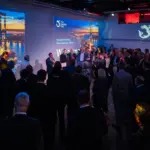
“We must re-imagine, redesign and build a port that is second to none both environmentally and operationally,” Mr Cordero said at the annual State of the Port event, which looked at the port’s future plans and its 2017 performance.
2030 goal
The port’s 2030 goal is for terminal cargo hauling equipment to be zero emissions and emissions from vessels at berth to be eliminated. By 2035 the entire port truck fleet is expected to be zero emissions.
“Zero emissions remains our ultimate goal,” Mr Cordero stressed. “For us to continue to grow sustainably, our Port must be better prepared than other North American ports to bring goods on vessels that plug into clean shore power, move on zero-emission yard equipment and cranes, and are transferred quickly onto the most efficient network of trucks and trains.”
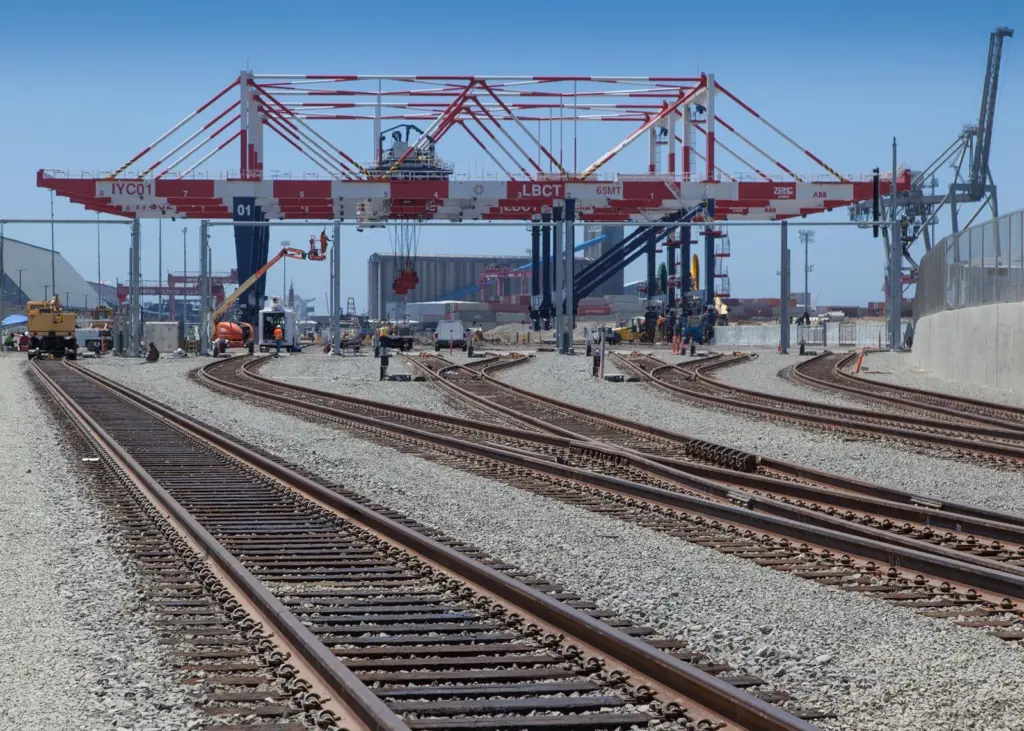
In 2017, the port further developed its Clean Air Action Plan, which has seen it use more environmentally friendly technology, such as its 70 all-electric stacking cranes. This month it approved the Pier B Rail Project to shift more cargo to ‘on-dock rail to enable faster cargo transportation with reduced emissions.
More rail
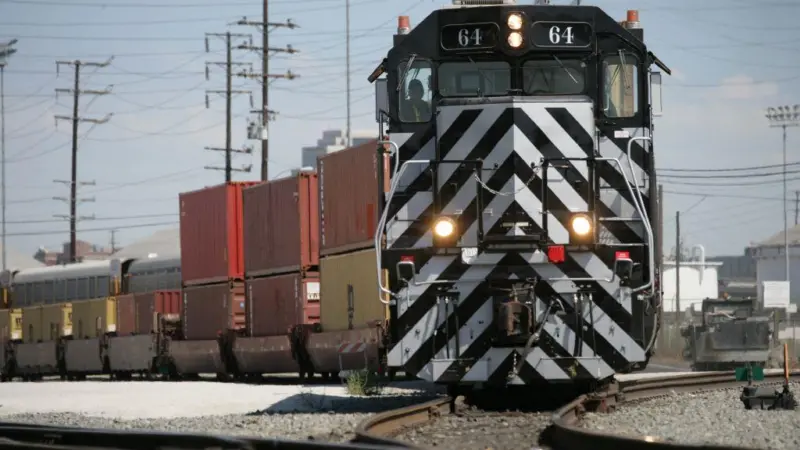
In 2017, the port moved 25% of its cargo by on-dock rail. Mr Cordero said rail is key to its operational and environmental success, stressing that every train cuts out as many as 750 truck trips.
The Long Beach Board of Harbour Commissioners also approved a US$65m programme to reduce environmental impacts in the community.
The port serves as “an incubator for emerging clean technologies,” said Lou Anne Bynum, president of Long Beach Board of Harbour Commissioners.
Related Articles
 ALTERNATIVE FUELS GREENPORT
 OPERATIONS
 ALTERNATIVE FUELS GREENPORT