![PortStrategy[GreenPort]](https://www.portstrategy.com/wp-content/uploads/2026/09/PortStrategyGreenPort.svg)


Marine life thrives in ports
Marine life is thriving at record levels in waters shared by two US ports.
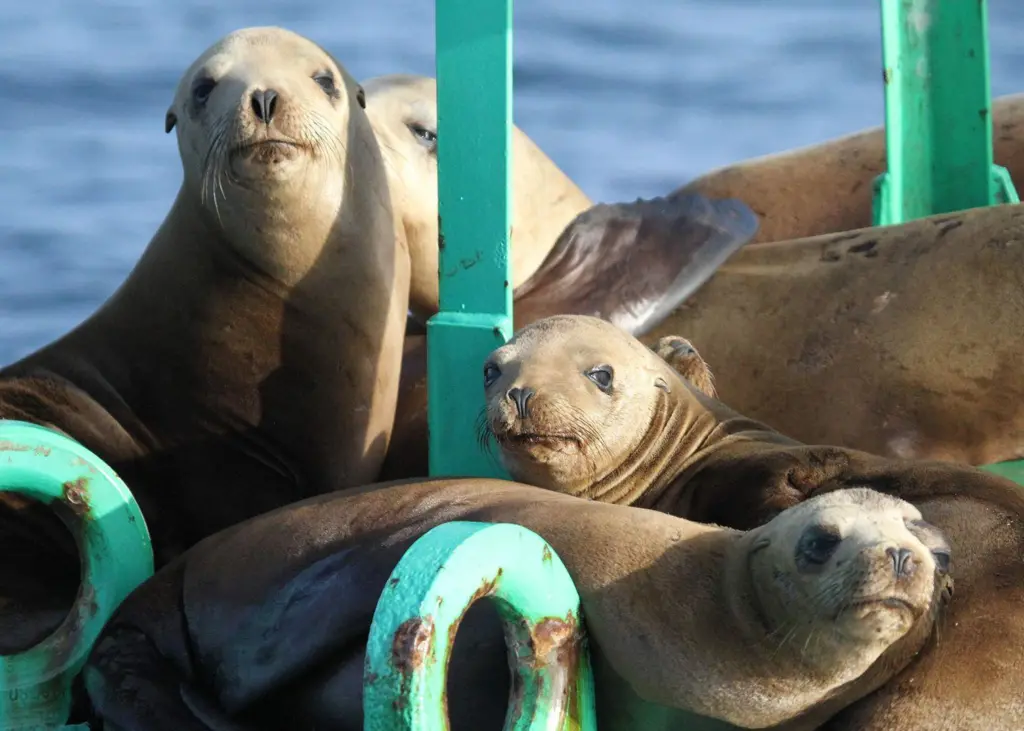
A new ecological study shows more than 1,000 different species of fish, birds, invertebrates, algae and marine mammals are flourishing in San Pedro Bay — the same waters that serve the ports of Los Angeles and Long Beach.
Los Angeles Harbor Commission president, Jaime Lee, said: “This study confirms we can maintain a healthy harbour that supports robust aquatic life and grow international trade that supports people and jobs nationwide at the same time.
Highest recorded biodiversity
The newly released survey, conducted in 2018 and 2019 by the ports of Los Angeles and Long Beach, has identified the highest recorded biodiversity of the four previous complex-wide studies carried out by the ports, the first of which was in 2000. In total, more than 1,000 species of plants or animals were observed, including 104 species of fish, 87 species of birds and five species of marine mammals.
“Our commitment to environmental social responsibility is not restricted to improving air quality – water quality has also been a priority,” said Port of Long Beach executive director, Mario Cordero.
Among other notable findings, biologists for the first time found nine species of fish typically associated with hard substrates such as reefs, including Garibaldi, sheepshead, horn shark, and moray eel. Their presence shows the existence of shallow, structured habitats such as riprap and breakwaters are providing nursery habitat for the fish to grow, forage and flourish.
State and federal wildlife agencies have given special-status designation to three of the 10 most abundant bird species observed in both the 2013 and 2018 biological surveys. The presence of these birds — brown pelican, elegant tern and double-crested cormorant — indicate the port complex provides important foraging and roosting opportunities for these species.
Also, kelp coverage in the summer of 2018 was more than twice that observed in any previous study, with little decrease between spring and summer.
Marine mammals are common, especially sea lions and harbour seals. Dolphins and seasonal visitors such as grey whales continue to frequent the outer harbour.
Climate change
The surveys also shed light on the impacts of climate change. A two-year marine heatwave during which the average water temperature was higher than it has been over the last two decades preceded the 2018 study. Consistent with regional trends, the phenomenon may have contributed to a 10-12% decrease in the total number of bird species and a 33% decrease in their abundance in the 2018 surveys. Likewise, it may be responsible for a 50% decline in larval fish density since the 2013 survey.
Related Articles
 ALTERNATIVE FUELS GREENPORT
 OPERATIONS
 ALTERNATIVE FUELS GREENPORT