![PortStrategy[GreenPort]](https://www.portstrategy.com/wp-content/uploads/2026/09/PortStrategyGreenPort.svg)




Port of LA holding its own
The Port of Los Angeles said it has mainly continued to preserve its clean air gains in order to reduce key pollutants, lower health risks and improve life quality in LA.
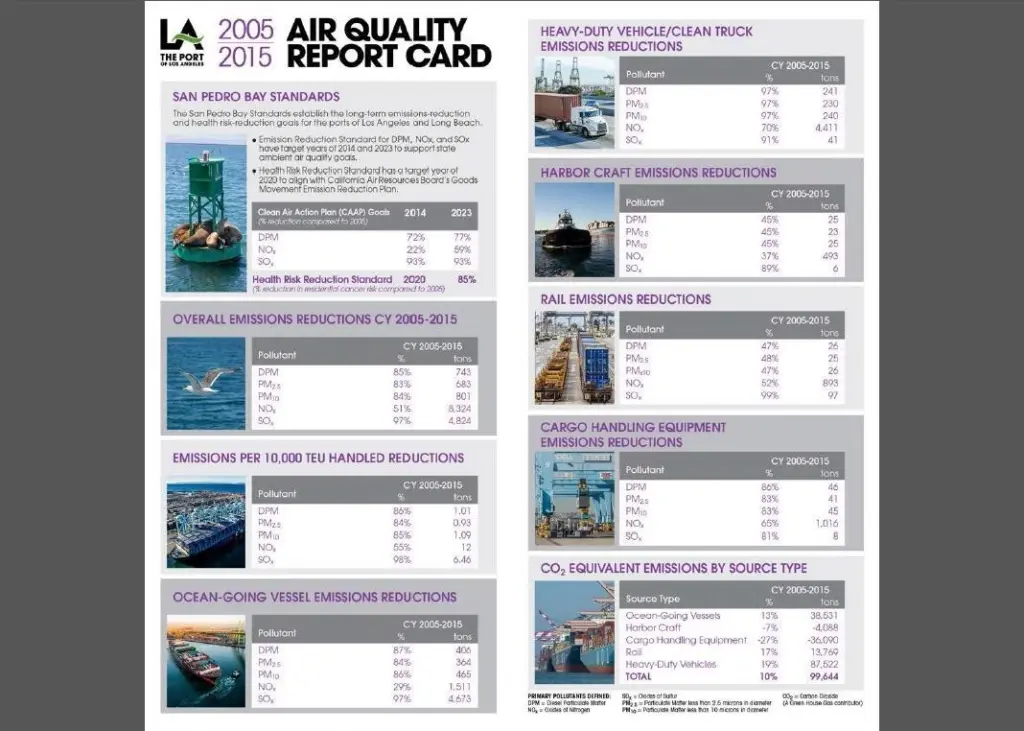
This comes following the release of the 2015 Inventory of Air Emissions report released in August where the Port of Long Beach’s results were said to have been marred by lingering effects from ships at anchor early last year.
“Our clean air strategies were put to the test with the backlog of ships we experienced in the first part of 2015, but we largely held our ground,” said Gene Seroka, executive director.
He added: “With this temporary situation behind us, we expect to see clean air progress when the numbers come in for 2016.”
The port continued reducing the health risk of port-related emissions lowering them 85%. That level sustains the progress achieved in 2014 when the Port of LA hit its 2020 target.
In addition to criteria pollutants like NOx, SOx and DPM, the Port also tracks greenhouse gas (GHG) emissions.
The 2015 emissions inventory shows that GHG emissions were 10% below the 2005 baseline, but the 2015 GHG emissions were higher than GHG emissions in 2014, when they were 16% below the 2005 baseline.
It is aiming for a return to larger GHG emissions reductions for 2016 with the congestion problem cleared, as the Port of LA continues in its efforts to achieve California’s goal of reducing GHGs 80% by 2050.
“The cargo handling equipment upgrades, particularly the ongoing transformation to new Tier 4 units reflect the ongoing commitment of our terminal operators, trucking partners, vessel operators and others have made to green our Port,” added Chris Cannon, director of environmental management at the Port of LA.
Reducing energy consumption will continue to play a critical role in the march toward zero emissions at the Port of LA.
Progress has already begun, and a pending CAAP update will incorporate strategies that advance energy efficiency solutions, such as conversion of TraPac to an automated marine container terminal and the Green Omni Terminal Demonstration Project.
The port’s region is home to more than 16.8m people in urban portions of Los Angeles, San Bernardino and Riverside counties and all of Orange County. Just 2% of all SOx emissions in the area are now attributable to port operations compared with 23.2% back in 2005.
Related Articles
 ALTERNATIVE FUELS GREENPORT
 OPERATIONS
 ALTERNATIVE FUELS GREENPORT