![PortStrategy[GreenPort]](https://www.portstrategy.com/wp-content/uploads/2026/09/PortStrategyGreenPort.svg)






Record output low emissions
An American port is achieving increased business and reduced emissions all at the same time.
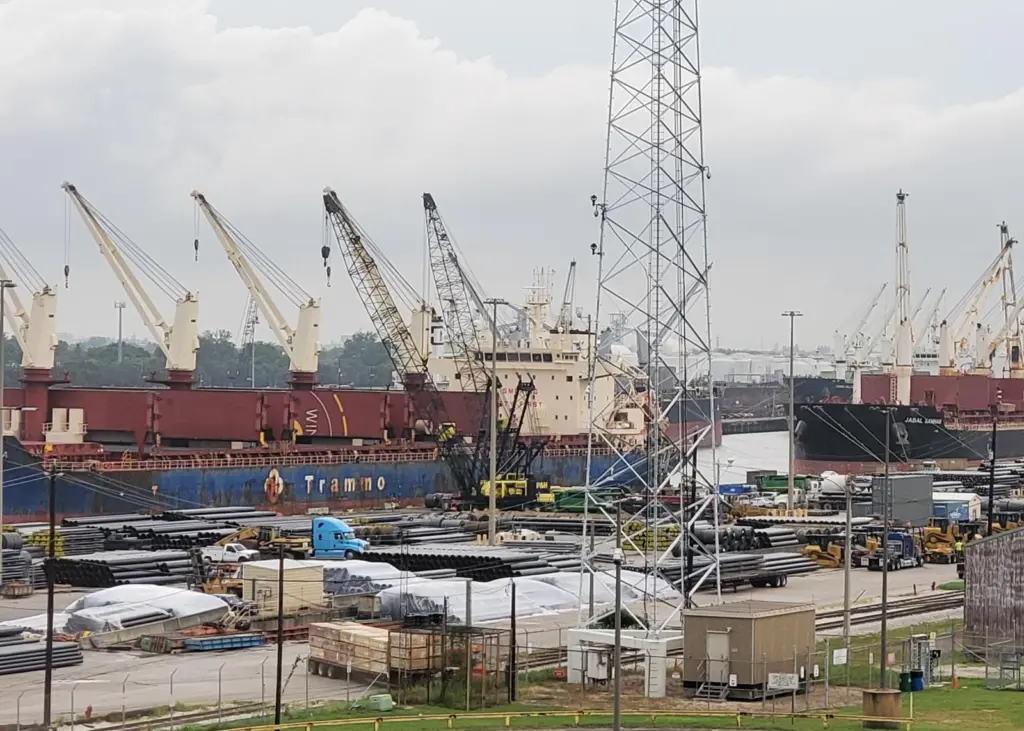
The Port of Houston is balancing the growth of its cargo volumes with new more environmentally friendly port equipment.
“An amazing amount of work is getting done by an amazing team doing a great job despite the pandemic and issues along the supply chain,” said Roger Guenther, executive director at the Port of Houston, at a recent staff team briefing.
High efficiency
In the staff report, Mr Guenther highlighted a historic record-breaking month of the highest cargo volume ever for the public container terminals. He added that there has also been a dramatic increase in import steel and other general cargo commodities handled through the multipurpose facilities.
He said the port is seeing an extended peak holiday season for containerised cargo and the elevated levels occurring in the supply chain are expected to continue well into 2022.
But he warned that the unprecedented surge in import volumes has created significant challenges across the nation and Houston is not immune to current disruptions in the global supply chain.
With consideration of heightened interest of the Houston Ship Channel expansion program, called Project 11, Mr Guenther highlighted the environmental initiatives of the public terminals. Earlier this month, Port Houston received the draft report for the Goods Movement Emissions Inventory (GMEI), which updates emissions data from 2013 to 2019.
The updated GMEI draft shows improvements in nearly every category. Even with the 53% twenty-foot equivalent unit (teu) throughput increase and 8% increase in cargo tonnage during this period, the public terminals emissions were lowered by between 15% and 93% for all evaluated pollutants across the board in 2019 compared to 2013.
Additionally, Mr Guenther noted receiving nine new hybrid-electric rubber-tyred gantry (RTG) cranes bringing the total to 31 RTG’s in total, growing yard crane equipment from zero to 26% of the total fleet over recent years.
He said that the hybrid-electric RTGs reduce emissions by up to 70 to 90% over older diesel models.
Related Articles
 ALTERNATIVE FUELS GREENPORT
 OPERATIONS
 ALTERNATIVE FUELS GREENPORT