![PortStrategy[GreenPort]](https://www.portstrategy.com/wp-content/uploads/2026/09/PortStrategyGreenPort.svg)


Shore power toughens emissions fight
Shore power capability is being doubled at a US port in a bid to improve air quality.
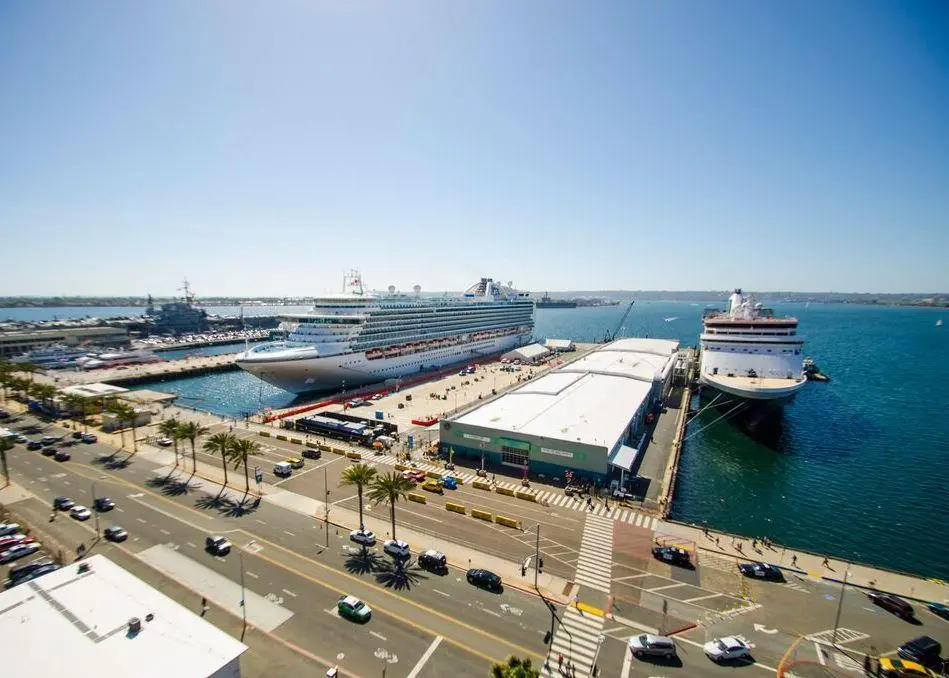
The Port of San Diego in California is doubling shore power at its B Street and Broadway Pier cruise ship terminals with US$4.6m in funding. Installing additional shore power equipment will allow two cruise vessels calling on San Diego to connect to shore power outlets at the same time.
“This is a good investment and it is just one of our many clean air projects on the horizon,” said chairman Michael Zucchet, Port of San Diego Board of Port Commissioners. “In addition to having the infrastructure available for nearly every cruise ship to run off electricity while in port, we’re also installing a solar-powered microgrid at our Tenth Avenue Marine Terminal, adding more public electric vehicle chargers on the bayfront, and more.”
Ahead of legislation
The port, which first installed shore power at the cruise terminals in 2010 goal, aims to complete the shore power expansion by September 2022, four months ahead of recently updated California Air Resources Board (CARB) regulations that require all cruise ships calling on California ports to use shore power from 1 January 2023.
Having two shore power outlets at the cruise ship terminals will result in at least a 90% overall reduction of harmful pollutants such as NOx and Diesel Particulate Matter as well as a reduction in greenhouse gas emissions.
The port is also working on a new shore power system with at least two shore power outlets by 2025 at the National City Marine Terminal; and adding an additional shore power outlet to the Tenth Avenue Marine Terminal’s existing shore power system, which includes two shore power outlets, by 2031.
Related Articles
 ALTERNATIVE FUELS GREENPORT
 OPERATIONS
 ALTERNATIVE FUELS GREENPORT