![PortStrategy[GreenPort]](https://www.portstrategy.com/wp-content/uploads/2026/09/PortStrategyGreenPort.svg)





A tale of two deltas
The Pearl river delta led the way in Chinas capitalist drive,now it faces overcapacity and overtaking by its Yangtze cousin. Wing Kah-goh investigates
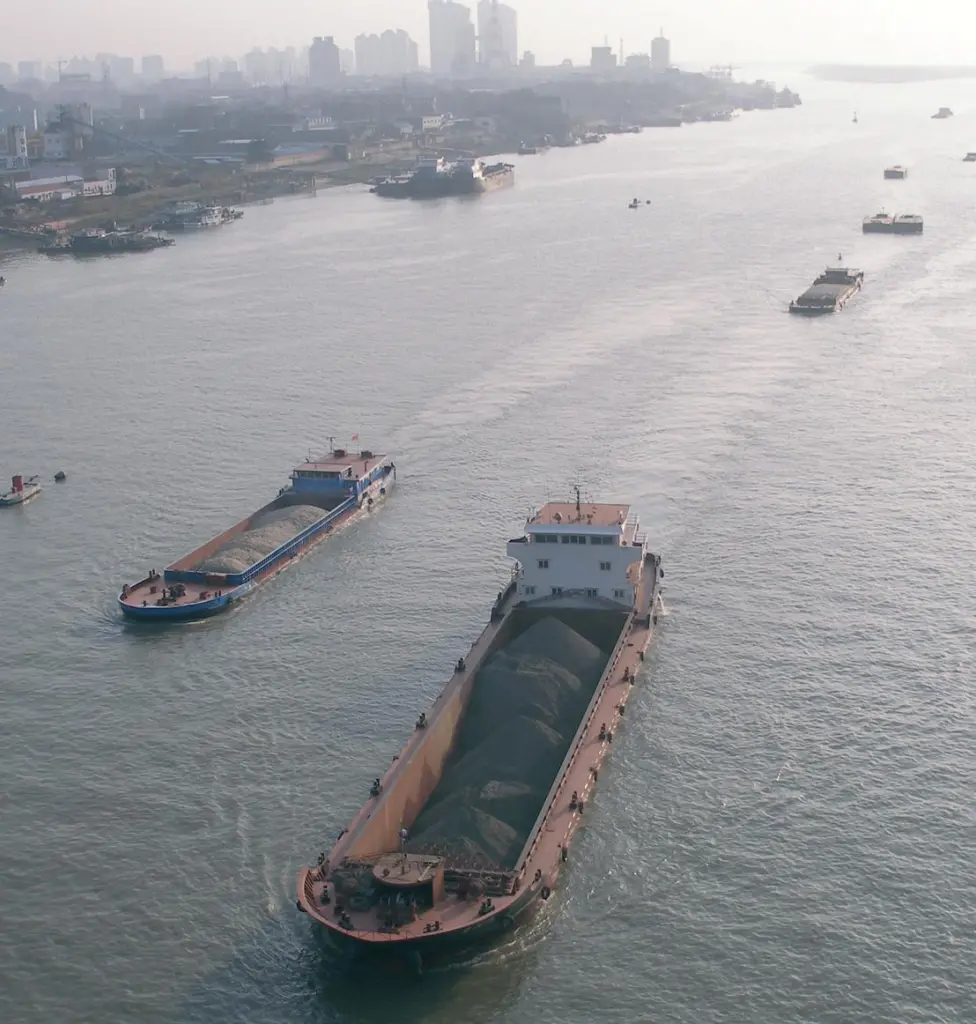
China’s two greatest manufacturing areas are like chalk and cheese when it comes to port development. The Yangtze and the Pearl river deltas account for one-third of China’s total gross domestic product and 60% of the country’s foreign trade.
Spiralling production costs, higher wages and environmental crackdowns often mean today’s low cost products are generating low profits too. On the port side, the Pearl River Delta is far more developed, thanks to it being Deng Xiaopeng’s guinea pig for capitalism as well as by virtue of the simple fact it is a much smaller area.
The development of the Pearl River Delta (PRD) began in 1978 as China started to open its doors to overseas investors.Per capita GDP in the region is more than three times the national average.
The development of the Yangtze River Delta (YRD) began in 1984 when the cities of Shanghai,Ningbo and Wenzhou were declared open to foreign investment.In 1990, the Chinese government further declared Pudong New Zone and several more cities in the Yangtze River valley open to overseas trade and investment. Today, with an area consisting of some 16 cities in Shanghai proper, Zhejiang and Jiangsu Provinces, the Yangtze River Delta accounts for approximately 10% of China’s population.
The Greater Pearl River Delta accounts for less than 0.5% of the land mass and less than 5% of the population of China but has spawned more container berths than anywhere else. However, the area is too container focused and heavily centred on the city of Shenzhen.
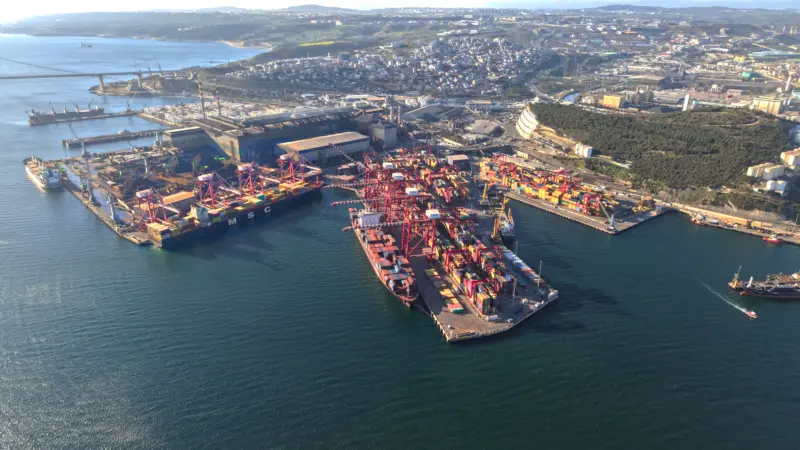
Last year’s growth rate of 14% at Shenzhen to 18.26m teu was the slowest among major Chinese ports, attributable to both a shift to other nearby ports such as Nansha but also the increasing migration of production facilities from the pricey PRD to the YRD – potentially an alarming trend for a city committed to such dramatic port expansion that by 2010 the city will have 45m teu in capacity. This will be achieved with 29 berths added at Yantian, and the opening of the Modern Terminals-led Dachan Bay this year, a site that when fully completed will have 10m teu in capacity.Both Chiwan and Shekou have their own expansion plans too.
To the north of Shenzhen, the new box port of Nansha, Guangzhou’s principle box artery, is growing rapidly. In 2006, Guangzhou posted a throughput of 4.68m teu with the rapidly expanding Nansha accounting for close to half the total.The growth rate of 41% was the fastest among all China’s major ports. This year, Nansha is expected to add another six berths.
Elsewhere,Hutchison continues to grow its presence on the western side of the PRD at Gaolan and has just inked a joint venture to form Huizhou Port International Container Terminals at Huizhou, east of Hong Kong. If the PRD is to absorb all this fantastic expansion it will need to seriously boost its hinterland to head beyond Guandong province to ensure that landlocked Hunan, Jiangxi and Guizhou provinces plus Guangxi province to the west all funnel their cargoes through the PRD.
This is not the case in the far larger YRD, where container volume growth rates are set to be the most prosperous in the world for the coming few years. Shanghai derives two thirds of its throughput from the Yangtze River and all along the delta new container terminals are sprouting up to go alongside the shiny new factories developing ever greater technological feats.
Whether it’s Taicang, Nantong, or Nanjing, box volumes are growing at all YRD ports at in excess of 20% and even doubling year-on-year. The YRD is comparatively underdeveloped transport-wise and road and rail links continue to be worse options than riverine routes.
Excess capacity is not a likely problem for the YRD for the coming decade,while for the PRD a major rethink in strategy will be necessary: something we have already started to see with industry panels in Hong Kong strongly advocating against the construction of a tenth container terminal. Other projects may need to be canned too.
Related Articles
 CONCESSIONS & INVESTMENTS
 CONTAINER & CARGO HANDLING
 TERMINAL OPERATIONS