![PortStrategy[GreenPort]](https://www.portstrategy.com/wp-content/uploads/2026/09/PortStrategyGreenPort.svg)





Busan policy shift
Port management have wised up to reality and are seeking out new ways to boost stagnant volumes, as Wing Kah-goh finds out
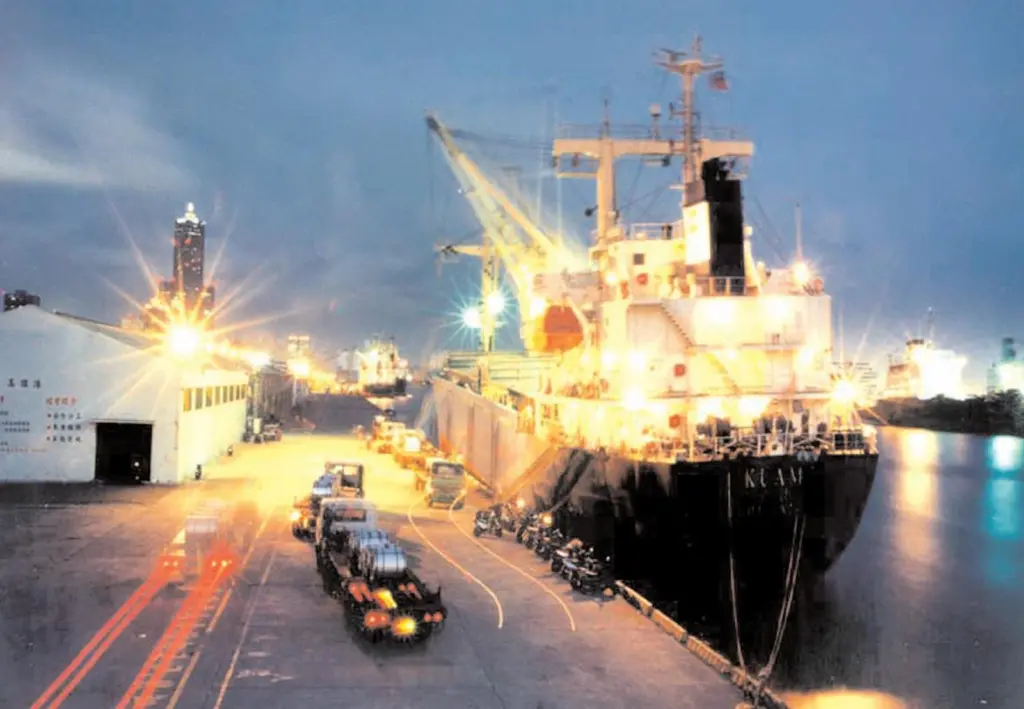
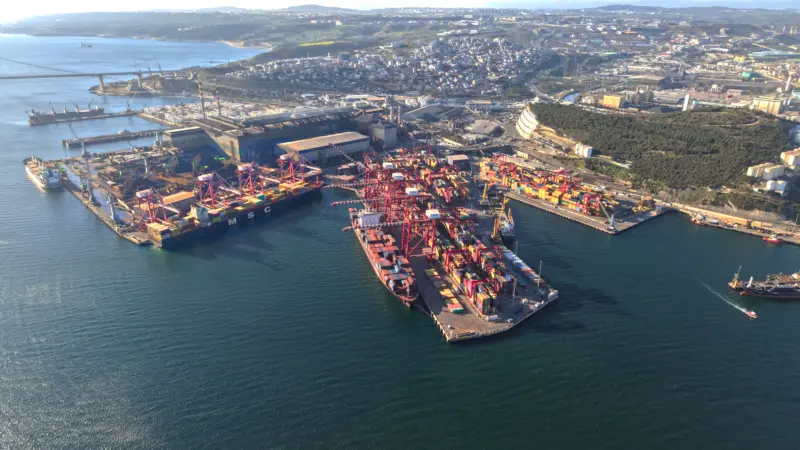
Busan, long living under the deluded illusion of becoming the logistics hub for northeast Asia, has had a change in policy.Last year,throughput grew at its lowest level for 16 years,creeping up 1.6% to 12m teu.Transhipment made up 43% of the total.
The timing was poor for Busan as it inaugurated its vision for the future – Pusan New Port (PNP),unveiled at the start of the year, suffered from minimal traffic. It fell short of its first year target of 800,000 teu dramatically, scoring just 266,000 teu.
Acknowledging its lessening regional importance, Busan Port Authority embarked on a new strategy, looking to invest in its first overseas concessions in Vietnam and Russia’s Far East following a national port regulation amendment. By investing in Vostochny in Russia’s Far East, and possibly Vung Tau in Vietnam, Busan may be able to control the inward and outward bound destination of boxes.
Furthermore, South Korea is in negotiations with Chinese and Japanese governments for collaboration between the country’s ports. “We plan to initiate (port affiliations) with Chinese ports in Tangshan, Qinhuangdao, Lianyungang and Nanjiang, as well as the port of Niigata, Japan,” the Minister of Finance and Economy said this year. If successful, the agreement could lead to an additional 2m teu worth of throughput annually at South Korean ports.
Meanwhile, financial incentives continue to be augmented. Last year, BPA offered $1.2m to companies that transhipped at PNP.This offer has been modified so that it is not conditional on volumes so that now $10 is offered per teu moved. Additionally, a $20 container tax per teu imposed since 1992 was scrapped this year and the results are encouraging: volumes jumped 6% year-on-year in January to 613,579 teu.
Related Articles
 CONCESSIONS & INVESTMENTS
 CONTAINER & CARGO HANDLING
 TERMINAL OPERATIONS