![PortStrategy[GreenPort]](https://www.portstrategy.com/wp-content/uploads/2026/09/PortStrategyGreenPort.svg)





China comes to Pakistans rescue
With a world-class deepwater facility, bankrolled by the Chinese, now up and running at Gwadar in the southwest of Pakistan and PSA International as its operator, the government is now working out the details of a fourth major port. The Pakistani government continues to sift through the bids for a new container terminal at Pakistan Deepwater Container Port (PDCP) in Keamari, not far from Karachi Port.
The new terminal, which will have a 4m teu handling capacity and will be developed in three phases on a build-operate-transfer basis, has seen bids from a number of international companies including DP World, Hutchison Port Holdings and Sharjah-based Gulftainer.
PSA International of Singapore won the rights to operate Pakistan’s brand new Gwadar Port at the end of last year. The facility in Balochistan, built with $200m of Chinese aid and $50m of Pakistani money, is situated 120 km east of the border with Iran, close to the entrance of the Middle East Gulf. Interestingly, as part of the contract, the state, not PSA, sets the rates.
The first terminal has been completed, with a quay length of 600 m and a depth of 14.5 m and cranes already installed. Under the contract, Gwadar port would be given on lease for 40 years on the build-operate-transfer basis.
Gwadar port is Pakistan’s third deepsea port after Karachi and Port Qasim. Unlike Karachi and Port Qasim, which thrive on captive cargoes, Gwadar Port, which is on main shipping lanes, will totally depend on transhipment cargo and will face fierce competition from Sri Lanka, India and the Gulf ports to the west.
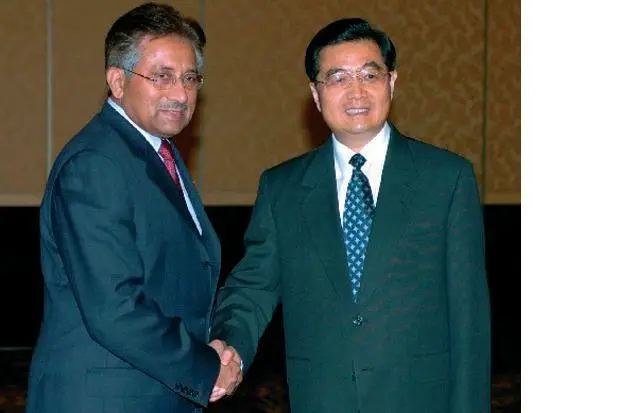
Gwadar will not just be a box destination though. During a four-day visit by Chinese President Hu Jintao last December, the Pakistani Board of Investment and the Great United Petroleum Holdings Company of China signed a memoranda of understanding on the construction of a $12.5bn petrochemical terminal at Gwadar.
For China, aiding the development of Gwadar gives the People’s Republic a strategic outlet onto the Arabian Sea. This year, China inked another port aid deal in south Asia; this time helping Sri Lanka develop Colombo port.
With Gwadar coming onstream, Pakistan has this year brought its ports kicking and screaming into the modern era of operations.
In January, the World Bank completed a comprehensive assessment of Pakistan’s ports, calling for sweeping changes including a 15% reduction to port charges; a drastic reduction to staff at its two main ports, Karachi and Port Qasim; the outsourcing of port services to the private sector, and closure of Karachi Dock Labour Board following retrenchment of its staff among others. It also recommends increasing port draughts by dredging, availability of 24-hour navigation services and reviewing the number of naval officials in port authority appointments.
It was only from last December that Pakistani ports started operating on Sundays.
The World Bank estimated that overall the inadequate and inefficient transport and trade logistics system is imposing a cost to the economy equivalent to 4%-6% of the gross domestic product.
According to the World Bank, container handling charges in the port of Karachi were 1.5 to three times more than the charges in Colombo or in the port of Nhava Sheva near Mumbai in India. Ship dues per ship calls were five times more than those ports in Sri Lanka and Hong Kong and 20% higher than in Nhava Sheva. Port productivity was also low with an average ratio of 55 containers handled per ship berth per hour as compared with a range between 65 and 100 in the three regional ports.
Meanwhile, the International Bank for Reconstruction and Development is providing $79m to increase productivity of the Karachi port by reducing Karachi Dock Labour Board-related (KDLB) labour costs; and to facilitate the re-entry of former KDLB registered workers and employees into the labour market.
The bank report said the KDLB labour scheme was created in 1973 to protect the rights of dock workers by registering them and providing regular work on a rotational basis.
When KDLB started its activities, more than twice the requirement of dock workers registered. Since then, increased containerisation and other forms of mechanised handling have greatly reduced the need for manual workers.
The majority of dock workers currently registered by KLDB have low education and do not have the skills for modern cargo handling operations, having been trained for outdated general cargo manual operations. Today, containers represent more than two thirds of Karachi port’s dry cargo.
Related Articles
 CONCESSIONS & INVESTMENTS
 CONTAINER & CARGO HANDLING
 TERMINAL OPERATIONS