![PortStrategy[GreenPort]](https://www.portstrategy.com/wp-content/uploads/2026/09/PortStrategyGreenPort.svg)





Chinese ports to benefit from waterways push
The prominence of China’s river ports is to increase as a result of rising fuel prices, worsening road congestion and a search for greener forms of transport, according to a new report.
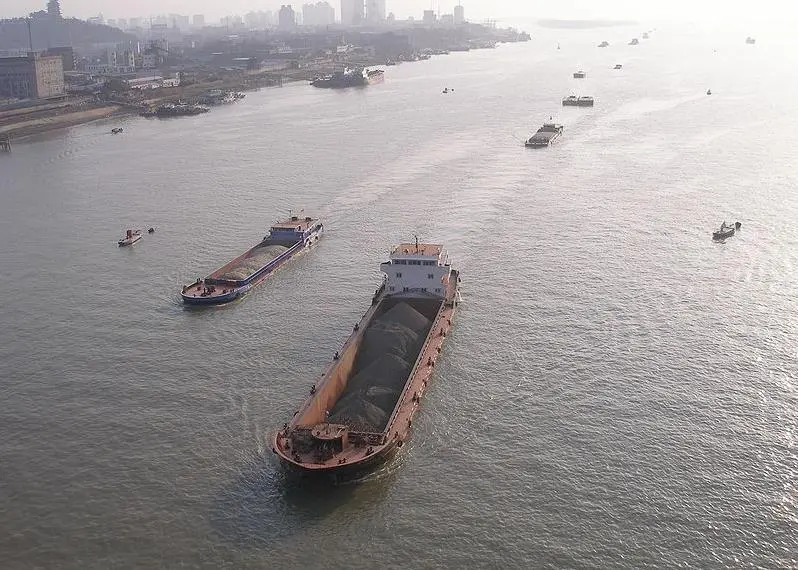
A shift toward the less-expensive hinterland has been pushed by the central government who has offered tax breaks to firms that relocate. The government has now also decided that the waterways will become a top priority for co-ordinated planning and investment with the aim of offering an alternative mode of transport within 10 years, explains the latest edition of Yangtze Transport: Accessing China’s Interior.
Money will be invested in dredging to improve the quality of the Yangtze trunkline as a shipping channel, while the vessel standardisation programme will be accelerated so that old vessels are withdrawn more rapidly. New legislation will be introduced to minimise energy consumption and carbon emissions.
Cargo throughput at the 24 major ports on the Yangtze trunkline is still relatively small, and concentrated heavily in the lower reaches – the Jiangsu ports from Taicang to Nanjing accounted for 67% of the Yangtze’s total throughput in terms of both containers and general cargo last year. However the dynamics seem to be changing, albeit slowly, as more manufacturers set up plants in central and western provinces.
The business report notes that four of the largest, global cosmetics group L’Oreal, Taiwan-based TPV, LWB Refractories and the US-based Terex Corporation which has a joint venture with Changjiang Engineering Crane, are studying the options of waterway outlets/rail networks and the impact of new infrastructure on overall logistics – including emissions.
Related Articles
 CONCESSIONS & INVESTMENTS
 CONTAINER & CARGO HANDLING
 TERMINAL OPERATIONS