![PortStrategy[GreenPort]](https://www.portstrategy.com/wp-content/uploads/2026/09/PortStrategyGreenPort.svg)





DIRECT CALLS FOR NORTHERN BLACK SEA PORTS
Black Sea ports have traditionally been served by feeders out of Istanbul, Malta, Piraeus and even Gioia Tauro rather than being subject to calls from liner services. However, as the region increasingly sources its imports from China rather than Western Europe, shipping lines have reacted by establishing new liner services, which terminate/originate in the Black Sea. But the question remains: is port infrastructure up to the task? Alex Hughes investigates.
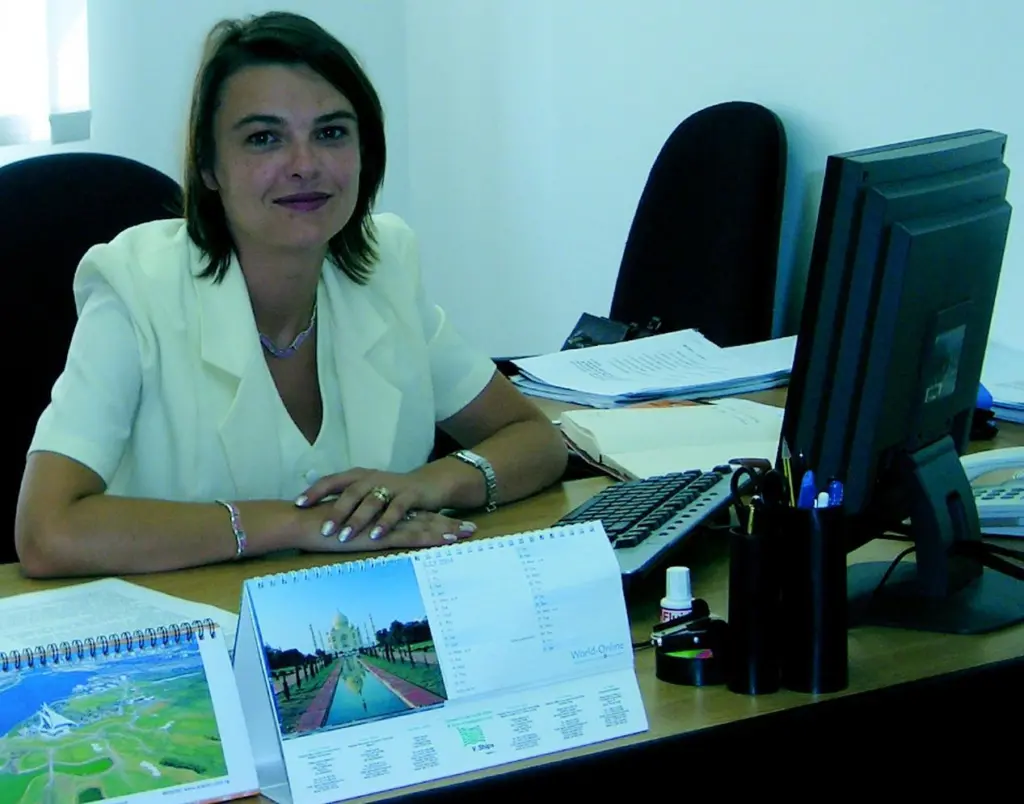
The answer, at least as far as the Romanian port of Constantza is concerned, is a definite yes! Constantza South Container Terminal (CSCT), a wholly owned subsidiary of Dubai Ports International (DPI), the management and consultancy arm of Dubai Ports Authority, opened for business on the port’s Pier IIS in April 2004. The new facility, which was built and equipped through a loan to the Romanian government by the Japan Bank for International Cooperation, will be run by DPI for at least the next 18 years.
CSCT currently has 625 metres of quay with alongside draught of 14.5 metres and a 93,000sq metre stacking yard. Quayside handling equipment, which initially consisted of three Mitsubishi (MHI) ship-toshore cranes, has since been reinforced by a new Gottwald MHC.
However, according to CSCT business development manager Ms Raluca Daraban, this is an interim solution until two additional quayside gantry cranes can be deployed in the autumn. MHI also supplied the eight RTGs adopted for yard stacking duties, although additional RTGs will be needed once the new quay cranes come on line.
“Average hourly productivity is 25 moves per crane. Even though this is by far the highest figure achieved by any port in the Black Sea area, where no modern container terminals yet exist, our aim is to achieve better than 30 moves once our employees become more experienced, ” says Daraban.
Contantza port as a whole reported throughput growth of 51.5% in 2003, handling total box traffic of 206,449TEUs as opposed to 136,272TEUs in 2003, reflecting its position as the Black Sea’s leading hub for containers. However, box movements are split between no fewer than four sites, which include a berth run by AP Moller for dedicated Maersk Sealand traffic that is some 800 metres distant from the consolidation area, plus two infrastructure and equipment-challenged independent operators – Umex and Socep – in addition to CSCT.
Quizzed as to how CSCT can possibly make a profit against such a highly competitive backdrop, Daraban emphasises that the terminal will be operationally profitable by the end of the current year even with a projected throughput of 80,000TEUs. “Although we have sufficient financial stability and strength to match any low tariffs being offered by rival terminals, we feel that there will never be a need to drop prices as we are confident that the higher quality of our services could never be matched by any of our competitors, ” she unequivocally states.
Asked whether DPI had ever sought closure of the other terminals as a condition of investing in the port, she stresses that this was not necessary, given that rising levels of box traffic in the Black Sea will require more capacity, not less.
With regard to regional competition for CSCT, Daraban points out that many ports in the Black Sea are currently trying to grab a slice of European-bound cargo emanating in the Far East, with the Ukrainian ports of Odessa and Illyichevsk, Russia’s Novorossyisk and Varna in neighbouring Bulgaria all potential rivals. She nevertheless once again emphasises that Constantza is by far the best situated, given that it offers deeper draught, better inland connections, is closer to the entrance to the Black Sea and is reasonably close to other competing ports. CSCT also expects to attract containers from the whole Danube-Black Sea channel, since this passes very close to the terminal and could potentially be used by barges plying the route. A new highway to Bucharest is due to be completed in mid2005, with an entrance near the South Port area, a great asset for haulage companies on this route.
To date, CSCT mainly receives calls from 1,200TEU vessels, although current direct callers are looking to increase the uptake of the capacity of their vessels and also to eventually deploy bigger ships, while other shipping lines are looking to commence direct calls too.
“Other terminals in this region are heavily congested and are suffering from a progressive lack of investment. Our location makes us a potential hub port for regional transhipment boxes, especially since we are unique in being able to offer shipping lines post-Panamax lifting capability, ” says Daraban, adding that the common user facility is also the only terminal in the region to have the Navis operating system in place, while within Constantza it is the only terminal capable of handling two block trains without additional shunting.
UKRAINE’S UNTAPPED POTENTIAL Traffic at the two leading Ukrainian ports of Odessa and Ilyichevsk is also on the rise. The former reported a 44% increase in container throughput in 2003, reaching 159,000TEUs. Despite not being planned as the country’s leading box handling installation, the 111,000TEUs racked up in 2002 in effect propelled it into first place, overtaking the previous incumbent, Ilyichevsk, which the government has long promoted as Ukraine’s main international gateway. In 2003, Ilyichevsk also reported strong growth, throughput rising 42% to 152,000TEUs.
The improvement in trade at Odessa last year was due, in part, to the return of Maersk Sealand in February, followed by the commencement of new feeder services marketed by Sea Consortium’s Xpress Container Line and P&O Nedlloyd. Andrey Yegorov, director general of Odessa Commercial Seaport, also acknowledges significant growth in box traffic from established lines, such as Hapag Lloyd, CMA CGM, Bulcon, Norrasia, Ermes and Taros, while CMA CGM now also makes direct calls on its liner service from China.
The rise in traffic has continued into 2004, with 90,000TEUs racked up in the half year, and projections of year end volumes topping 200,000TEUs despite the container terminal having a nominal capacity of just 100,000TEUs. Unfortunately, few opportunities exist to expand the facility.
Around 500 daily truck movements have resulted in landside congestion at the port having reached epidemic proportions. Three block train services have therefore been introduced. Of these, the “Viking” enables a 56-hour transit to be made between the port and Klaipeda in the Baltic, in what would otherwise be a 15-20 day journey by sea, while the “Rusich” gives access to St Petersburg.
To help find solutions to the congestion, the port authority entered into a five-year joint venture agreement with Hamburg Port Consulting (HPC) to bring much needed private sector know-how to the container terminal. The new management company, HPC Ukraine Ltd, took over on 1 July 2001 and almost immediately brought in its Container Terminal Information System (CTIS) in order to optimise use of space in the 125,000 sq metre facility. However, disputes regarding available investment have, it seems, dampened the relationship somewhat, with the current contract rumoured to be being re-negotiated.
The terminal has two berths: the 310 metre B2 has alongside draught of 12 metres, while B3, which is 220 metres, is 0.5 metres shallower. Some $8m of new investment has been made in equipment.
Berth two, for example, is now worked by one Liebherr MHC, a modernised MHI gantry and a brand new Liebherr quayside gantry.
With the quayside rail having been extended to 180 metres, the berth can now accommodate two feeder vessels simultaneously. B3, on other hand, relies on two multi-purpose Kondor jib portal cranes, supplied by manufacturer Kranbau Eberswalde, allowing some noncontainer vessels to also dock there.
In terms of the yard, capacity is around 7,000TEUs, with four new reachstackers undertaking front line duties and two FLTs taking care of empty box movements.
Despite this upgrading work, Alexey Povoroznyuk, part of the local management team of shipping agents Barwil, notes that the port suffers major headaches when trying to satisfy all the berthing requirements of the 11 shipping lines now calling weekly at the container terminal. Even so, he is adamant that the situation at Odessa is much better than that at Ilyichevsk, where no private sector expertise has yet been brought in.
“Ilyichevsk was specifically designed to handle containers; they have more yard space, better warehousing and other container facilities. Despite this, the container terminal at Odessa can achieve highs of 40 moves per-crane-hour on occasions, while Ilyichevsk struggles to reach 20. As a result, it is faster to turn around vessels in Odessa and there are few delays in releasing containers, which, as a shipping agent, is exactly what I want, ” he notes.
Asked to explain why Ilyichevsk cannot match the current performance at Odessa, Povoroznyuk points out that the equipment is inferior; the cranes are old and often break down; while no reachstackers have yet been acquired to help improve yard performance. Nevertheless, shipping lines do still want to call there and new developments are awaited by the industry.
However, despite both Odessa and Ilyichevsk receiving direct liner calls from CMA CGM’s Bosporus Express 1 and Bosporus Express 2 services respectively, Barwil’s client, MSC, nowadays makes use of Constantza to feeder boxes into Ilyichevsk, rather than making direct calls. This service takes just 16 hours, which Povoroznyuk says is highly competitive.
“I am not yet convinced that the local market can justify many more direct liner calls. The problem is the lack of berthing guarantees, which was the key reason why MSC prefers to feeder boxes into the Ukraine and not call direct.
If large ships are delayed here, the knock-on effect to schedules can be very damaging, ” says Povoroznyuk, who nevertheless insists that container traffic into the Ukraine will continue to experience double digit growth as rising break bulk rates make it common sense for shippers to switch to containerised consignments.
NOVOROSSIYSK PLAYS CATCH-UP With the break-up of the former Soviet Union, Russia found itself in the embarrassing position of having to rely on Odessa and Ilyichevsk through which to conduct its Black Sea container trade. However, Novorossiysk, better known as an oil trading port, has been progressively upgraded to enable it to also compete for box traffic, while discriminatory rail tariffs have persuaded shippers not to send containers across the neighbouring border. Geographically, nowadays, Novorossiysk acts not only as the gateway to southern and eastern Russia, but also to Central Asia and is often touted as a potential hub for shipping lines in the Black Sea region.
Traditionally, two terminals have competed for container business, but were joined in April 2004 by the NUTEP Container Terminal, a joint venture between the National Container Company (LLC) and the Delo Group. The terminal is centred on the 297metre Berth 39, which can accept vessels drawing up to 11.5 metres. Two 40-tonne Vulkan Kocks quayside gantry cranes are currently active, with three Ferrari reachstackers deployed in the 37,000 sq metre stacking yard.
Additionally, NUTEP has on order Terberg trucks to undertake the quay-to-yard shuttle.
Current capacity is 70,000TEUs, although planned expansions should bring this to 600,000TEsU. The eventual size of the terminal could therefore be 253,000 sq metres, with three berths, respectively offering 11.5, 13.5 and 15 metres of alongside draught, splayed out the length of the 930 metre quay.
To date, the terminal has attracted the interest of two lines, with MSC operating two 500TEU feeder services and Greek feeder operator, Blue Container Line deploying one 300TEU vessel. According to Sergey Popov of local shipping agent Barwil, the port community expects NUTEP to become the port’s main container terminal. “At the moment, its weak point is the lack of a direct rail connection, which we view as vital. Until the planned connection is put in place, there will be problems in dealing with the large amount of road traffic, which often sees trucks having to queue for up to six hours before dropping off or picking up containers, ” notes Popov adding that the port as a whole is linked to both Moscow and Almaty by daily container block trains.
Main rival is Novorossiysk Commercial Sea Port which boosted throughput last year from 60,000 to 90,000TEUs. Activities are restricted to berths 14, 17 and 18, where the combined quay length is 665 metres and alongside draught 8.25, 11 and 11.5 metres respectively. The three berths share a combined 35,000 sq metre stacking yard, which is operated by four 40-tonne Kalmar reachstackers.
In terms of equipment, two 100-tonne Gottwald MHCs are deployed on berths 17 and 18, where ZIM concentrates three feeder services operated by 700-1,000TEU vessels. Berth 14 has two smaller Gottwald MHCs and a 40-tonne Kondor crane to service two common feeder calls, one from CMNI using 500TEU vessels and the other by CMA CGM using 450TEU vessels, both of which are patronised by Hapag Lloyd and P&O Nedlloyd.
Maersk Sealand uses Novorossiysk Timber Port (NTP) whose own throughput increased from 25,767 to 41,317TEUs in 2003.
Container handling is restricted to the 102 metre Berth 28, where alongside draught is just 8.25 metres. Two Liebherr MHCs service the two current calling Maersk Sealand feeders.
“Prior to April 2004, both MSC and Maersk Sealand used the timber port, which really was not equipped to handle such larger amounts of box traffic. MSC therefore leapt at the opportunity to move to NUTEP when that terminal opened, although we do understand that NTP is currently seeking additional container business, ” notes Popov, whose own company, Barwil, is also hoping to represent a new container service; former client MSC opened its own sales office in 2002.
Related Articles
 CONCESSIONS & INVESTMENTS
 CONTAINER & CARGO HANDLING
 TERMINAL OPERATIONS