![PortStrategy[GreenPort]](https://www.portstrategy.com/wp-content/uploads/2026/09/PortStrategyGreenPort.svg)





East Asia
Wing Kah-goh casts his eye across terminal developments in the worlds key box market, east Asia, starting in Korea with Pusan New Ports spectacular turn-round
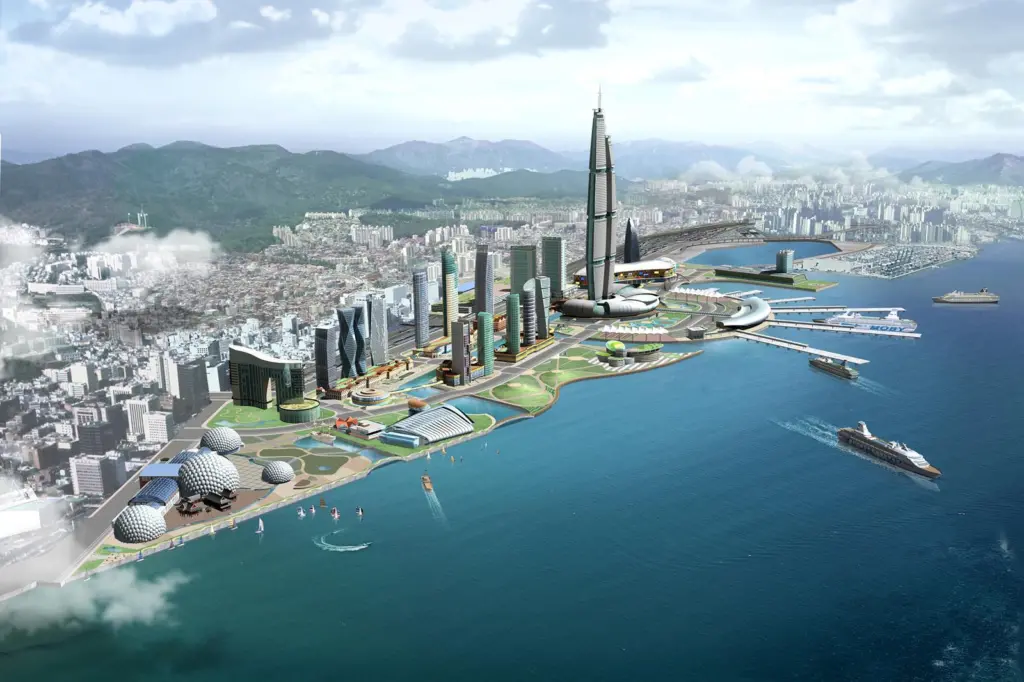
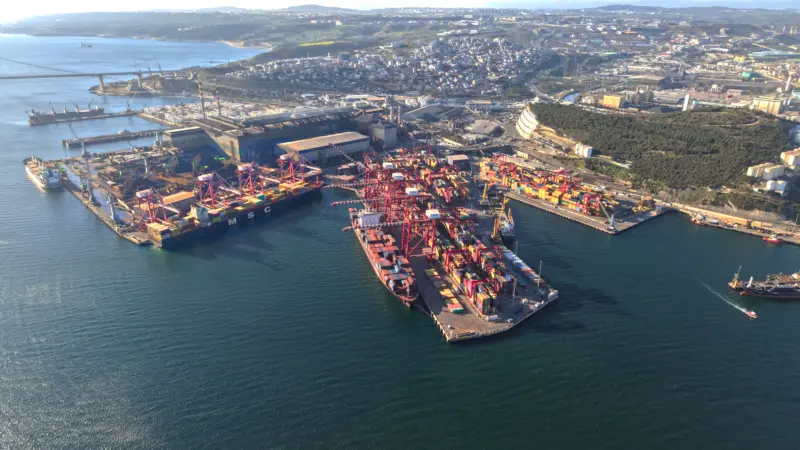
Holed below deck before launch. Dead in the water. Yet another Korean white elephant. The obituaries for Pusan New Port (PNP) came early, and were lengthy and vitriolic. However, reports of its early demise now appear greatly exaggerated.The move last year by Maersk Line to shift more than 700,000 teu from the old port to the DP World-operated Pusan Newport Co (PNC) was a huge fillip. Maersk joins Mediterranean Shipping Company, CSAV, ZIM, Emirates and United Arab Shipping Company at the DP World facility.
Patrick Bol, managing director of PNC said: “The increased mainline volumes will also attract feeders to call directly at PNC, increasing transshipment activity as well. This is only the start, there are more shipping lines to follow; in 2009 Hanjin and Hyundai will move to adjacent Newport terminals further accelerating the Busan cargo gravity shift to the West.”
And the good news has not stopped there for the beleaguered Busan Port Authority. In early January this year Macquarie Korea Infrastructure Fund, a subsidiary of Australian financial services giant Macquarie, announced an investment of Won259.4bn ($276.9m) in Pusan New Port Container Terminal.
The terminal company, which already boasts CMA CGM, Korea Marine Transport Co and Hyundai Development as investors, has a concession to develop, operate and maintain phase 2-3 at Pusan New Port, a fourth berth, 1,400m long terminal with an annual capacity of 2.7m teu.
So finally two years after it launched to much fanfare and near zero custom the mega port 30 nautical miles west of the old port in the city centre, which eventually will spawn 30 berths, is now up and running. It has come at a price though.
The excess capacity that has entered the city with the additional 3.5m teu at Pusan New Port means that the six operators in the city now have to fight for every 20 ft box. One terminal operator reported that rivals were charging as low as $20 a box to load and discharge.
A $20 container tax per teu imposed since 1992 was scrapped in 2007. BPA has also started investing overseas in ports that it feels can funnel cargo back to Busan. December saw its first investment – $109m – in the port of Nakhodka in the Russian Far East. A second investment, in southern Vietnam, is in the offing. Whatever the cost, Pusan New Port is not allowed to fail. Locals, though, may well complain that in the short term they will see little return for the huge tax dollars put in the new port. Having burnt through huge lumps of taxpayers money, BPA has just announced it will issue $298m in bonds to further expand.
What the Koreans have to contend with is the container collusus of China which last year moved more than 100m teu. Busan’s rivals include great maritime centres such as Shanghai, Qingdao and Dalian. Increasingly though, another name is making waves – Tianjin. If Deng Xiaopeng was known for turning Shenzhen from padi field to uber-capitalist haven and his successor Jiang Zemin was behind the stratospheric rise of Pudong in Shanghai, the current leadership in China – President Hu Jintao and Premier Wen Jiabao – are nailing their colours to the mast in creating a new financial and trade metropolis in the Binhai area of Tianjin – the coal city on Bohai Bay that serves as Beijing’s maritime artery.
Leaders say that this once-sleepy city of 11m can deliver the sort of spur to the national economy that the development of Shenzhen and the Pudong area of Shanghai provided in the 1980s and 1990s. Cui Jindu, the vice-mayor, maintained: “We want Tianjin to be northern China’s gateway to the outside world, a high-value manufacturing and research and development base, an international centre for shipping and logistics.”
One of four municipalities with province-level status in China, Tianjin’s economy has almost doubled in size in the first half-decade of the 21st century, to 366bn yuan ($51.3bn) in 2005. Per capita GDP also nearly doubled to more than 35,000 yuan ($4,902), compared with the national average of just over 3,000 yuan ($420.2).
Confirmation by PetroChina that it had made one of the world’s biggest oil and gas discoveries of recent times in the shallow waters of Bohai Bay, just offshore, is set to lead to petrodollars, further fuelling Tianjin’s development.
The city’s ambitions have won some impressive international votes of confidence. Last year Airbus chose Tianjin for the site of its A320 aircraft assembly plant, its first foray outside Europe.
Among the 4,000 or more foreign-funded enterprises with manufacturing bases in Tianjin are Coca-Cola, Nokia, Nestle and the pharmaceutical giant GlaxoSmithKline.
All of these developments have not gone unnoticed by port operators. Tianjin is locked in a fierce battle with both Dalian and Qingdao for port supremacy in north China – its preferential treatment from Beijing likely to steer it ahead. Tianjin Dongjiang bonded port area’s first phase of development, six container berths with a total investment of 12bn yuan ($1.7bn), started operations in December. Total investment in the Dongjiang port area is expected to reach 22.6bn yuan ($3.2bn), according to earlier state media reports. The Tianjin local government plans to construct 20 new container berths with a total annual capacity of 11m teu in the Dongjiang port area in the future.
Tianjin Port (Group) Co Ltd, parent of Hong Kong-listed firm Tianjin Port Co Ltd and the country’s fourth-largest port operator, is the major investor in the bonded port complex. The free trade zone is just the third in the whole country.
CSX World Terminals (now consumed into DP World) was the first foreigner here, investing nearly ten years ago.
APM Terminals, meanwhile, has teamed up with Tianjin Port Development and Cosco Pacific on a 3.6bn yuan ($477.3m) terminal which will start up in late 2008 or early 2009. As of 2006, PSA International also has a stake in the city’s booming port scene, while HPH came close on two occasions to investing but both times was thwarted at the eleventh hour on contractual issues.
China Merchants Holdings announced early last year that it is to invest 3bn yuan ($387m) in a container terminal project at Tianjin. “We plan to build four container berths in the Tianjin port, each capable of accommodating 600,000 teu to 700,000 teu,” CMH chairman Dr Fu Yuning told reporters at the time, adding that construction is slated to begin in 2010.
French liner CMA CGM, meanwhile, is preparing to invest in a container terminal at phase three of North Basin of Tianjin Port. The group plans to set up three container berths at phase three through a joint venture formed with Tianjin Port and a third unspecified party.
The local government expects Tianjin to crack 15m teu within five years, up more than double from the 7m it shifted last year.
Related Articles
 CONCESSIONS & INVESTMENTS
 CONTAINER & CARGO HANDLING
 TERMINAL OPERATIONS