![PortStrategy[GreenPort]](https://www.portstrategy.com/wp-content/uploads/2026/09/PortStrategyGreenPort.svg)





Fighting talk
A five-year plan to boost Taiwans ports could move the island back into the premier league
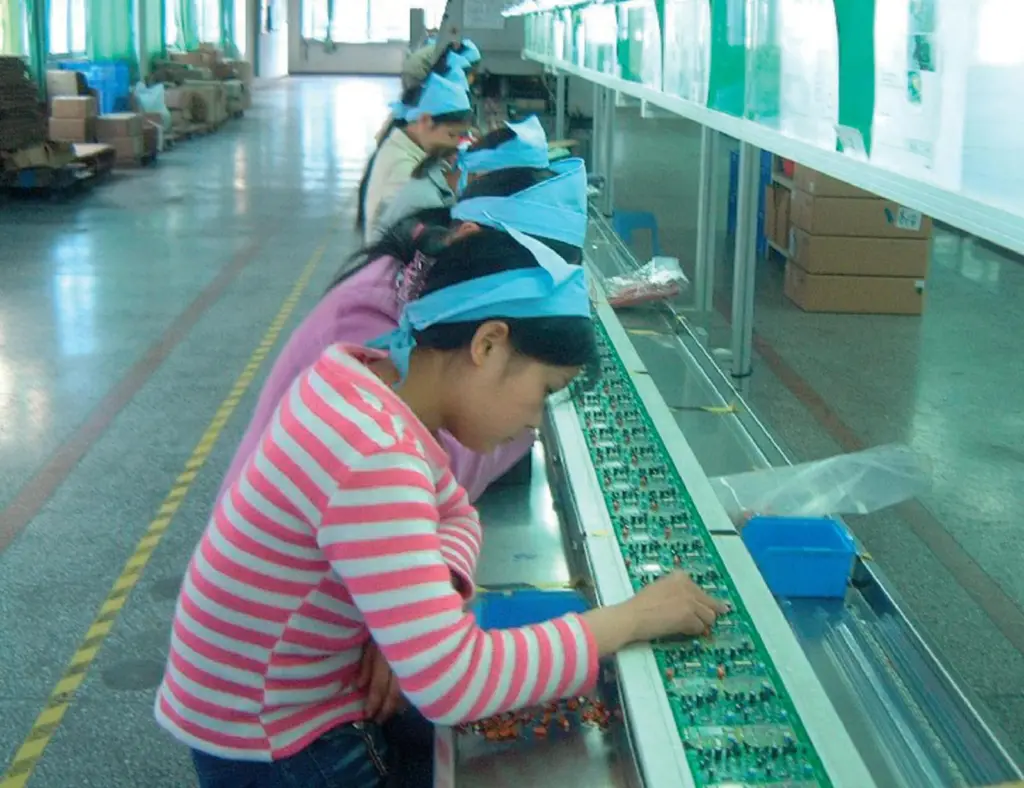
Twenty years ago, kids picking up a toy and flipping it over would see the common phrase ‘Made in Taiwan’. This is no longer the case. The Taiwanese continue to manufacture in ever greater volumes but across the Taiwan Strait and in the People’s Republic of China, where Taiwan has become one of the largest investors. A lack of cross strait access has hindered port development on the island and worse still, the rise of the likes of mainland ports such as Xiamen, where Hutchison and APM have pumped in cash, means that were cross strait ties to be resolved the competitive prices offered at Xiamen would be very hard for Taiwan’s premier port, Kaohsiung, to match.
Nevertheless, even as Kaohsiung slid down the rankings just last month,Taiwan’s Council for Economic Planning and Development issued a five-year plan to make Taiwan’s ports competitive. The government will work to maintain Kaohsiung port as the world’s sixth largest port and boost the volume of containers handled by domestic commercial ports to 17.9m teu by 2016, CEPD officials say.
Lin Chih-ming, director-general of the Department of Aviation and Navigation under the Ministry of Transportation and Communications, says the volume of containers handled by domestic ports is expected to reach 10m teu this year for the first time ever.
Through the building of the sixth container centre at Kaohsiung port, the government hopes to increase the volume to 15.7m teu by 2011 and further to 17.9m teu by 2016, Mr Lin says. CEPD officials say Taiwan’s four international commercial ports, namely Keelung, Taichung, Kaohsiung and Hualien, have maintained normal growth in terms of volume of cargo handled and cargo throughput, but there are signs that growth is slowing down.
Kaohsiung port remains the most important international commercial port in Taiwan, handling more than 50% of the country’s cargo volume, compared with 17% handled by Taichung and 13% handled by Keelung, the officials say. Also, Kaohsiung handles more than 70% of the country’s containers, with 90% intended for transhipment, they note.
As China has set a goal to increase the containerhandling volume of Xiamen port to 16m teu by 2020, Taiwan must make sure that it also makes progress to secure Kaohsiung port’s status as the world’s six largest port and even upgrade its ranking, they say. According to Mr Lin, Kaohsiung port handled a total of 9.47m teu in 2005 and is expected to see the volume rise further to 10m teu this year.
He says the first-phase construction of the sixth container centre is expected to be completed in 2011, after which the container-handling capacity of Kaohsiung port will increase by 2m teu per year.
One way to push Taiwanese ports’ competitiveness has been to promote the idea of free trade port statuses for the four main ports of Kaohsiung port, Keelung port, Taichung port and Taipei port plus Tao Yuan air cargo park. All goods and equipment brought into these port zones will be treated as export products, eligible for tax exemptions and rebates in accordance with related statutes starting this year.
Meanwhile, construction continues on Taipei port. “I believe that this harbour will become the most important international port in northern Taiwan. Maybe it will be more important than Keelung Harbour, someday,” Premier Su Tseng-chang said earlier this year.
The government has been trying to develop port facilities at Taipei port to ease the pressure on the overloaded and bottlenecked port of Keelung. Both private enterprises and the government have invested in facilities in Taipei port. To date, nine port facilities have been completed and are operating.
Formosa Petrochemical Oil Corp owns and runs six port facilities, from which it ships oil from its Mailiao oil storage complex in Yunlin County.Tonglit Logistics Co also owns two port facilities, from which it imports and exports vehicles and automobile parts.Two other companies share another port facility for shipping oil-related products. A total of 59 port facilities are expected to be completed before 2021.
Related Articles
 CONCESSIONS & INVESTMENTS
 CONTAINER & CARGO HANDLING
 TERMINAL OPERATIONS