![PortStrategy[GreenPort]](https://www.portstrategy.com/wp-content/uploads/2026/09/PortStrategyGreenPort.svg)





Fire in the belly
India’s interior is forcing large scale port growth on both coasts. Stevie Knight reports
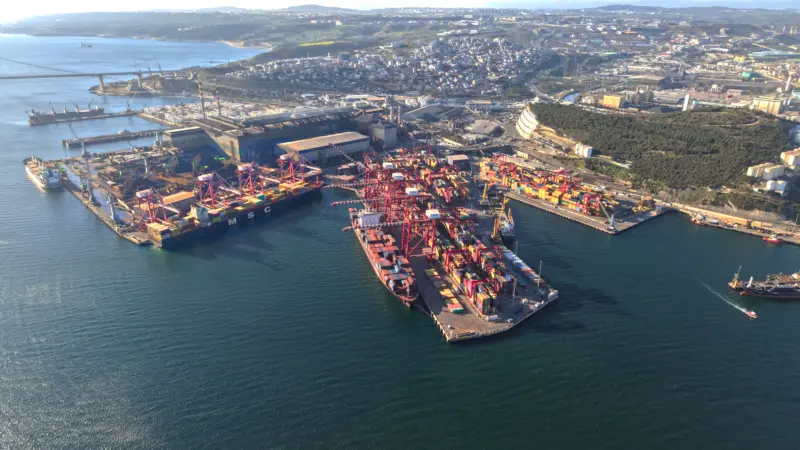
Ennore Port’s recent opening of three new terminals, has, according to the Minister for Shipping, GK Vasan, pushed India’s capacity to around “the one billion tonne mark”.
But most, including Mr Vasan, have noticed it’s not enough to keep pace with India’s supercharged growth, and he has plans to more than treble this milestone by 2020.
With 22 private-public partnerships sealed in the last year and a half, he is looking for more of the same to save the day – and in the case of Ennore (India’s corporate port), a public floatation to get the funds needed for infrastructure work.
There has been a sea change in India’s ports over the last few years, as the Indian government, which used to dominate all maritime activity, saw the wisdom of encouraging the private sector to take the lead – and largely bear the burden. Ennore is a case in point. Of the recent installations, two bulk terminals have been built on a build-operate-transfer (BOT) basis, while the port has developed the auto facility itself in order to snare high value cargo from nearby Japanese ventures.
It’s a massive turn around. A decade ago, the private sector handled just 5% of Indian cargo, and at present this proportion stands at just over a third. But it’s predicted that the private sector will handle half of the nation’s cargo by 2015.
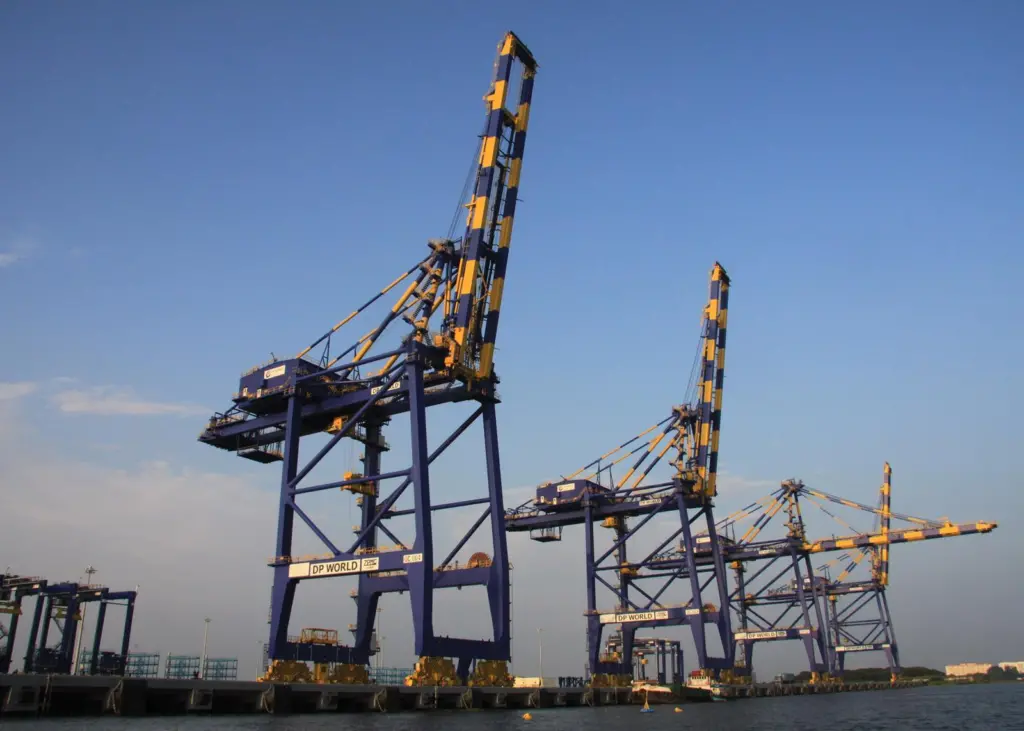
Many major government ports now run largely as landlords – with the larger operators being invited in to run BOT terminals on a revenue-sharing basis. For example, DP World has interests in JNPT, Cochin and Vishakhapatnam, and virtually all greenfield port developments are now private-sector financed. And in order to help them stay up with the game, India’s Shipping Ministry is to raise Rs50bn ($1.1bn) by issuing tax-free bonds to fund major ports’ dredging and infrastructure development. But although there’s a recent move to give major ports freedom to decide their own pricing instead of being ruled by the regulator, they are still quite a long way from autonomy.
It should be noted these big changes came on the back of the success of private investment, a success which stung the government into action.
The private terminals at JNPT were, explains Shailesh Garg of Drewry, the first off the block, which gave the industry reason to feel hopeful for the future of containers, and JNPT still holds most of the box traffic. However, multipurpose Mundra port has for some time been the one that many people watch, as the massive Adani Group simply pulled the fabric of the infrastructure network in its direction. Firstly, the port was set up to access both natural deep water and the riches of India’s northwest, an area which accounts for around 60% of the whole country’s traffic.
Then Adani’s next move was to develop hinterland connections. Bhuvana Ramalingam of APM Terminals explains the usual problem: “You tend to get pockets of land, all owned by a number of different people, which makes developing road or rail links difficult.”
Because of this, Mr Garg explains that Adani used considerable foresight in acquiring land, much more than its initial operations needed. It installed 65 km of private railway connecting the port to the national rail network junction at Adipur – then simply waited for the government policies to catch up.
Other players haven’t had such an easy time, and a special economic zone (SEZ) for JNPT failed because of land issues. One source points out: “Private owners sometimes have their heads in the ground and start demanding huge sums for compensation, and occasionally political parties get involved and this again stirs things up.” Mr Garg adds though, that it’s the same everywhere, the first parcel of land is usually cheap, but the rest get progressively more expensive. Further in India there may well be a complex mixture of land contracts to negotiate, from the parcel that comes with the port development issued by the government, through to the freehold or leasehold areas that are needed for connectivity.
It obviously helped Mundra’s development to have enough land for an SEZ, ensuring that anyone setting up facilities nearby could enjoy considerable tax benefits. However, Mundra’s first foray into boxes wasn’t so well received, and in the end it sold on its container operation, which proved to be the turning point. Now Mundra SEZ has a number of projects to its name, including a new coal project at Visakhapatnam on the east coast.
The impact of India’s enormous energy shortfall can’t be overstated, as huge megawatt stations that will treble the current power output are in the pipeline – alongside with a concomitant hunger for steel.
Mr Garg explains a lot of the new private developments are actually feeding these power stations or steel mills, guaranteeing a draw. Essar’s Hazira terminal, for example, services the company’s nearby steel plants, and Adani and Tata are now placing industries like power stations and steel mills around Mundra, an interesting reversal on the usual trend of power first and ports second, but one that makes sense. East coast port Krisnapatnam has one big megaWatt development on the horizon which, if finalised, will draw in another 15-16mta of coal while a number of smaller power plants are already feeding port volumes.
At the moment India’s container port development is imbalanced toward the west coast, with boxes mostly directed through JNPT. However, competition from other west coast facilities like Pipavav, Mundra and upcoming ports like Hazira (South Gujarat) and Dighi Port, a project just south of Mumbai, may see the east coast eventually start pulling its weight.
The phrase “location, location, location” describes many of Pipavav’s opportunities as well as some of its challenges.
Secondly, Pipavav is located in Gujarat – an area which is running a full head of steam to progress its development. “Every week you see the head of state announcing new initiatives designed to invite business in and push along the infrastructure,” says Bhuvana Ramalingam of APM Terminals. The port also inaugurated the first-ever joint venture involving the Indian Railways to gain a 269km broad gauge connection with the main line.
The port is positioned on the opposite side of the Gulf of Khambat from Mumbai, which meant trucks had a long route and there was a certain loss of cargo. However, the port at Hazira, which actually belongs to Essar, was in the right spot to provide a short coaster service.
“Despite the fact that they deal entirely with bulk, negotiations resulted in the introduction of spreaders on some of their cranes to pick up containers bound for us.” So, there’s now a feeder service through from the north side of the bay into Pipavav which gives a convincing alternative to the road route, says Ms Ramalingam.
Mr Garg explains firstly the less developed east has bulk from mines going through places like Visakhapatanam but the domestic draw is gaining momentum, and there will be room for both transhipment and containerised cargo – although it might take another decade to really begin to show.
Besides the obvious contender of Chennai, facilities like Kakinada and Karaikal, another private port blessed with an SEZ, may be worth watching says Mr Garg as these start to snare some of the cargo actually destined for regions closer to the east coast as the economy in the area picks up.
But, as with any large beast that tries to turn, there is inevitably some scrambling around. For example, troubles between the Kolkata Port Trust (KoPT) and the state of Orissa’s local government have been sparked by KoPT’s annexation of lands that had been earmarked since 1991 for the Bahabalpur port project.
It won’t be the last. There are many ‘notified’ projects that have been sitting there for some time doing apparently nothing very much – until the pull from India’s interior starts to put a twinkle into everyone’s eye.
Related Articles
 CONCESSIONS & INVESTMENTS
 CONTAINER & CARGO HANDLING
 TERMINAL OPERATIONS