![PortStrategy[GreenPort]](https://www.portstrategy.com/wp-content/uploads/2026/09/PortStrategyGreenPort.svg)





GETTING WORSE BEFORE IT GETS BETTER
Chinas bulk and break-bulk handling facilities differ significantly from its container facilities in one crucial respect: with the countrys entrance to the WTO, its container terminals – both planned and existing – were deemed not to be of strategic national importance, thus paving the way for the introduction of foreign and private capital and management. The same policy was not applied to its bulk ports and terminals however, and they remain largely under the ownership of the state. Gavin van Marle reports.
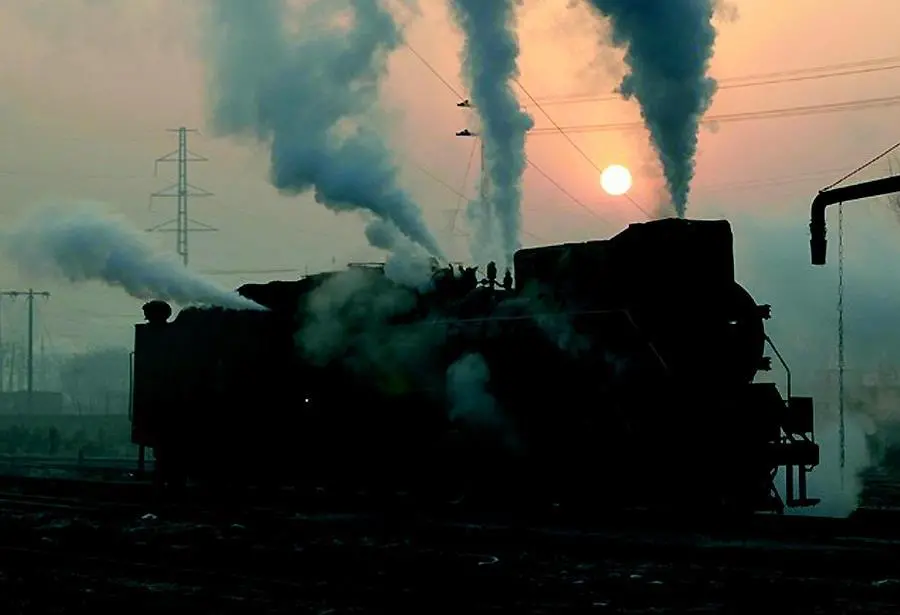
Put simply, China neither has the natural resources to satisfy its increasing energy demands, nor the available arable land to feed its enormous 1.3 billion population. As a result, handling of China’s huge, and growing, bulk volumes has remained in the hands of local port authorities which may go some way to explaining the serious congestion experienced at many facilities.
And the congestion here is having a knock-on effect throughout the world, as evidenced by the unprecedented charter rates for bulk carriers, as the waiting time for vessels to dock and be unloaded has surged over the last couple of years.
Not just in China, but also at its suppliers, such as Australian coal exports and Brazilian soya bean exports, considerable pressure has been applied on port operators by both carriers and shippers. To give some idea of the perspective of the current bottlenecks, UK shipbroker Simpson, Spencer & Young reported that at the end of December some 37m tonnes of iron ore were stockpiled in Chinese ports – the majority of it at Tianjin and Qingdao – awaiting clearance.
In the meantime Chinese steel production in 2004 was some 30% more than the previous year.
And these trends are likely to continue throughout the next year at least, according to both observers and statistics. While the Chinese government has tried hard recently to slow its rate of growth to a more manageable level, analysts believe that 2004’s official GDP growth of 9.5% was in reality more likely 13%.
Additionally, December 2004 saw the highest ever monthly dry bulk import volumes of 28.1m tonnes. Thus efforts to increase vessel handling productivity will have to be concentrated at its terminals.
Yet the bulk handling scene in China is complex, partly due to the continuing involvement of the state in its operations. For example, in Tianjin, one of China’s largest ports, container terminal operators have for some time had to hand over part of their operations – normally 10% of berth space – to the port authority for handling coal imports. The result is predictably chaotic, with container vessels and bulkers jostling for berths, but also with coal dust clogging up the container handling equipment leading to further delays and breakdowns.
Of course, the situation is changing, and over the next few years it is likely that Tianjin will emerge as one of China’s most important bulk ports. The port authority has recently completed construction of dedicated coal facility which has an annual capacity of 20m tonnes over six berths. Also currently under construction at the port is what will be the largest coal logistics plant in China, covering some 12 sq km. It is also adding a second iron ore terminal capable of handling vessels of up 100,000dwt.
But with many bulk terminals still directly controlled by the central government, there has been a chronic lack of investment into infrastructure and modern handling equipment. It is still not uncommon for rail wagons or trucks to be loaded at storage yards by gangs of men wielding shovels. Indeed, in recent months there has actually been some criticism of government policy towards the bulk business from parts of the press, and much of it is justified. It seems a little more than ironic that the country which is holding the next Olympics – and funding a huge construction project around it – is the same as that which needs a World Bank loan to build a grain terminal at the port of Dalian.
The recently-completed Xi Zui grain terminal is one of the largest in the world, and with a storage capacity of 1m tonnes, it is intended to be the major intermodal hub for grain movements in north-eastern China.
British company AS-C Material Handling won the turnkey contract for the design, procurement, project management and construction of the facility which comprises a mammoth 600,000 tonne storage silo to accept both rail and ship-borne grain shipments arriving at the port.
THE END OF STATE-OWNED FACILITIES?
South across the Bo Hai Bay, the port of Qingdao is also planning to build a new grain facility, and one which may mark the beginning of the end for China’s state-owned facilities. Qingdao port authority is now accepting submissions and letters of intent from operators, shippers and logistics providers to invest in the extension of its grain operations.
Opened in 2001, Qingdao’s current grain terminal boasts a nominal annual handling capacity of 3.5m tonnes per year, over a single 280 metre berth with a 14 metre draught. The terminal’s 50,000 tonne storage capacity was supplemented by a 100,000tonne grain warehouse which in 2003 handled 2.6m tonnes. But now the port authority is seeking private capital to help fund the expansion of the storage facilities.
“Along with China’s entry into the WTO, grain imports have seen a dramatic growth, particularly in bulk grain loaded and unloaded at Qingdao port, and shipped inland for deep processing in recent years.
It is estimated that the throughput of grains via Qingdao will reach 8m tonnes in 2010. We believe the project will be profitable, given this background, ” says Wang Zhiyong, from the port’s business development division.
However, terminal investment may not solve the problem of congestion by itself. Port authorities and shippers have for some time argued that port productivity is also hampered by the lack of connectivity to many ports. To a large extent this is the fault of the Chinese rail system which has singularly failed to deal with the twin challenge of catering for the growth in both freight and passenger traffic. The acute shortage of locomotives and track access for freight trains is always thrown into sharp relief during this time of year, as the government virtually suspends all rail freight movements to free up capacity to cater for the huge demand for passenger transport over the Lunar festival.
The origins of the problem lie in the fact that the rail system is still controlled by the central government, which like the bulk terminals under its control, has not seen many of the necessary modernisations and infrastructure improvements that it should have.
In contrast, the road building programmes that are a feature in the environs of many Chinese ports these days, are funded by cash-rich local municipalities. As a result, the road haulage industry has been steadily growing its share of internal freight carryings, while rail has seen a decline in its market share. Over the first nine months of 2004, the rail network carried 1.61 billion tonnes of all commodities, but according to local sources that figure only represented some 30% of actual demand.
Wang Derong, executive president of China Communications Transportation Association, says: “The real problem is that railway construction in past years has failed to match the rapid growth of the country’s economy. Although economic growth next year is expected to fall, insufficient railway capacity is still far from meeting people’s demands. It’s a problem that cannot be resolved in the short-term.”
And while the government has slated a spending plan of some US$12 billion per year through to 2020 on construction of new lines – amounting to an extra 100,000km of new track – Wang adds that he believes the problem will get worse before it gets better. It is highly likely that in the short-term at least, the same will be true of China’s bulk terminals. And in the longer term, the performance of these terminals will also rely heavily on the capacity of China’s rail network.
Related Articles
 CONCESSIONS & INVESTMENTS
 CONTAINER & CARGO HANDLING
 TERMINAL OPERATIONS