![PortStrategy[GreenPort]](https://www.portstrategy.com/wp-content/uploads/2026/09/PortStrategyGreenPort.svg)




Japan – from under its shell
Japan has always been a difficult market to crack. Not only has the country a traditionally protectionist mentality toward its own industries – especially when it comes to any perceived Chinese encroachment – but it is only just recovering from its last grim interlude of recession.
However, when crane manufacturer ZPMC won an order for a set of rubber-tyred gantry cranes, it partially attributed it to the effect of globalisation whittling away the ‘bastions’ of protective economies.
Unfortunately, any change implied by ZPMC might be premature. Japan may be about to retreat inside its shell once again as economists forecast the worst recession since 1974, and the Chinese flex their – not inconsiderable – financial muscle.
The recent Japanese story has been one of climbing out of a hole by investing in car and electronics exports, a route that has just dried up along with the shipping. But even at the height of the export trade, Japan’s ports were not as successful at attracting cargo as its neighbours, and Pusan, in Korea, attracted a good amount of local trade that otherwise might have used one of the Japanese ports.
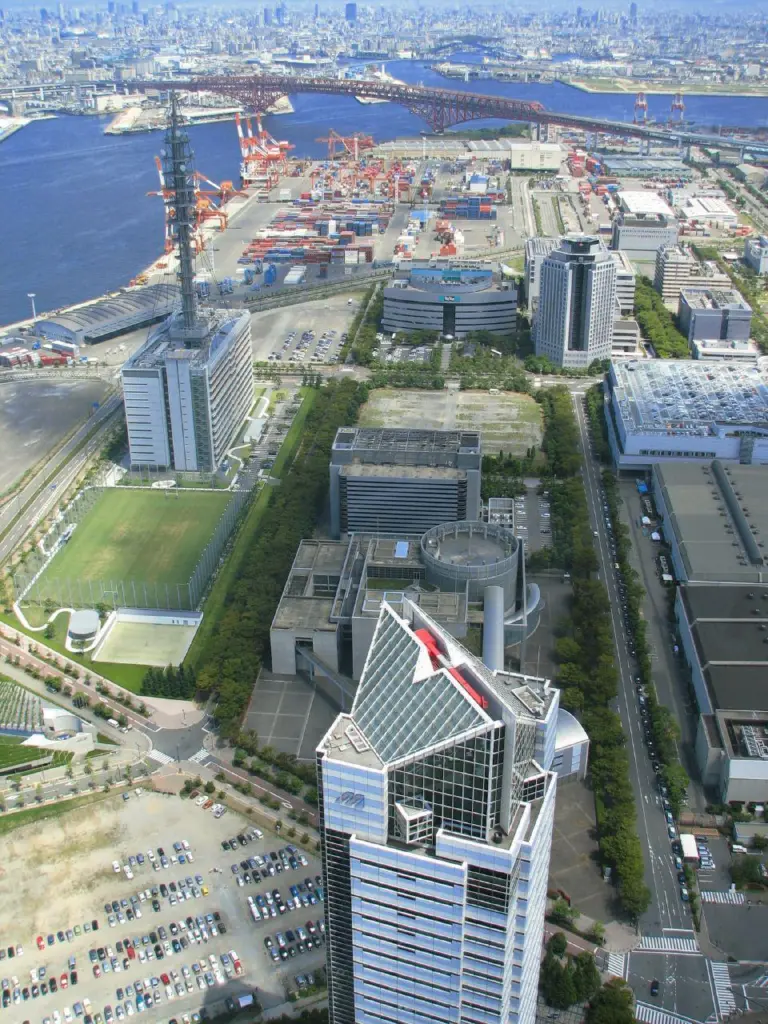
So, Hanshin was developed as the new, dedicated ‘super-port’, taking in Osaka and Kobe, Sakai-Semboku and Amagasaki-Nishinomiya-Ashiya with a capacity of at least 4.3m teu per year and a simplified tariff that saved shippers money.
At the same time, in order to develop, Japan decided to open up its ports to private investors – unfortunately only a few months before the slide.
It is still not certain if the global recession means that Japan will get out there and flex some muscle of its own – or go back into hiding.
Related Articles
 CONCESSIONS & INVESTMENTS
 CONTAINER & CARGO HANDLING
 TERMINAL OPERATIONS