![PortStrategy[GreenPort]](https://www.portstrategy.com/wp-content/uploads/2026/09/PortStrategyGreenPort.svg)





Look beyond productivity
Portek is keen to develop supply chain partnerships to drive growth, finds Carly Fields
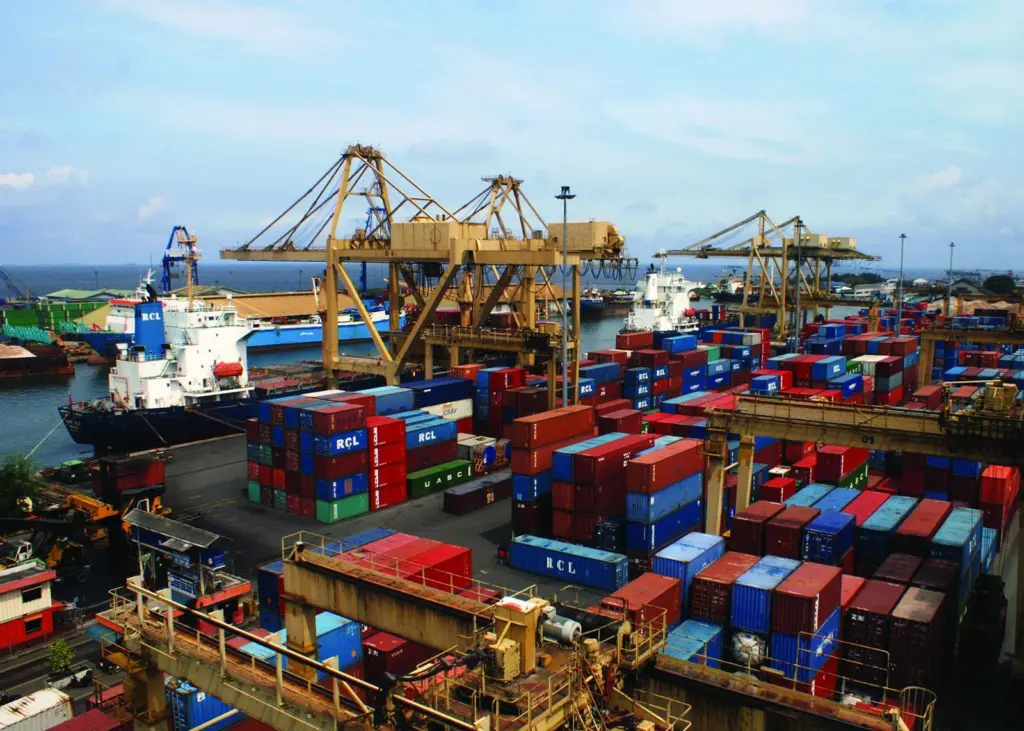
Setting out as a pure port equipment engineering business in 1988, Singapore-headquartered Portek now has many more strings to its bow, not least terminal operations. It’s no coincidence that this evolution has fast-tracked under the watchful eye of owner Mitsui and non-executive director and former chief executive Takao Omori, both of whom arrived on the scene in 2011.
From its hardware beginnings, Portek with Mitsui now boasts an annual throughput of over 1m teu through its terminal operations in Gabon, Rwanda, Algeria, Malta, Latvia and Jakarta.
Beyond operations, Mr Omori plans to complete the circle of port operations in the future. Speaking exclusively to Port Strategy, he explains his future plans: “My policy is to not only look at the productivity of the container itself, but to look inside the box and to ask ‘what’s in it’, ‘what are the shipper’s or consignee’s requirements’, and ‘what are the functions before and after the container terminal’.
“We are closely working with not only shipping companies, but also cargo owners and logistics players – we need to understand the whole supply chain to understand the function of the terminal.”
Given its background, he admits that the company is confident in terms of engineering, but it needs a better understanding of the business demands of both cargo owners and shipping companies to position itself to meet future supply chain needs.
Its aspirations have been supported by the Mitsui tag, which has allowed access to funding on a scale that Portek could previously only have anticipated.
“When I first joined I saw that there were restrictions in access to funding to invest in the larger size equipment or terminals,” Mr Omori concedes. “But having Mitsui as a parent company with its financial stability, we now have the funds to make additional investment. Right now, we are trying to convert a traditional engineering model, keeping our current strengths for mobilisation, modernisation and modification.”
Portek is utilising its parent company’s name to leverage financing in places like Indonesia, and is keeping its focus on the African continent. It is also looking at opportunities in Bangladesh and Myanmar in South Asia and describes Indonesia as “a great opportunity” for the company with its projected population growth and the outlook of the new president, Joko Widodo.
Flexibility counts
“We’re not really a big terminal operator like PSA but we maintain our flexibility in terms of the mid to small size terminal operations with really good engineering capability,” says Mr Omori. “Looking at the existing electrification and automation capability, I believe our combination of talents is really good together, combining engineering issues with operational issues. From now on, our hybrid capability can play a much greater role in terminal integration with more automation functionality.”
Indeed, Mr Omori is keen to emphasise Portek’s continuing expertise in equipment solutions. Challenged by the cascade effect, mid to small sized terminals are now facing tough decisions on equipment upgrades to maintain a presence in container trades that have to accommodate increasingly larger ships.
“These terminals now need bigger equipment,” he says. “That’s an area where we still play a role to mobilise equipment in mid to small size terminals. Indonesia used to be a big market for us for deliveries of refurbished equipment, but right now they are looking at new equipment and they are looking to standardise equipment in multiple terminals. This is not only in the mega terminals, but also in the smaller terminals.”
While Mr Omori draws the line at investments in trucking or railway companies going forward, he does appreciate the importance of strong relationships with all supply chain stakeholders. “As a gateway terminal, we are in continuous discussions with our current clients and shipping companies, as well as logistics players,” he says. “For our terminal in Algeria, for example, our terminal partner is a local authority that is well connected in terms of infrastructure.
Right now, we are in discussion with our local stakeholders in terms of infrastructure developments to extend our function to the hinterland by opening an inland container depot connected by railway.”
Related Articles
 CONCESSIONS & INVESTMENTS
 CONTAINER & CARGO HANDLING
 TERMINAL OPERATIONS