![PortStrategy[GreenPort]](https://www.portstrategy.com/wp-content/uploads/2026/09/PortStrategyGreenPort.svg)





Northern lights
The port of Hong Kong is being eclipsed but its port operators are still raking it in through smart investments outside of the former number one hub
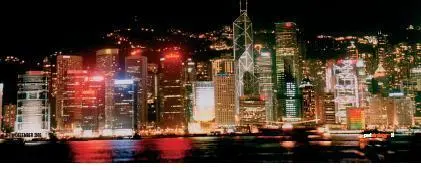
It was the region that first opened up to the international economy and to this day the Pearl River Delta (PRD) remains China’s most vibrant trading centre. One third of all exports come from the PRD and a slew of new ports means shippers are set to be spoilt for choice.
Guangzhou or Canton is China’s historic trading gateway. To date, much of the container activity in Guangzhou has been barge traffic. However, the deep water port at Nansha island, 54km southeast of Guangzhou city centre, opened last year and made Guangzhou suddenly a competitor to its southern neighbours Shenzhen and Hong Kong.
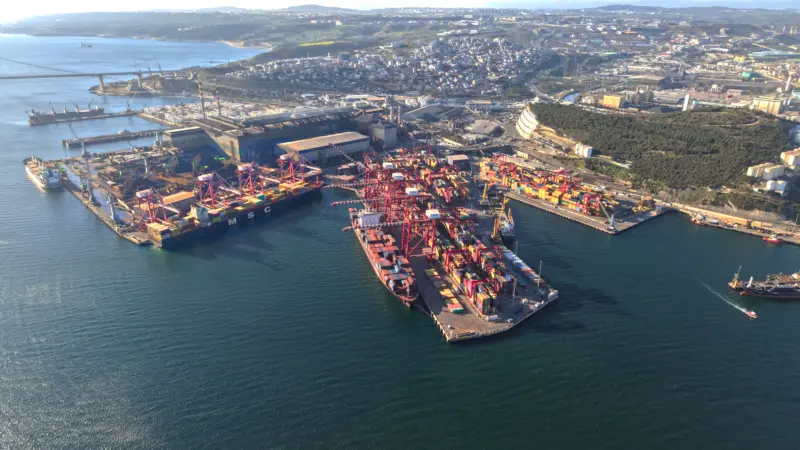
Yantian to the east of Shenzhen is the PRD’s premier facility and rapidly becoming Hutchison Port Holdings flagship site. The facility on a per square metre basis is actually now more efficient than the vaunted Kwai Chung terminals in Hong Kong.
Under massive third phase expansion plans worth a combined RMB10bn (US$1.3bn) by 2010 Yantian will have a total area of 344 ha with 15 deepwater container berths.
However, the Hutchison-led Yantian will soon have a deepwater rival. Also to the east of Shenzhen, Dachan Bay, led by another Hong Kong operator, Modern Terminals, has committed RMB14bn (US$1.8bn) to two phases of Dachan Bay. The port areas at Shekou and Chiwan, on the western side of Shenzhen, are expanding as is a China Merchants project at Mawan.
On the western side of the delta Hutchison is staking its reputation on developing a viable deepwater terminal at Zhuhai, a rare location on this side of the river to boast deepwater.
In November 2004, the Chinese government announced a grand plan to integrate all of China’s southern provinces into a super hub centred on the Pearl River Delta.
The vast transport initiative will fan out from Guangdong towards Fujian, Jiangxi, Hunan, Hainan, Yunnan, Guizhou, Sichuan, Guangxi Zhuang Autonomous Region and Chongqing municipality. The Guangdong government has all prefecturelevel cities linked by expressways. When the road journey from the central city of Wuhan to Guangzhou
(a distance of about 1,200 km) is shortened to 11 hours, Hong Kong and Guangdong’s ports would have a larger catchment area, more than 1,000 km, similar to US ports. In 2005, the former British colony of Hong Kong lost its container port crown to Singapore – something it will never regain in all probability as double digit growth north of the border siphons off traffic that once flowed the Fragrant Harbour’s way.
In the mid-1990s, Hong Kong handled more than 90% of all cargo originating from the Pearl River Delta, the region’s industrial hub. That share has rapidly fallen to under 50%.
In 2000,Maersk had 200 calls to Hong Kong a year. Last year this figure was just 60. And what Maersk does, others tend to follow.
Such minimal growth from Hong Kong brings into question the necessity of a tenth container terminal development which has been earmarked for Lantau island next door to a proposed logistics park and an ambitious Y-shaped 30km bridge linking Macau and Zhuhai on the other side of the delta at a total cost of up to US$6bn.
Shenzhen, Huizhou, Dongguan, Guangzhou, Foshan, Jiangmen, Zhongshan and Zhuhai account for 95% of Guangdong’s exports. Unlike the Yangtze River Delta where Shanghai calls the shots, neither Shenzhen nor Guangzhou are strong enough. The two things that many of these PRD ports have in common are Hong Kong investors and phenomenal profit margins.
Related Articles
 CONCESSIONS & INVESTMENTS
 CONTAINER & CARGO HANDLING
 TERMINAL OPERATIONS